Linseed, also called alsi or flax, is a rabi oilseed crop grown mainly in Madhya Pradesh, Chhattisgarh, Uttar Pradesh, Maharashtra, Jharkhand, Bihar and Odisha. It needs little water and suits rainfed areas. Its seeds are used for oil, food and health products, and its stems give fibre. Here is a general guide.
Climate and soil
- Linseed grows in cool weather during the rabi season.
- It suits clay loam and black soils that hold moisture well.
- Fields should be well drained. Waterlogging harms the crop.
Sowing time
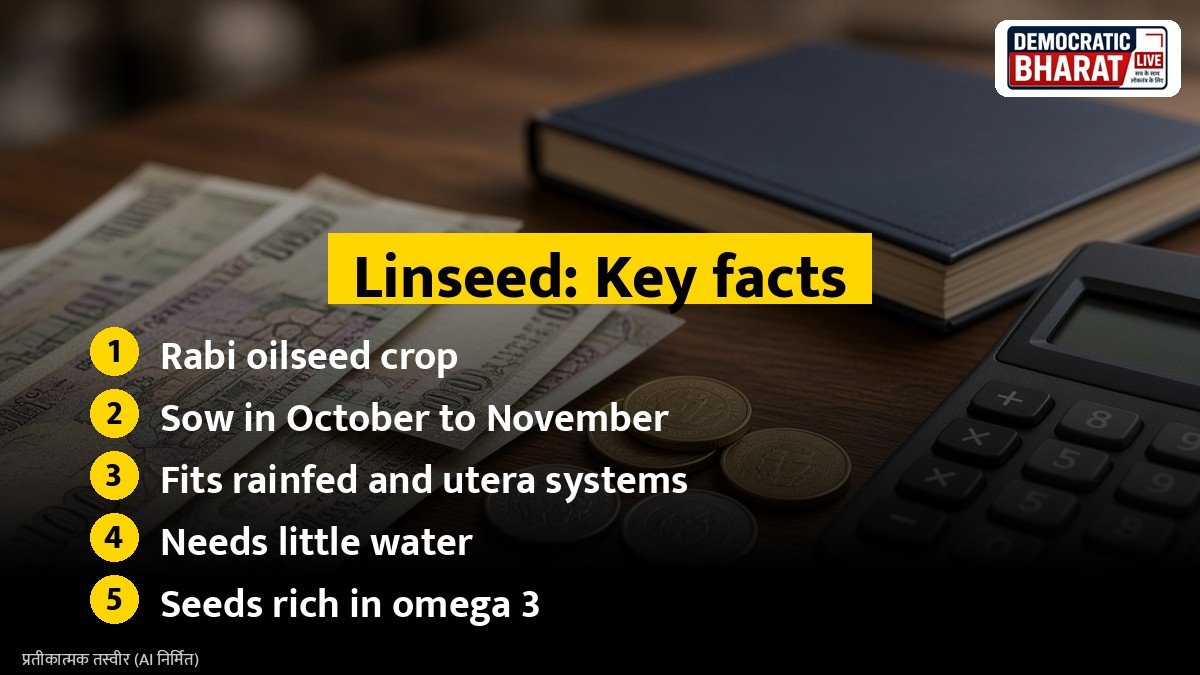
In most areas, linseed is sown from early October to mid November. Late sowing can lower yields and increase pest and disease attack. In rice growing areas of eastern India, linseed is often sown as a utera or paira crop, where seed is broadcast into the standing rice crop before harvest so that it uses leftover soil moisture.
Varieties
Many improved varieties have been released by ICAR institutes and state agricultural universities for seed, oil and dual purpose use. Choose a certified variety recommended for your area by the Krishi Vigyan Kendra.
Also Read: Mustard Farming Guide for Rabi: Sowing Time, Seed Rate, Irrigation and Pest Control Tips | Rajma Farming Guide: Sowing Time, Varieties, Fertiliser and Care for Kidney Bean Crops
Seed and sowing
- Treat seed with a recommended fungicide before sowing.
- Sow in rows at the recommended spacing and depth, so seed reaches moisture.
- Follow the recommended seed rate, which is higher for utera sowing.
Fertiliser
Apply fertiliser as per the Soil Health Card. Linseed responds well to nitrogen, phosphorus and sulphur. In rainfed conditions, the full dose is usually applied at sowing, while in irrigated fields nitrogen may be split.
Irrigation
Linseed can grow on stored soil moisture. Where irrigation is available, one or two irrigations at branching and flowering to seed filling stages can increase yield.
Weed, pest and disease care
- Keep the field weed free during the first month.
- Watch for bud fly, which damages flower buds, and for diseases like rust, wilt and powdery mildew.
- Use resistant varieties and integrated pest management, and spray only on expert advice.
Harvest
Harvest when the capsules turn brown and leaves dry up. Dry the plants, thresh and clean the seed, and store it with low moisture.
Uses and marketing
Linseed oil is used in paints, varnish and food. The seeds are rich in omega 3 fatty acids and fibre and are in demand as a health food. Check prices on Agmarknet or e-NAM and sell through regulated mandis or FPOs.
Advice for farmers
Before sowing, selling or storing your crop, check the latest information with your district agriculture department, Krishi Vigyan Kendra or mandi committee.
Bottom line
Linseed is a low water rabi oilseed that fits rainfed and rice fallow areas. Timely sowing and good seed are key to better yields.
Source / स्रोत: ICAR Indian Institute of Oilseeds Research, Ministry of Agriculture and Farmers Welfare