The Constitution of India gives citizens Fundamental Rights, and it also lists Fundamental Duties that every citizen should follow. They are in Part IVA, Article 51A of the Constitution. Here is what they are.
How they were added
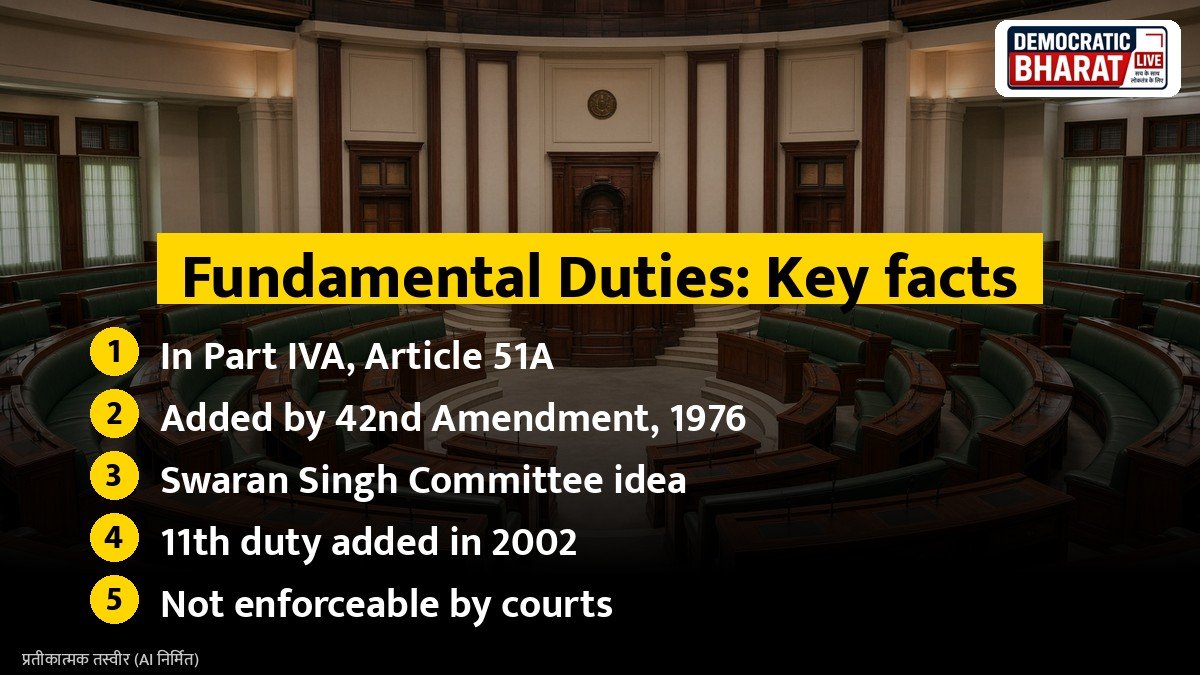
The original Constitution of 1950 did not have Fundamental Duties. In 1976, the Swaran Singh Committee recommended adding them. The 42nd Constitutional Amendment Act, 1976 added ten duties. The idea was partly inspired by the constitution of the former Soviet Union.
In 2002, the 86th Constitutional Amendment Act added an eleventh duty about education.
The 11 Fundamental Duties
It shall be the duty of every citizen of India:
- To abide by the Constitution and respect its ideals and institutions, the National Flag and the National Anthem
- To cherish and follow the noble ideals that inspired the national struggle for freedom
- To uphold and protect the sovereignty, unity and integrity of India
- To defend the country and render national service when called upon
- To promote harmony and the spirit of common brotherhood among all the people of India, and to renounce practices derogatory to the dignity of women
- To value and preserve the rich heritage of our composite culture
- To protect and improve the natural environment, including forests, lakes, rivers and wildlife, and to have compassion for living creatures
- To develop the scientific temper, humanism and the spirit of inquiry and reform
- To safeguard public property and to abjure violence
- To strive towards excellence in all spheres of individual and collective activity
- For a parent or guardian, to provide opportunities for education to their child or ward between the ages of 6 and 14 years
Are they enforceable
Fundamental Duties are not directly enforceable by courts like Fundamental Rights. However, courts have used them to interpret laws and uphold measures, such as for environmental protection and respect for the National Flag. Parliament can make laws to enforce specific duties, and several laws do so, like the Prevention of Insults to National Honour Act, 1971.
Also Read: No-Confidence Motion Explained: How It Works in the Lok Sabha and What Happens if a Government Loses | Election Commission of India Explained: Powers, How the CEC Is Appointed and the 2023 Law
Why they matter
Fundamental Duties remind citizens that rights come with responsibilities. They promote national unity, respect for the Constitution, protection of the environment and a scientific outlook.
Constitution Day
India observes Constitution Day, or Samvidhan Divas, on 26 November every year, the day the Constituent Assembly adopted the Constitution in 1949. Schools and offices often read the Preamble and discuss Fundamental Duties on this day.
Bottom line
Article 51A lists 11 Fundamental Duties for every citizen. They are not enforceable in court, but they guide citizens and lawmakers alike.
Source / स्रोत: Constitution of India, Legislative Department, Ministry of Law and Justice