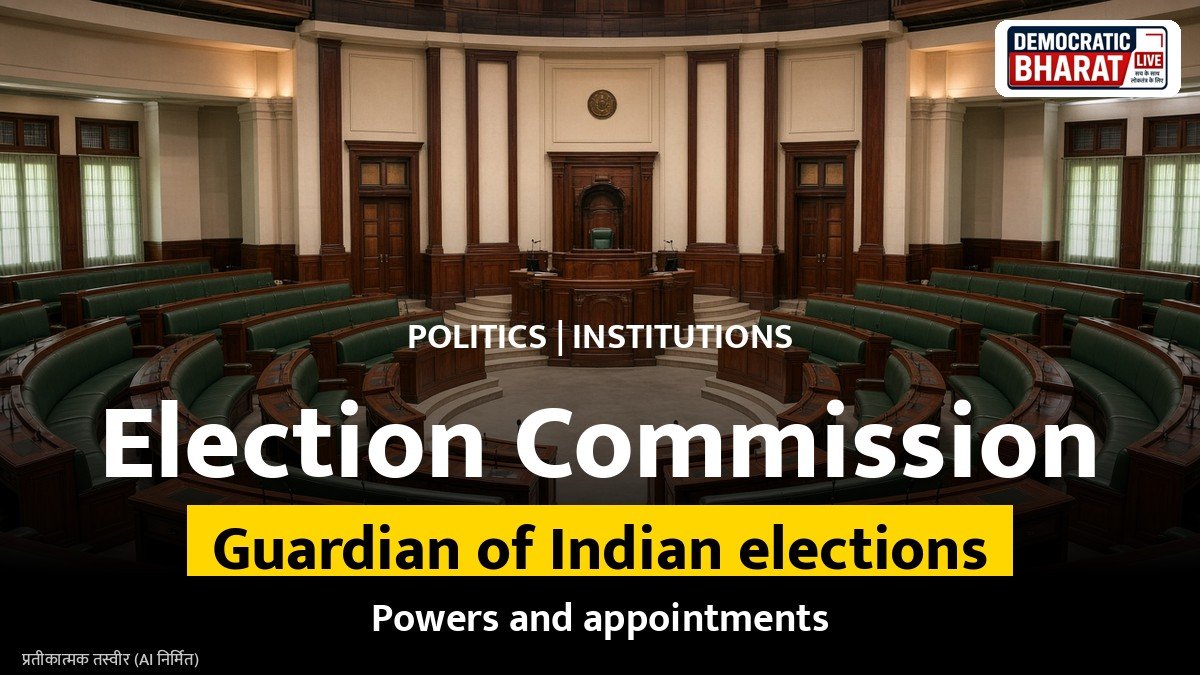
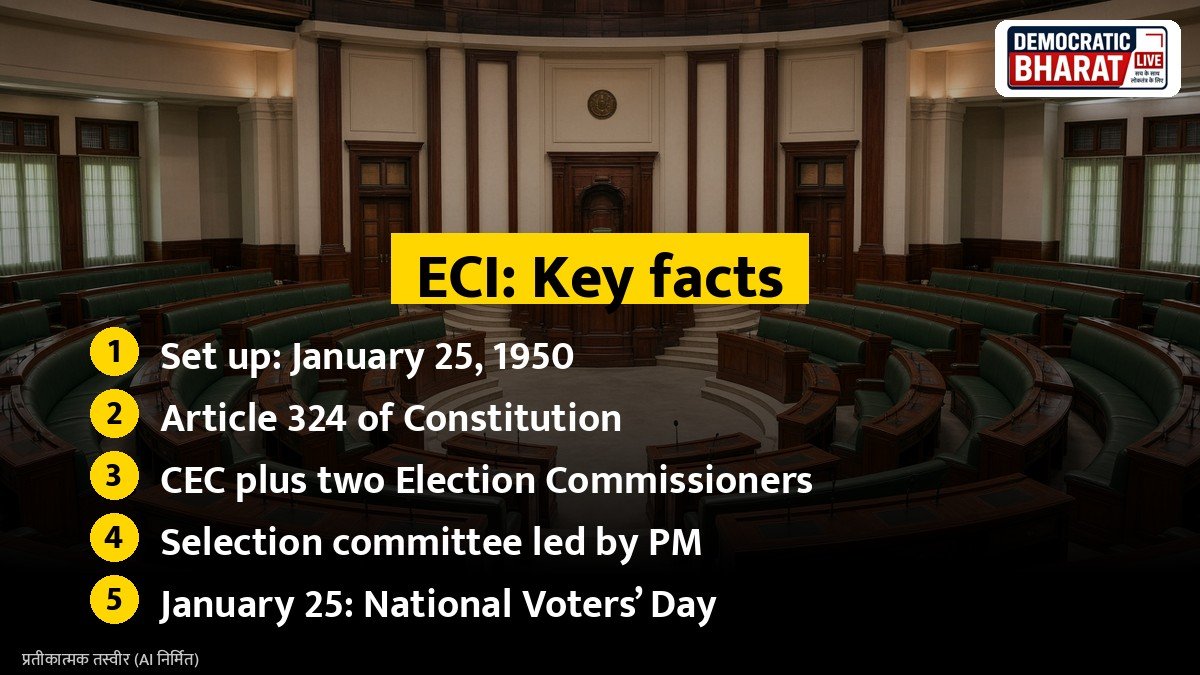
The Election Commission of India (ECI) is a constitutional body that conducts elections in the country. It was set up on January 25, 1950, a day before the Constitution came into force. That is why January 25 is observed as National Voters’ Day.
Constitutional basis
Article 324 of the Constitution vests the superintendence, direction and control of elections in the Election Commission. It covers elections to:
- the Lok Sabha and Rajya Sabha,
- state Legislative Assemblies and Councils, and
- the offices of the President and Vice President.
Elections to panchayats and municipalities are conducted by State Election Commissions, which are separate bodies.
Structure
For most of its history, the ECI had only a Chief Election Commissioner (CEC). In 1989, two more commissioners were added briefly, and since 1993 it has been a three member body: the CEC and two Election Commissioners. Decisions are taken by majority.
How members are appointed
The Chief Election Commissioner and Other Election Commissioners (Appointment, Conditions of Service and Term of Office) Act, 2023 sets the process:
- A search committee headed by the Law Minister prepares a panel of names.
- A selection committee of the Prime Minister, the Leader of the Opposition (or leader of the largest opposition party) in the Lok Sabha, and a Union Cabinet Minister nominated by the PM recommends the appointment.
- The President makes the appointment.
The Act was passed after a 2023 Supreme Court judgment that had said the Chief Justice of India should be part of the panel until Parliament made a law. Petitions against the 2023 Act have been filed in the Supreme Court.
Also Read: No-Confidence Motion Explained: How It Works in the Lok Sabha and What Happens if a Government Loses | How Rajya Sabha Election Works: Who Votes, Seats per State and the Single Transferable Vote
Term and removal
Members hold office for six years or until 65 years of age, whichever is earlier. The CEC can be removed only like a Supreme Court judge, through a process in Parliament. Election Commissioners can be removed only on the recommendation of the CEC.
Powers and functions
- Preparing and updating electoral rolls
- Announcing election schedules
- Registering and recognising political parties, and allotting symbols
- Enforcing the Model Code of Conduct
- Monitoring election expenses
- Deciding disqualification matters referred under the law
- Using EVMs and VVPATs for voting
Bottom line
The Election Commission of India is the backbone of the world’s largest democracy. Its credibility depends on its independence, which is why the method of appointing its members remains a key debate.
Source / स्रोत: Election Commission of India, Constitution of India, India Code