India’s classical dance traditions are among the oldest in the world. Many trace their roots to the Natya Shastra, a treatise on performing arts attributed to Bharata Muni. The Sangeet Natak Akademi, India’s national academy for music, dance and drama, recognises eight major Indian classical dance forms. The Ministry of Culture also includes Chhau in its list of classical dances.
1. Bharatanatyam (Tamil Nadu)
One of the oldest classical forms, Bharatanatyam developed in the temples of Tamil Nadu. It is known for its fixed upper torso, bent legs, intricate footwork and expressive hand gestures (mudras). Rukmini Devi Arundale played a big role in reviving it in the 20th century.
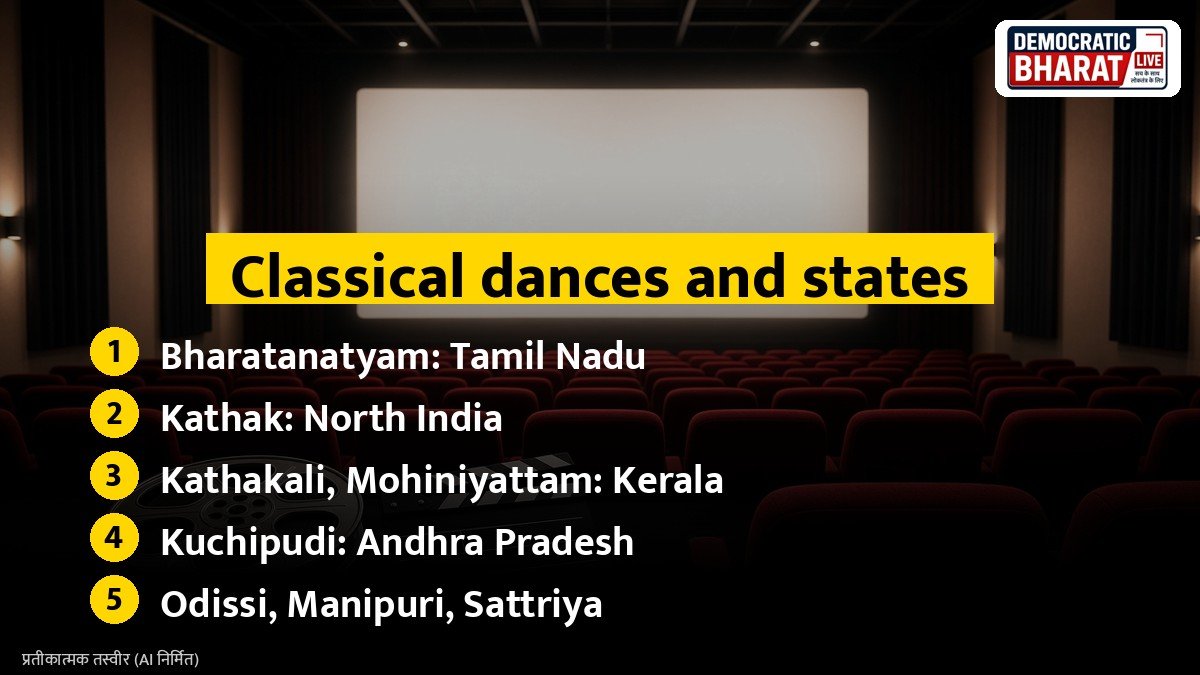
2. Kathak (North India)
Kathak comes from the word katha, meaning story. It grew from storytellers in temples and later flourished in Mughal and Rajput courts. It is known for fast spins (chakkars) and rhythmic footwork with ankle bells. The Lucknow, Jaipur and Banaras gharanas are its main schools. Pandit Birju Maharaj was one of its greatest exponents.
3. Kathakali (Kerala)
Kathakali is a dance drama known for elaborate make up, costumes and headgear. Performers, traditionally men, tell stories from the epics through facial expressions and gestures.
Also Read: IFFI Goa Guide: What Is the International Film Festival of India, Indian Panorama and How to Register | Shah Rukh Khan Birthday on November 2: From Fauji to His First National Award, Key Moments of His Career
4. Mohiniyattam (Kerala)
Mohiniyattam is a graceful, swaying dance traditionally performed by women, named after Mohini, the enchantress form of Vishnu.
5. Kuchipudi (Andhra Pradesh)
Named after a village in Andhra Pradesh, Kuchipudi combines dance and drama. A famous feature is the tarangam, where the dancer performs on the rim of a brass plate.
6. Odissi (Odisha)
Odissi is known for the tribhanga posture, with the body bent at three points, and is closely linked with the temples of Odisha, including the Jagannath temple at Puri. Guru Kelucharan Mohapatra helped revive it.
7. Manipuri (Manipur)
Manipuri is soft and flowing, often depicting the Raas Leela of Krishna and Radha. Dancers wear distinctive cylindrical skirts.
8. Sattriya (Assam)
Sattriya was introduced in the 15th century by the saint Srimanta Sankardev in the sattras (monasteries) of Assam. It was recognised as a classical dance by the Sangeet Natak Akademi in 2000.
Learning and watching
Many government cultural centres, universities and private gurus teach these forms. Festivals such as the Khajuraho Dance Festival and the Konark Dance Festival showcase them every year.
Bottom line
From Bharatanatyam to Sattriya, Indian classical dance forms carry centuries of stories, music and devotion.
Source / स्रोत: Sangeet Natak Akademi, Ministry of Culture