Rapeseed and mustard together form one of India’s most important oilseed crops. Rajasthan is the largest producer, followed by states such as Madhya Pradesh, Uttar Pradesh, Haryana and Gujarat. The ICAR Directorate of Rapeseed Mustard Research (DRMR), Bharatpur, guides farmers on best practices. Here is a mustard farming guide for the rabi season.
Climate and soil
Mustard grows well in cool, dry weather. It prefers well drained loam to sandy loam soils. Waterlogged fields should be avoided. A pH close to neutral is ideal.
Sowing time
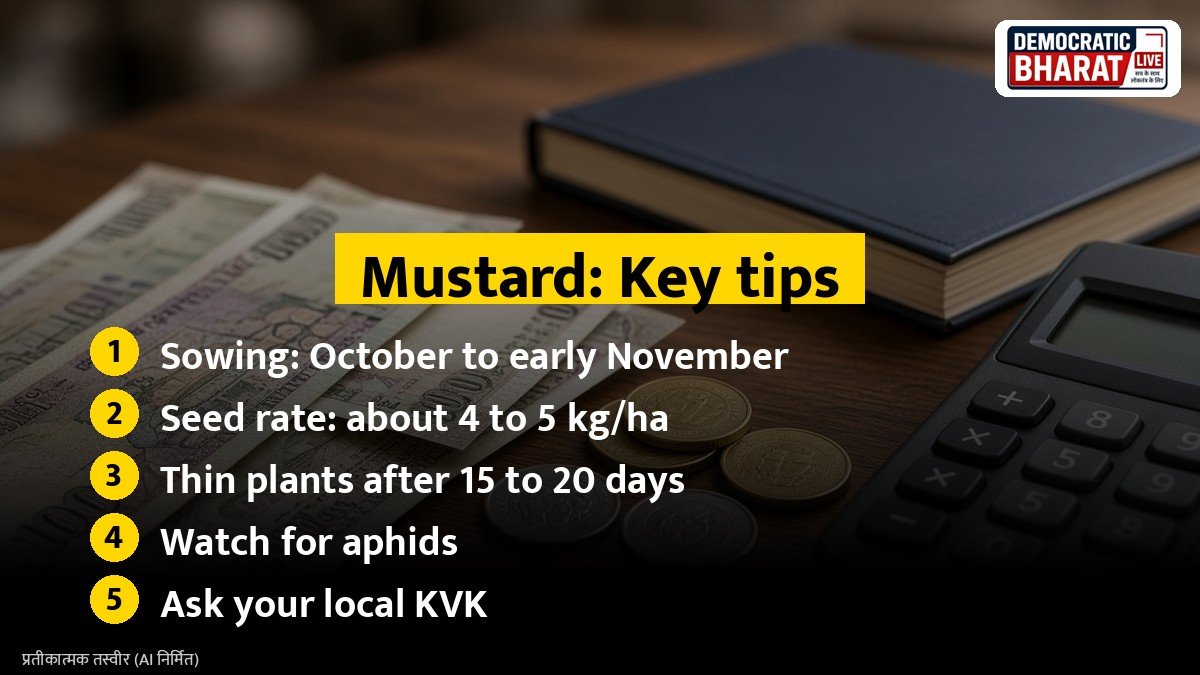
In most of North India, mustard is sown from early October to early November, depending on the area and the variety. Sowing too late exposes the crop to aphid attack and frost. Follow the sowing calendar of your state agriculture university.
Choosing a variety
Use varieties recommended for your region and conditions, such as irrigated, rainfed or late sown. ICAR and state universities release improved varieties with higher oil content and better tolerance to stress. Buy certified seed.
Also Read: Wheat Sowing Guide for Rabi Season: Best Time, Seed Rate, Varieties and Tips From ICAR | How MSP Is Fixed in India: Role of CACP, the 1.5 Times Cost Formula and Rabi Crops Covered
Seed rate and spacing
- A common seed rate is about 4 to 5 kg per hectare.
- Rows are usually spaced about 30 to 45 cm apart.
- Thin out extra plants about 15 to 20 days after sowing to maintain good spacing.
Treat seeds with a recommended fungicide to protect against seed borne diseases.
Fertiliser
Apply fertiliser based on a Soil Health Card or soil test. Mustard responds well to sulphur, which also improves oil content. Use nitrogen in split doses as advised.
Irrigation
Mustard needs fewer irrigations than wheat. Critical stages are the pre flowering and pod filling stages. Avoid excess water.
Pest and disease control
- Aphids are the most damaging pest, especially in cloudy, humid weather in December and January. Monitor the crop regularly and follow integrated pest management advice from your KVK.
- White rust, Alternaria blight and Sclerotinia stem rot are common diseases. Use resistant varieties and follow recommended sprays only when needed.
Harvesting
Harvest when about 75 percent of pods turn yellowish brown, to avoid shattering. Dry the crop well before threshing and store seeds in a dry place.
Selling
Rapeseed and mustard are among the crops with an MSP announced by the government. Check the official MSP on CACP or PIB, and register with your state procurement agency if you plan to sell at MSP.
Advice for farmers
Before sowing, selling or storing your crop, check the latest information with your district agriculture department, Krishi Vigyan Kendra or mandi committee.
Bottom line
Timely sowing, proper thinning, sulphur use and close watch on aphids are the keys to a good mustard crop.
Source / स्रोत: ICAR Directorate of Rapeseed Mustard Research, Indian Council of Agricultural Research, CACP