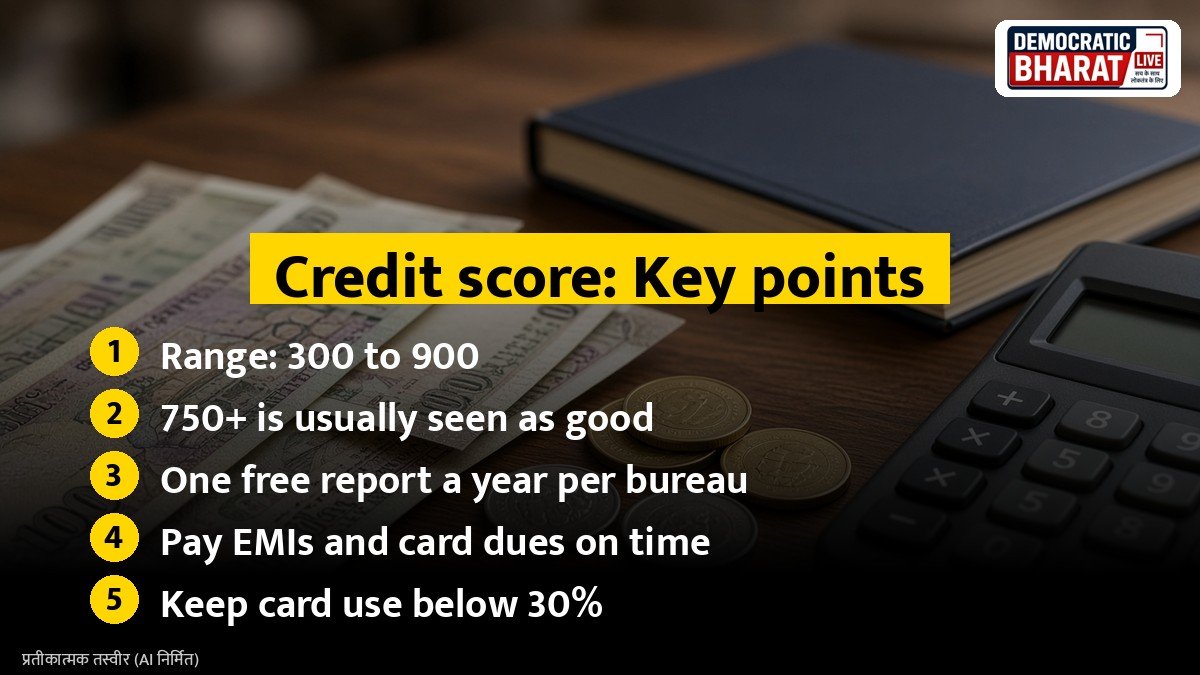
A credit score is a three digit number that shows how well you have managed loans and credit cards in the past. Banks and lenders use it to decide whether to give you a loan and at what interest rate. In India, credit scores usually range from 300 to 900.
Who calculates the score
Credit information companies licensed by the Reserve Bank of India collect data from lenders. The four companies are TransUnion CIBIL, Experian, Equifax and CRIF High Mark. Each calculates its own score, so your score may differ slightly from one bureau to another.
How to check your credit score free
As per RBI directions, every credit information company must give one free full credit report, including the credit score, once a year to every individual whose credit history it holds. You can get it from the official website of each bureau after verifying your identity with PAN and mobile number. Many banks and finance apps also show free credit scores.
Checking your own score is a soft enquiry and does not lower it.
What affects your score
- Repayment history: late or missed EMIs and card payments hurt the most.
- Credit utilisation: using a large part of your card limit lowers the score.
- Length of credit history: older accounts help.
- Credit mix: a balance of secured loans (home, car) and unsecured credit (cards, personal loans).
- New enquiries: many loan applications in a short time can lower your score.
Also Read: EPF Balance Check: 4 Easy Ways Using UMANG, Missed Call, SMS and the EPFO Portal | Jio Platforms IPO Allotment: How to Check Status
7 ways to improve your credit score
- Pay all EMIs and credit card bills on time. Set up auto debit.
- Pay at least the full card bill, not just the minimum due.
- Keep credit card usage below about 30 percent of the limit.
- Avoid applying for many loans or cards at once.
- Do not close your oldest credit card without reason.
- Check your credit report for errors such as loans you never took.
- Settle overdue accounts properly and avoid “settled” status where possible, since it can hurt future loans.
How to fix errors
If your report has a mistake, raise a dispute with the bureau online. Under RBI rules, complaints must be resolved within a set time, and compensation is payable for delays. If not resolved, you can approach the RBI Ombudsman through cms.rbi.org.in.
Beware of fake score sites
Use only official bureau websites, bank apps or trusted platforms. Do not share OTPs with callers who claim they can “fix” your score for a fee.
Bottom line
Check your credit score free at least once a year, fix any errors and build a record of timely payments. A good score can save a lot of money on your next loan.
Source / स्रोत: Reserve Bank of India, TransUnion CIBIL, RBI financial education