Washing hands with soap and water is one of the simplest and cheapest ways to prevent illness. It reduces the spread of diarrhoea, respiratory infections like flu, and many other diseases. Here is how to do it properly.
Why it matters
WHO, led by Director General Dr Tedros Adhanom Ghebreyesus, has repeatedly stressed that clean hands save lives, both in hospitals and at home. Germs on hands can spread to food, water, surfaces and other people. Children are especially at risk from diarrhoeal diseases, which can be prevented in large part by handwashing with soap.
When to wash your hands
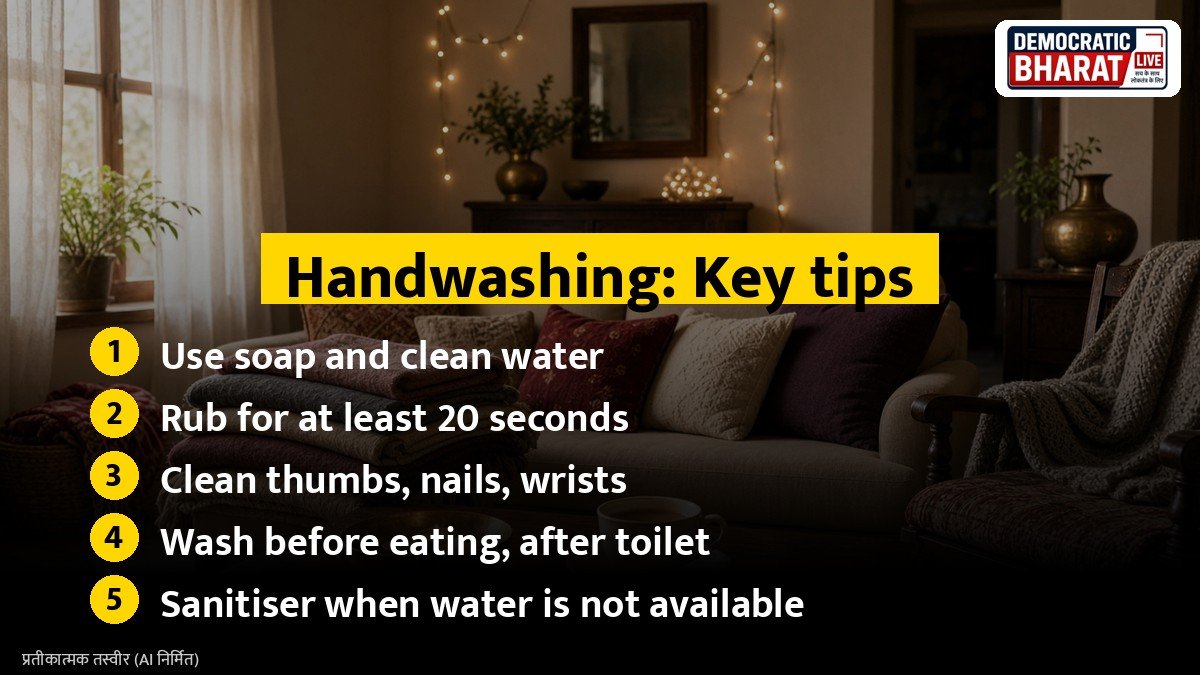
- Before eating or cooking
- Before feeding a child
- After using the toilet
- After changing a baby’s nappy or cleaning a child
- After coughing, sneezing or blowing your nose
- After touching animals, waste or garbage
- Before and after caring for someone who is sick
- After returning home from outside
How to wash, step by step
- Wet your hands with clean running water.
- Apply enough soap to cover all surfaces.
- Rub palms together.
- Rub the back of each hand with the palm of the other, interlacing fingers.
- Rub palm to palm with fingers interlaced.
- Rub the backs of fingers against the opposite palm.
- Rub each thumb in a rotating motion.
- Rub fingertips and nails in the opposite palm.
- Rinse well with running water.
- Dry with a clean towel or air dry.
The whole process should take about 40 to 60 seconds as per WHO guidance, with at least 20 seconds of rubbing with soap.
Also Read: How Much Added Sugar Is Too Much? What WHO and ICMR-NIN Guidance Says and Easy Ways to Cut Down | Oral Health Basics: How to Brush Right, Why Fluoride Matters and Habits That Damage Teeth
Hand sanitiser
When soap and water are not available, use an alcohol based hand sanitiser. Rub it over all surfaces of the hands until dry. Sanitisers do not work well on visibly dirty or greasy hands, so wash with soap in that case. Keep sanitisers away from children and fire.
Teach children
Make handwashing a habit for children through songs, demonstrations and reminders at mealtimes and after toilet use. Schools can set up handwashing stations at child friendly heights.
Important days
Global Handwashing Day is observed on 15 October, and World Hand Hygiene Day, led by WHO for healthcare settings, on 5 May.
Other hygiene tips
- Keep nails short and clean.
- Cover your mouth and nose with a tissue or your elbow when you cough or sneeze.
- Use clean water for drinking and cooking.
Bottom line
Wash your hands with soap at key times and use all the steps. It is one of the easiest ways to protect your family’s health.
Disclaimer: This article is for general information only and is not a substitute for medical advice. Consult a qualified doctor before starting any treatment or if you have symptoms.
Source / स्रोत: WHO, Hand hygiene, Ministry of Health and Family Welfare