
Healthy teeth and gums are important for eating, speaking and overall health. Yet tooth decay and gum disease are among the most common health problems. Here is what experts advise.
How big is the problem
The WHO Global Oral Health Status Report, released in November 2022 under Director General Dr Tedros Adhanom Ghebreyesus, estimated that nearly 3.5 billion people worldwide are affected by oral diseases. Untreated tooth decay in permanent teeth is the most common health condition globally. The report noted that most oral diseases are preventable.
Brush the right way
- Brush twice a day, in the morning and before bed.
- Use a soft bristled toothbrush and a pea sized amount of fluoride toothpaste.
- Hold the brush at an angle to the gums and use gentle circular strokes.
- Clean all surfaces: outer, inner and chewing surfaces.
- Brush for about two minutes.
- Spit out the toothpaste but do not rinse heavily, so fluoride stays on the teeth longer.
- Replace your toothbrush every three to four months or when bristles fray.
Why fluoride matters
Fluoride helps strengthen tooth enamel and makes teeth more resistant to decay. For children under six, use only a small smear or pea sized amount and supervise brushing so they do not swallow it.
Also Read: How to Create a Strong Password and Keep Your Accounts Safe: Simple Cyber Safety Tips | How Much Salt Should You Eat a Day? What WHO and ICMR-NIN Guidelines Say About Daily Salt Intake
Clean between teeth
Food and plaque stuck between teeth can cause decay and gum disease. Use dental floss or interdental brushes once a day if possible.
Habits that damage teeth
- Frequent sugary snacks, sweets and soft drinks
- Chewing tobacco, gutkha and smoking, which also raise the risk of oral cancer
- Using teeth to open bottles or packets
- Brushing too hard, which can damage gums
Signs to watch
See a dentist if you notice bleeding gums, bad breath that does not go away, tooth pain, sensitivity, loose teeth, or a white or red patch or ulcer in the mouth that does not heal in two weeks. Early checks can detect oral cancer, which is common in India due to tobacco use.
Regular check ups
Visit a dentist at least once a year for a check up and cleaning. Under the National Oral Health Programme, dental services are being expanded in government hospitals.
For children
Start cleaning a baby’s gums with a soft cloth, and brush as soon as the first tooth appears. Avoid putting babies to sleep with a bottle of milk or juice.
Bottom line
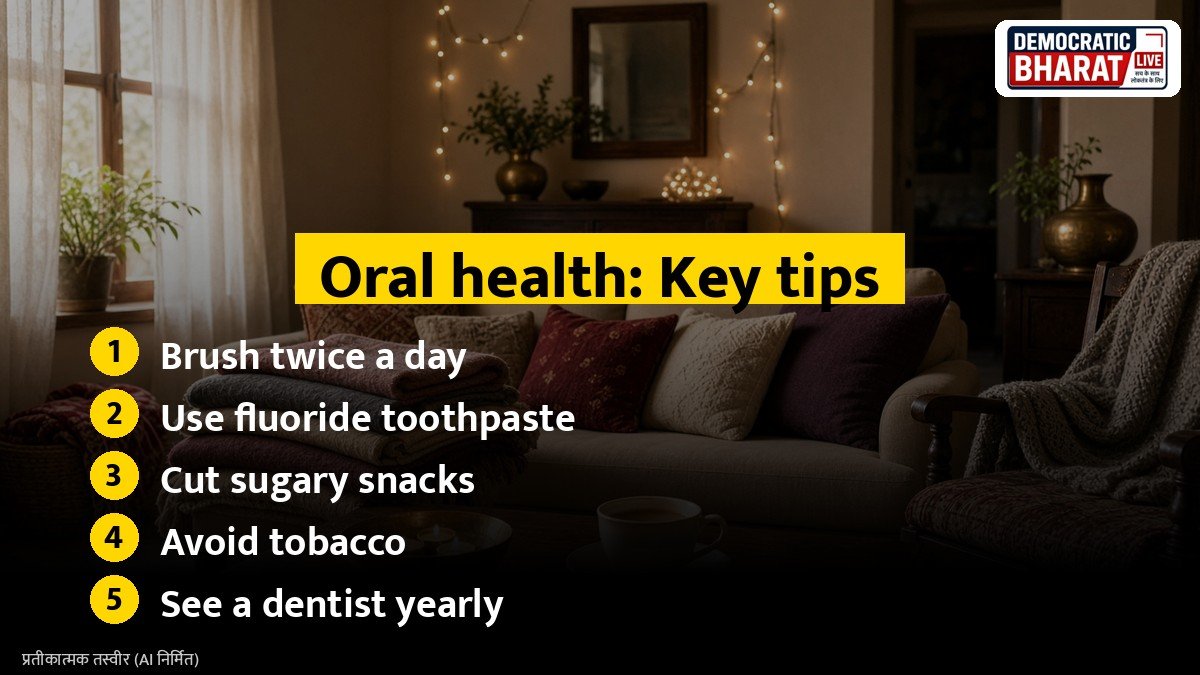
Brushing twice daily with fluoride toothpaste, cutting sugar and tobacco, and regular dental check ups can prevent most oral diseases.
Disclaimer: This article is for general information only and is not a substitute for medical advice. Consult a qualified doctor before starting any treatment or if you have symptoms.
Source / स्रोत: WHO Global Oral Health Status Report 2022, National Oral Health Programme, MoHFW