Carrot is one of the most popular winter vegetables in India, used in salads, cooking and the famous gajar halwa. It is a good cash crop for farmers near towns. Here is a general guide.
Types of carrot
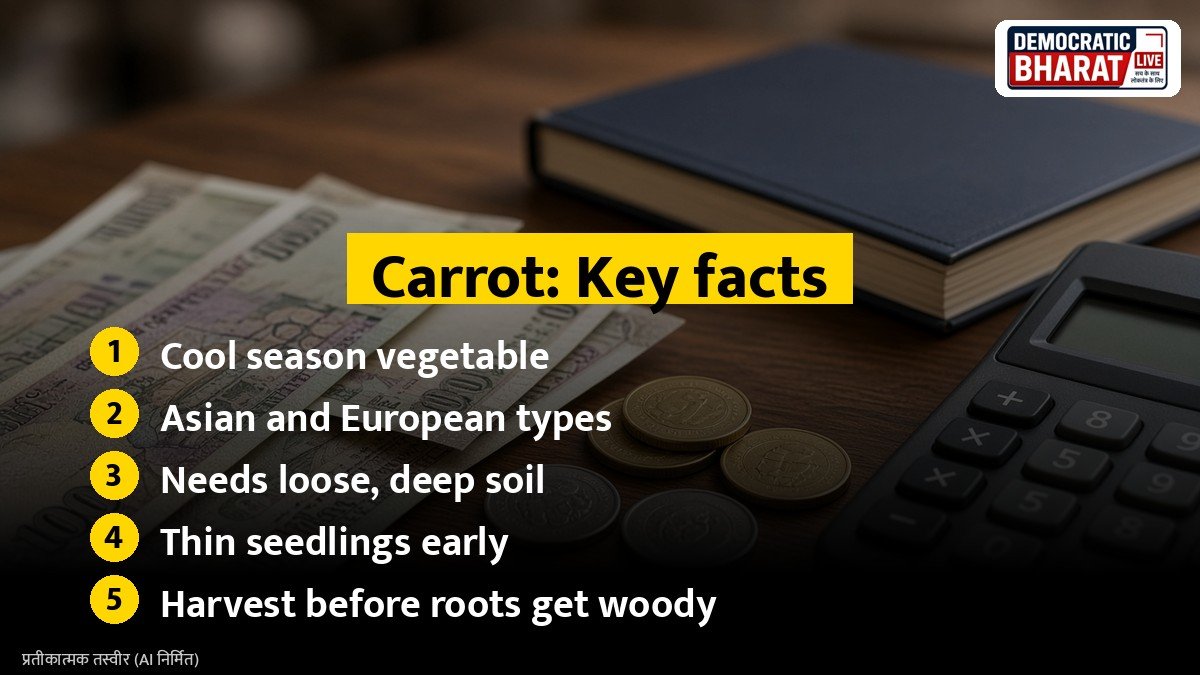
- **Asian or tropical types:** usually red and suited to the plains. They are sown earlier, from around August to October, and tolerate warmer temperatures. Varieties like Pusa Rudhira and Pusa Kesar were developed by ICAR-IARI.
- **European or temperate types:** usually orange, sown later in the plains in winter, or in hill areas. They need cooler temperatures for good colour.
Choose varieties recommended for your area by the Krishi Vigyan Kendra.
Soil and field preparation
- Carrots need deep, loose, well drained sandy loam or loam soil so roots can grow straight.
- Heavy clay or stony soil can cause forked or misshapen roots.
- Plough deeply and break clods well. Raised beds or ridges help drainage.
- Add well rotted farmyard manure. Fresh manure can cause forked roots.
Sowing
- Sow seeds in rows on ridges or beds at the recommended spacing.
- Seeds are small, so mix them with fine sand for even sowing.
- Cover lightly with soil and keep the soil moist for good germination, which can take one to two weeks.
Also Read: Mustard Farming Guide for Rabi: Sowing Time, Seed Rate, Irrigation and Pest Control Tips | Linseed (Alsi) Farming Guide: Sowing Time, Varieties, Irrigation and Care for a Rabi Oilseed
Thinning
When seedlings are a few centimetres tall, thin them out so that plants have enough space. Crowded plants give thin, small roots.
Fertiliser
Use fertilisers as per the Soil Health Card. Too much nitrogen can cause leafy growth and poor roots.
Irrigation
Give light, regular irrigation to keep the soil evenly moist. Uneven watering, especially heavy irrigation after a dry spell, can cause roots to crack.
Weed and pest care
- Remove weeds early, as young carrot plants grow slowly.
- Watch for pests like aphids and diseases like leaf blight.
- Use integrated pest management and spray only on expert advice.
Earthing up
Cover exposed tops of roots with soil to prevent green shoulders, which reduce market value.
Harvest
Harvest when roots reach marketable size, usually about three months after sowing, depending on variety. Do not delay too long, as roots can become woody or crack. Loosen the soil and pull gently.
Marketing
Wash, grade and pack carrots for better prices. Check rates on Agmarknet or e-NAM, and supply directly to nearby markets or retailers.
Advice for farmers
Before sowing, selling or storing your crop, check the latest information with your district agriculture department, Krishi Vigyan Kendra or mandi committee.
Bottom line
Loose, deep soil, the right variety, timely thinning and even irrigation are the secrets of a good carrot crop.
Source / स्रोत: ICAR Indian Agricultural Research Institute, National Horticulture Board