PM SHRI, short for PM Schools for Rising India, is a central scheme to upgrade existing government schools into model schools that show the ideas of the National Education Policy (NEP) 2020. Here is how it works.
About the scheme
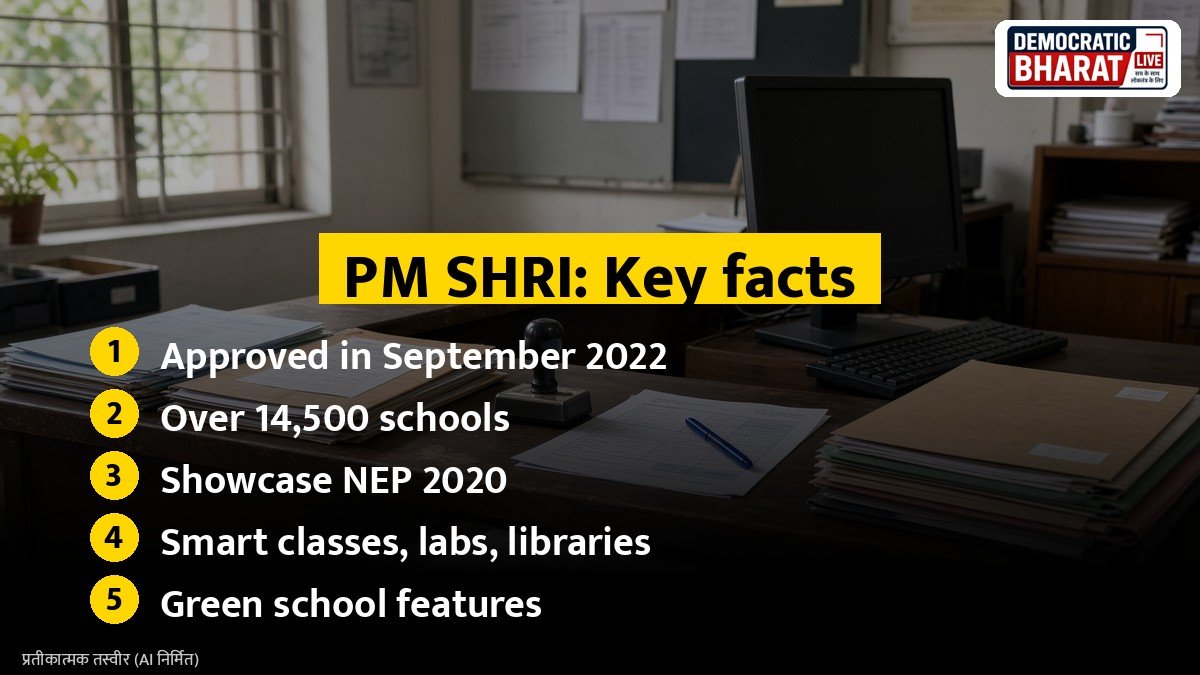
The Union Cabinet approved PM SHRI in September 2022. It aims to develop more than 14,500 schools run by the central government, state governments, Union Territories and local bodies, including Kendriya Vidyalayas and Jawahar Navodaya Vidyalayas. The scheme was approved for five years, from 2022-23 to 2026-27, with a total cost of about Rs 27,360 crore, including a central share of about Rs 18,128 crore.
Aims
- Showcase the implementation of NEP 2020
- Provide high quality, inclusive education
- Act as model schools that mentor other schools nearby
- Build schools that are equitable, joyful and child centred
What is upgraded
- Smart classrooms and digital libraries
- Science labs, ICT labs and tinkering labs
- Sports facilities and art rooms
- Vocational education and skill labs
- Teacher training and leadership development
- Learning based on experience, play and inquiry
- Assessment focused on concepts and skills rather than rote learning
Also Read: Beti Bachao Beti Padhao Explained: Aims, What the Scheme Does and Why There Is No Cash Benefit | PM Vishwakarma Yojana: 18 Trades Covered, Rs 15,000 Toolkit Aid and Loan up to Rs 3 Lakh at 5 Percent
Green schools
PM SHRI schools are to be developed as green schools, with features like solar panels, LED lights, nutrition gardens, waste management, plastic free campuses, water conservation and rainwater harvesting.
How schools are chosen
Schools were selected through a challenge method:
- States and UTs signed an agreement with the Ministry of Education to implement NEP 2020.
- Eligible schools applied online on the PM SHRI portal.
- Schools that met minimum benchmarks were assessed by states and verified.
- A maximum of two schools per block or urban local body were selected, one at the elementary level and one at the secondary level, in most cases.
Quality monitoring
A School Quality Assessment Framework is used to monitor progress. Schools are expected to show better learning outcomes over time.
For parents and students
Admission to PM SHRI schools follows the normal admission rules of the school, such as Kendriya Vidyalaya or state government school rules. There is no separate application to the scheme for students.
After the scheme period
States and UTs are expected to maintain the standards achieved by these schools after the scheme ends.
Bottom line
PM SHRI is upgrading thousands of government schools into model schools with modern facilities, green features and NEP based teaching.
Source / स्रोत: PM SHRI portal, Ministry of Education, Press Information Bureau