Inflation is the rate at which prices of goods and services rise over time. In India, the main measure of retail inflation is the Consumer Price Index (CPI). Here is how it works and why it matters for your budget.
What is CPI
The CPI tracks changes in the prices of a fixed basket of goods and services that households usually buy, such as food, fuel, clothing, housing, transport, health and education. When the index rises, it means the cost of living has gone up.
Who releases it
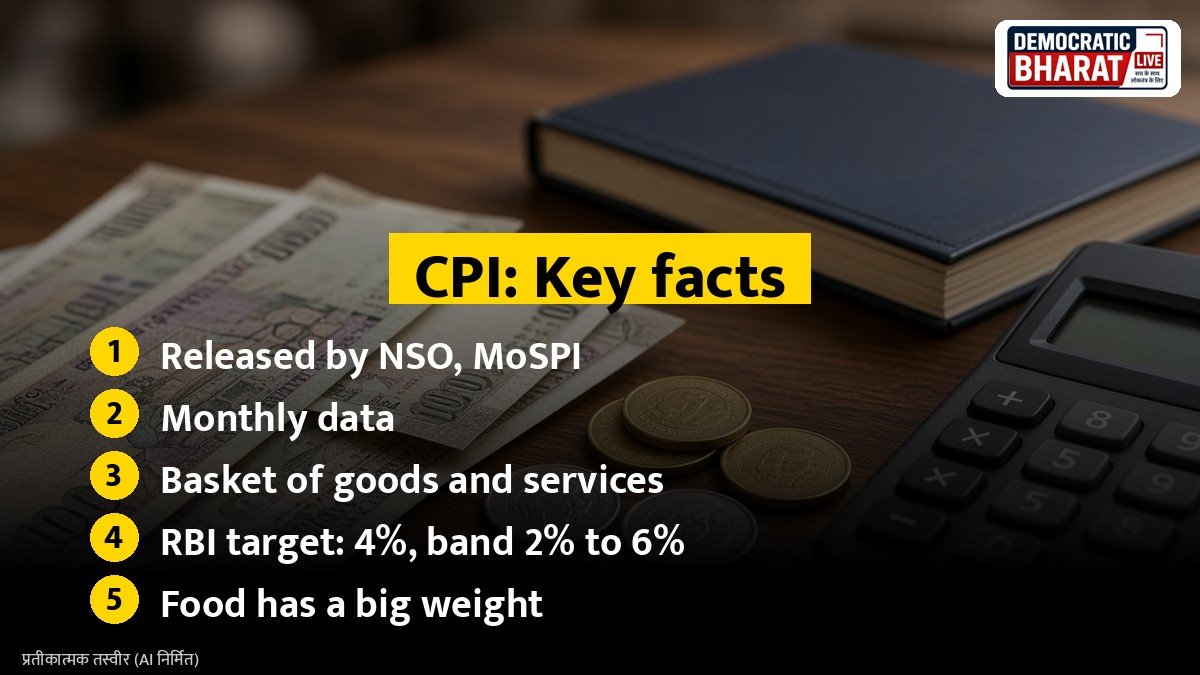
The National Statistics Office (NSO) under the Ministry of Statistics and Programme Implementation (MoSPI) releases CPI data every month, usually around the 12th. It publishes separate indices for rural, urban and combined India.
How it is measured
- Prices of items in the basket are collected from markets in selected towns and villages across the country.
- Each item has a weight based on how much households spend on it, taken from household consumption surveys.
- The index is calculated against a base year, which is given a value of 100.
- The inflation rate is the percentage change in the index compared with the same month a year earlier.
MoSPI revises the base year and the basket from time to time to reflect changes in what people buy.
Also Read: How to Check Your Credit Score Free in India and 7 Ways to Improve It Before Taking a Loan | PPF Account Rules: Deposit Limit, 15 Year Lock In, Loan, Partial Withdrawal and Extension Explained
Food matters a lot
Food and beverages carry a large weight in the CPI basket. That is why changes in prices of vegetables, pulses, cereals, milk and edible oils have a big effect on the inflation figure. Sharp rises in tomato, onion or potato prices often push up headline inflation.
Core inflation
Economists also look at core inflation, which excludes volatile food and fuel items. It shows the underlying trend of prices.
Why RBI watches CPI
Under the flexible inflation targeting framework, the Reserve Bank of India’s Monetary Policy Committee aims to keep CPI inflation at 4 percent, within a band of 2 percent to 6 percent. If inflation stays above the band, the RBI may raise the repo rate to cool demand. If it is low, the RBI may cut rates to support growth.
How inflation affects you
- **Savings:** if your savings earn less than the inflation rate, their real value falls.
- **Loans:** interest rates on loans often move with the RBI’s response to inflation.
- **Salaries and pensions:** dearness allowance for government employees is linked to an inflation index.
- **Household budget:** rising prices reduce what your money can buy.
WPI and CPI
India also has the Wholesale Price Index (WPI), released by the Commerce Ministry, which tracks prices at the wholesale level. CPI is closer to what consumers pay.
Bottom line
CPI inflation tells you how fast your cost of living is rising. Keeping your savings growing faster than inflation is key to protecting your money.
Source / स्रोत: Ministry of Statistics and Programme Implementation, Reserve Bank of India