Fenugreek, or methi, is grown for its fresh green leaves and for its seeds, which are used as a spice and in medicines. India is the world’s largest producer of fenugreek, with Rajasthan the leading state, followed by states like Madhya Pradesh and Gujarat. Here is a general guide.
Climate and soil
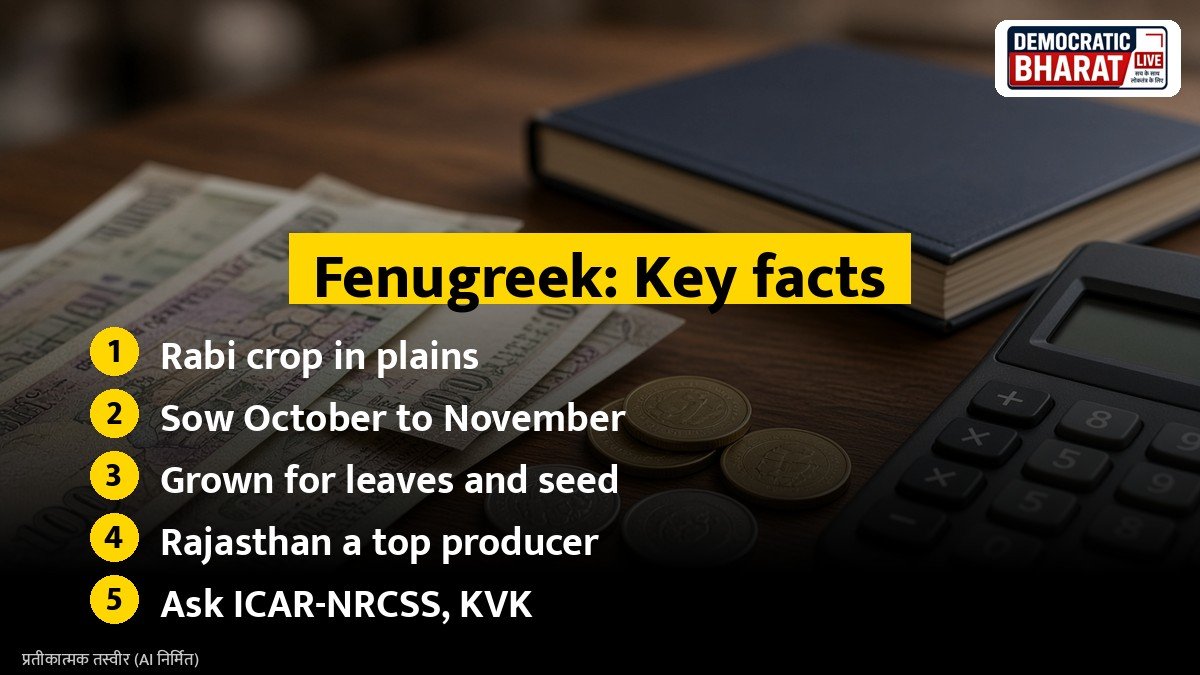
- Fenugreek is a cool season crop grown in the rabi season in the plains.
- It tolerates mild frost better than many crops but is harmed by heavy rain and waterlogging.
- Well drained loam and sandy loam soils rich in organic matter are best.
Sowing time
In most of north and central India, fenugreek is sown from late October to mid November for seed. For green leaves, it can be sown over a longer period and harvested in cuttings. Follow your state agricultural university’s advice for local dates.
Varieties
The ICAR National Research Centre on Seed Spices in Ajmer and state agricultural universities have released improved varieties for seed and leaf yields. Ask your Krishi Vigyan Kendra about varieties suited to your area. Kasuri methi is a special type grown for its aromatic leaves.
Also Read: Mustard Farming Guide for Rabi: Sowing Time, Seed Rate, Irrigation and Pest Control Tips | Wheat Sowing Guide for Rabi Season: Best Time, Seed Rate, Varieties and Tips From ICAR
Seed treatment and sowing
- Treat seed with a recommended fungicide or bio agent to prevent root diseases.
- Treating seed with Rhizobium culture can help nitrogen fixation, as fenugreek is a legume.
- Sow in rows at the recommended spacing and seed rate.
Fertiliser
Apply well rotted farmyard manure before sowing. Use fertilisers as per the Soil Health Card. Being a legume, fenugreek needs less nitrogen than cereals.
Irrigation
Give a light irrigation right after sowing if soil moisture is low. Further irrigations are given at critical stages such as branching, flowering and seed formation, as advised. Avoid over watering.
Weed and pest care
- Keep the field weed free in the first month with hand weeding.
- Watch for aphids, powdery mildew, downy mildew and root rot.
- Use integrated pest management and spray only after expert advice, keeping safe waiting periods for leafy crops.
Harvest
- **Leaves:** first cutting can be taken a few weeks after sowing, and more cuttings follow.
- **Seed:** harvest when pods turn yellow and lower leaves start falling. Dry the plants, thresh and clean the seed, and store it in a dry place.
Marketing
Fenugreek seed is traded in major spice markets. Check prices on Agmarknet or e-NAM, and consider selling through FPOs. Cleaning and grading can improve prices.
Advice for farmers
Before sowing, selling or storing your crop, check the latest information with your district agriculture department, Krishi Vigyan Kendra or mandi committee.
Bottom line
Fenugreek is a short, low cost rabi crop that can give income from both leaves and seed. Timely sowing and good drainage are key.
Source / स्रोत: ICAR National Research Centre on Seed Spices, Ajmer, Spices Board India