Small injuries and sudden illnesses can happen at any time at home. A well stocked first aid kit helps you respond quickly before you reach a doctor. Agencies like the National Disaster Management Authority (NDMA) and the Indian Red Cross Society advise every family to keep one. Here is a simple checklist.
Basic items
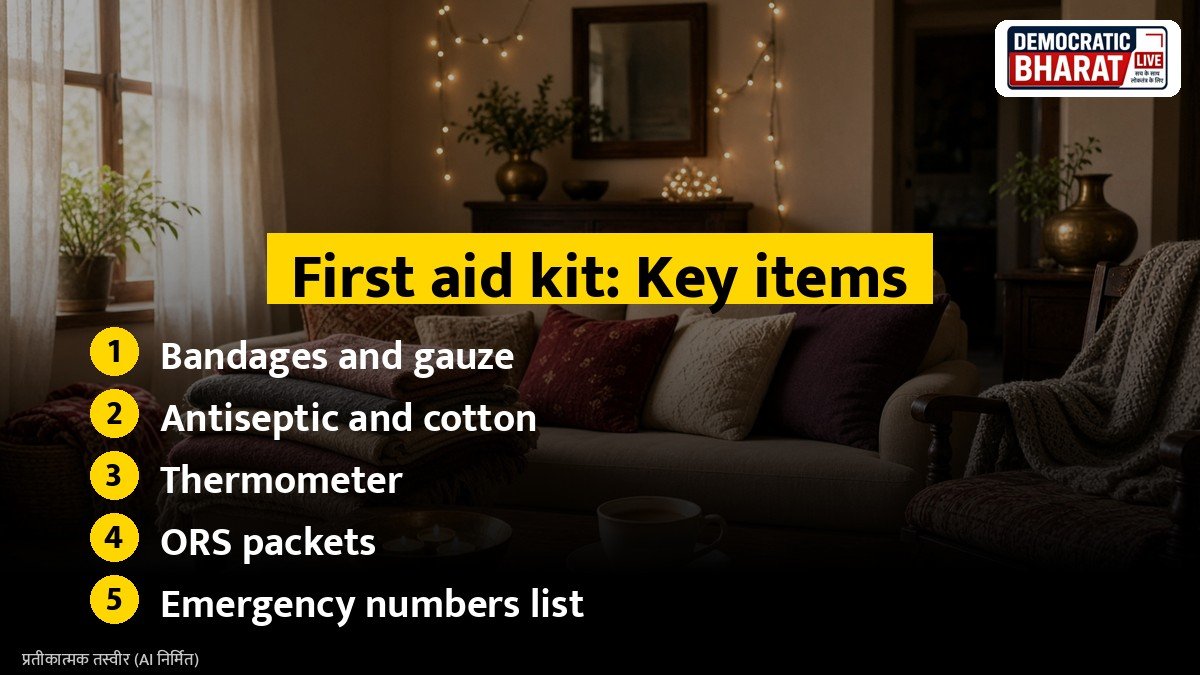
- Adhesive bandages of different sizes
- Sterile gauze pads and rolls
- Crepe bandage for sprains
- Medical adhesive tape
- Cotton wool
- Antiseptic solution or wipes
- Antiseptic cream for minor cuts
- Scissors and tweezers
- Disposable gloves
- Digital thermometer
- Safety pins
- Instant cold pack
- ORS packets for dehydration
- Small torch with spare batteries
Medicines
Keep only medicines that your doctor has advised for your family, such as those for fever or allergies, and any regular medicines for family members. Label them clearly and check expiry dates. Do not give medicines to children without a doctor’s advice on the right dose.
Important information
Keep a card with:
- Emergency numbers: 112 for all emergencies, 108 for ambulance in many states, 101 for fire
- Your family doctor’s number
- Nearest hospital address
- Blood groups and allergies of family members
Also Read: Diwali Safety Tips: How to Use Festive Lights, Extension Boards and Diyas Without Fire Risk | Driving in Fog: Safety Tips for Winter Roads, Lights to Use and What to Avoid
How to store the kit
- Use a strong box or bag that closes well.
- Keep it in a cool, dry place that adults can reach quickly but away from small children.
- Check the kit every three to six months and replace used or expired items.
- Keep a smaller kit in your car and travel bag.
Basic first aid tips
- **Minor cuts:** wash with clean water, apply gentle pressure to stop bleeding, apply antiseptic and cover with a bandage.
- **Burns:** cool the area under running tap water for at least 10 to 20 minutes. Do not apply ice, toothpaste or butter. Cover loosely with a clean cloth and see a doctor for serious burns.
- **Sprains:** rest, apply a cold pack wrapped in cloth, use a crepe bandage and keep the limb raised.
- **Nosebleed:** sit up, lean forward and pinch the soft part of the nose for 10 minutes.
- **Dehydration from diarrhoea:** give ORS solution as per packet instructions and see a doctor if it continues.
Learn first aid
Organisations like the Indian Red Cross Society and St John Ambulance run first aid training courses. Learning basic first aid and CPR can help you save a life.
When to get help
For serious injuries, chest pain, breathing difficulty, heavy bleeding or unconsciousness, call 112 or go to the nearest hospital immediately.
Bottom line
Keep a basic first aid kit at home, check it regularly and learn simple first aid steps so you can act fast in an emergency.
Source / स्रोत: National Disaster Management Authority, Indian Red Cross Society