
A home loan is one of the biggest financial commitments for most families. Understanding how your EMI works can help you choose the right loan and save lakhs in interest. Here is a simple guide.
What is an EMI
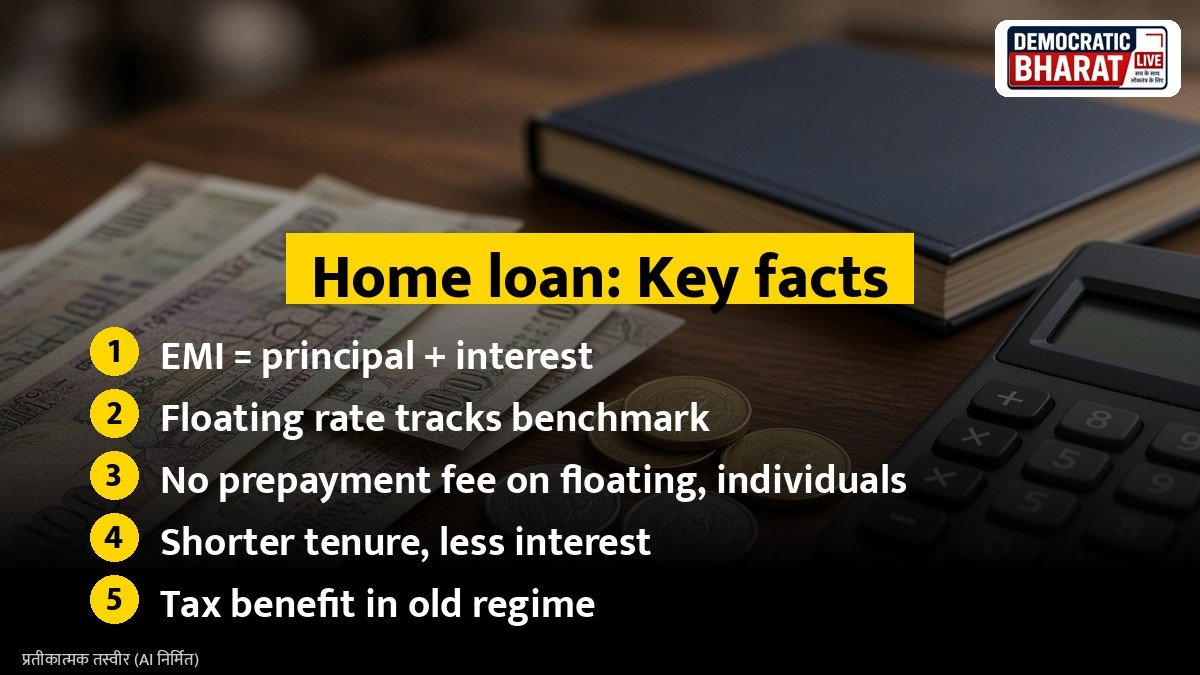
An Equated Monthly Instalment (EMI) is the fixed amount you pay every month to repay the loan. It includes two parts:
- **Interest** on the outstanding loan
- **Principal** repayment
In the early years, most of the EMI goes towards interest. Over time, the principal part grows.
How EMI is calculated
Banks use a standard formula based on three factors:
- Loan amount
- Interest rate
- Tenure in months
A higher loan amount or interest rate raises the EMI, while a longer tenure lowers the EMI but increases total interest paid. Online EMI calculators on bank websites show the full schedule.
Floating and fixed rates
- **Floating rate:** changes with an external benchmark, often the RBI repo rate. When the benchmark falls, your rate falls, and vice versa.
- **Fixed rate:** stays the same for a set period, but is usually higher at the start.
When floating rates change, banks usually adjust the tenure first and keep the EMI the same. RBI rules require lenders to inform borrowers and give them options to change the EMI or tenure, or to switch to a fixed rate.
Also Read: Post Office RD Explained: Minimum Deposit, Interest, Loan, Premature Closure and How to Open | How to Check Your Credit Score Free in India and 7 Ways to Improve It Before Taking a Loan
Prepayment
Under RBI rules, banks and housing finance companies cannot charge prepayment or foreclosure penalties on floating rate home loans taken by individuals for non business purposes. Making part prepayments early in the loan can reduce interest sharply.
Tips to save on interest
- Make a higher down payment to borrow less.
- Choose the shortest tenure you can comfortably afford.
- Prepay whenever you get a bonus or extra income.
- Increase your EMI a little each year as income grows.
- Compare lenders and consider a balance transfer if another lender offers a much lower rate, after counting fees.
- Keep a good credit score to get better rates.
Tax benefits
Under the old tax regime, you can claim up to Rs 2 lakh a year for interest on a self occupied home loan under Section 24(b), and up to Rs 1.5 lakh for principal repayment under Section 80C, along with other eligible items. The new regime does not allow these deductions for a self occupied house.
Before you sign
- Read the loan agreement and Key Facts Statement.
- Check processing fees, insurance and other charges.
- Keep EMIs within a safe share of your monthly income.
Bottom line
Know how your EMI is split, track rate changes and prepay when possible to cut your total interest.
Source / स्रोत: Reserve Bank of India, Income Tax Department