In recent years, many people in India have lost money to a fraud called digital arrest. Scammers pose as police, CBI, customs, narcotics or other officials on video calls, claim the victim is involved in a crime, and keep them under so called digital arrest until they pay. Here is how to protect yourself.
There is no such thing as digital arrest
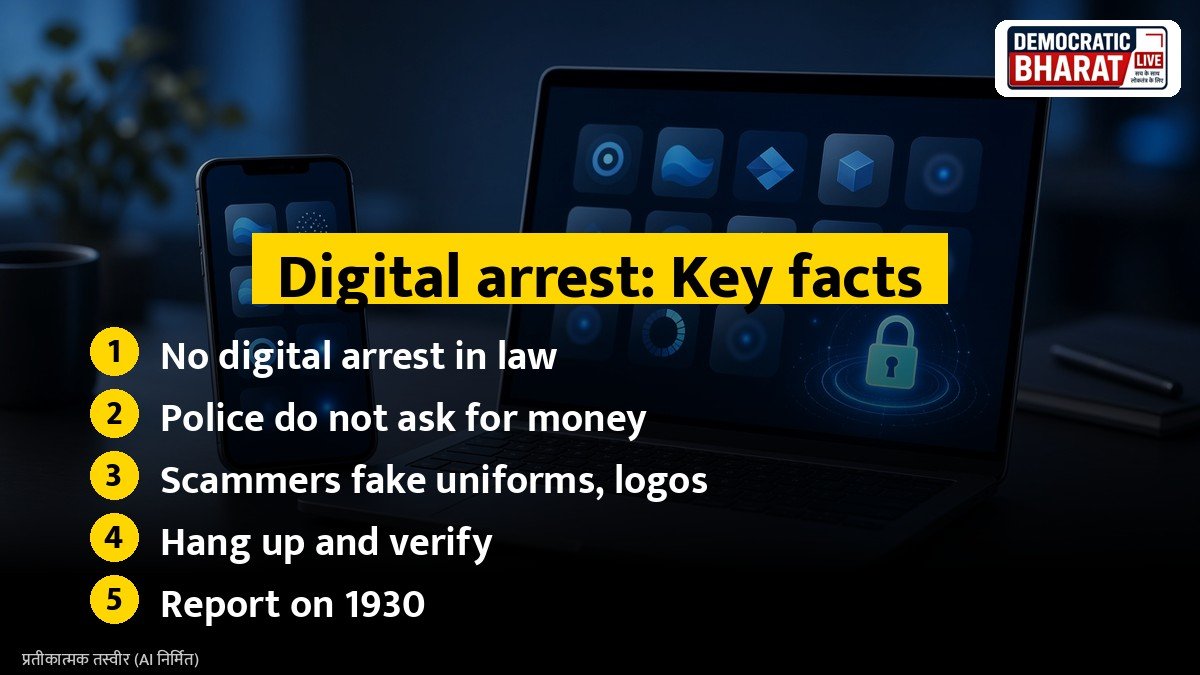
Indian law does not have any provision for arresting someone over a video call. Police and investigating agencies do not ask people to stay on video calls, and they do not demand money to settle cases. The Indian Cyber Crime Coordination Centre (I4C) under the Ministry of Home Affairs has issued repeated public advisories on this scam. Prime Minister Narendra Modi also warned about it in his Mann Ki Baat radio programme in October 2024.
How the scam works
- The victim gets a call saying a parcel in their name has drugs or fake passports, or their Aadhaar or phone number is linked to money laundering.
- The call is transferred to a fake police officer or CBI official, often on a video call.
- The scammers show fake uniforms, police station backgrounds, ID cards and court orders.
- The victim is told not to tell anyone and to stay on the call.
- They are asked to transfer money to a safe account for verification, promising it will be returned.
The money goes to mule accounts and is quickly moved.
Warning signs
- A caller says you are under arrest over a phone or video call
- Pressure to keep the call secret from family
- Threats of immediate arrest
- Requests to transfer money, share OTPs or install apps
- Official looking documents sent on WhatsApp
Also Read: Diwali Safety Tips: How to Use Festive Lights, Extension Boards and Diyas Without Fire Risk | Cyber Fraud: How to Report It on Helpline 1930 Within the Golden Hour and Protect Yourself From Common Scams
What to do
- Do not panic. Hang up.
- Do not share personal or bank details.
- Verify by calling your local police station directly using a number you find yourself.
- Talk to family members.
- Do not install screen sharing or remote access apps.
If you have lost money
- Call the cyber crime helpline 1930 immediately. Quick reporting can help freeze money in the fraudster’s account.
- Report on the National Cyber Crime Reporting Portal, cybercrime.gov.in.
- Inform your bank.
- You can also report suspicious numbers using the Chakshu facility on Sanchar Saathi.
Who is targeted
Scammers often target senior citizens, professionals and people who live alone, but anyone can be a victim. Share this information with elderly relatives.
Bottom line
Real police never arrest anyone on a video call or ask for money to clear your name. Hang up, verify and report on 1930.
Source / स्रोत: National Cyber Crime Reporting Portal, Indian Cyber Crime Coordination Centre (I4C)