The Natyashastra is an ancient Indian text on the performing arts, covering drama, dance, music, stagecraft and aesthetics. It is attributed to the sage Bharata Muni and is often described as the foundation of Indian classical arts. Here is what it is about.
Date and authorship
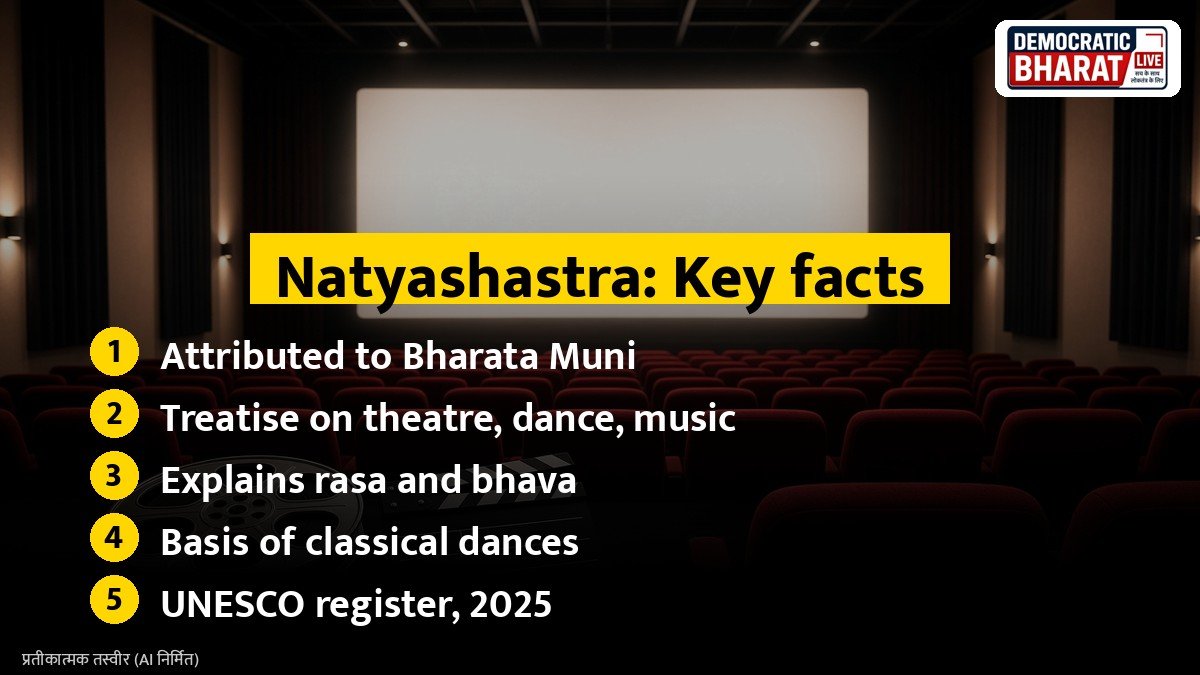
The Natyashastra is traditionally attributed to Bharata Muni. Scholars generally date the text to roughly between 200 BCE and 200 CE, though it may have been compiled over time. It is written in Sanskrit and has around 36 chapters, with some versions having 37.
The story of its origin
According to tradition, the gods asked Lord Brahma for a form of entertainment that could be seen and heard by all. Brahma created the Natya Veda, a fifth Veda, drawing words from the Rigveda, music from the Samaveda, gestures from the Yajurveda and emotions from the Atharvaveda. He gave it to Bharata, who taught it to his sons and performed the first play.
What it covers
- Theatre architecture and stage design
- Acting, including movements of the body, hands, eyes and face
- Dance, including the 108 karanas, or basic dance units
- Music, including scales, instruments and rhythm
- Costumes, make up and props
- Types of plays and their structure
- The training and duties of performers
Also Read: CBFC Certificate Explained: What U, UA 7+, UA 13+, UA 16+ and A Mean for a Film | Indian Classical Dance Forms: The Eight Styles Recognised by Sangeet Natak Akademi and Where They Come From
The theory of rasa
The Natyashastra’s most famous idea is rasa, the aesthetic experience or emotion felt by the audience. It describes how rasa arises from the combination of bhava (emotions shown by the actor) with their causes and expressions.
The text lists eight rasas:
- Shringara: love
- Hasya: humour
- Karuna: compassion or sorrow
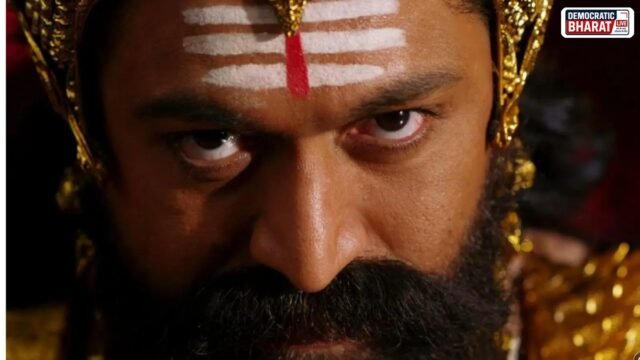
- Raudra: anger
- Veera: heroism
- Bhayanaka: fear
- Bibhatsa: disgust
- Adbhuta: wonder
Later scholars, especially Abhinavagupta, discussed a ninth rasa, Shanta, meaning peace, which gave the concept of navarasa.
Influence
The Natyashastra has shaped Indian classical dance forms like Bharatanatyam, Kathakali, Kuchipudi and Odissi, and classical theatre such as Kutiyattam. Its ideas on rasa influenced Indian poetry, music, painting and even modern cinema.
UNESCO recognition
In April 2025, manuscripts of the Natyashastra and the Bhagavad Gita were added to UNESCO’s Memory of the World International Register, which recognises documentary heritage of global importance. The Ministry of Culture welcomed the inscription.
Bottom line
The Natyashastra is one of the world’s oldest texts on performing arts. Its rasa theory still shapes how Indian art moves audiences.
Source / स्रोत: Ministry of Culture, UNESCO Memory of the World