Beekeeping, or apiculture, is a low cost way for farmers to earn extra income from honey and other products while improving the yield of crops through better pollination. Here is how to get started.
Benefits
- **Honey income:** honey can be sold locally or to processors.
- **Other products:** beeswax, pollen, propolis and royal jelly.
- **Better yields:** bees pollinate crops such as mustard, sunflower, fruits and vegetables, which can increase yields and quality.
- **Low land need:** bee boxes can be placed on field bunds or orchards.
Bee species used in India
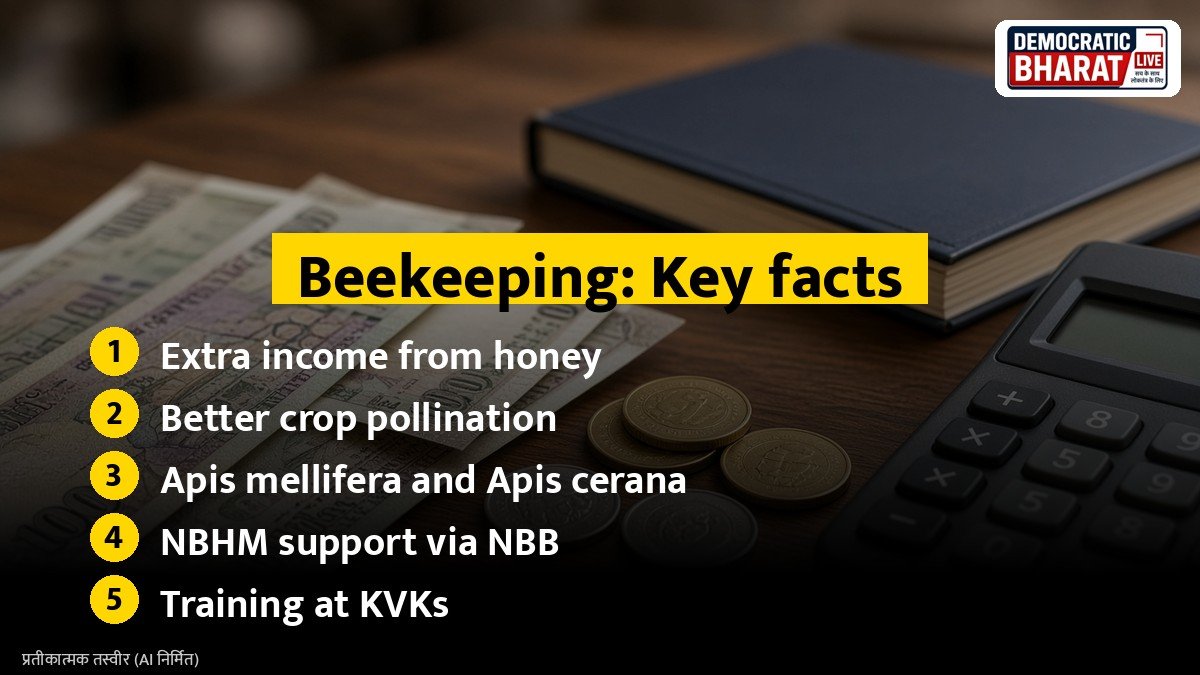
- **Apis mellifera (Italian bee):** the most common for commercial beekeeping, as it gives more honey and adapts to boxes.
- **Apis cerana indica (Indian bee):** native, suited to hilly and southern regions, gives less honey but is hardy.
- **Rock bees and little bees** are wild and not kept in boxes. Stingless bees are kept in some southern states.
How to start
- Get training from a Krishi Vigyan Kendra, state horticulture department or the National Bee Board network.
- Start small with a few bee boxes with colonies from a registered supplier.
- Place boxes in a shaded, dry place near flowering crops and a water source.
- Inspect colonies regularly for disease, pests and queen health.
- Move boxes to follow flowering seasons, which is called migratory beekeeping.
- Harvest honey with a honey extractor without damaging the comb.
Also Read: Stubble Burning Alternatives: Crop Residue Management Options, Machines and Support for Farmers | eNAM Registration for Farmers: How to Sell Crops Online on the National Agriculture Market
Care tips
- Avoid spraying pesticides when crops are in bloom. If spraying is needed, do it in the evening and inform beekeepers nearby.
- Protect colonies from ants, wax moths and mites.
- Feed sugar syrup in lean seasons when flowers are few, as advised.
Government support
The National Beekeeping and Honey Mission (NBHM) was approved in 2020 under the Atmanirbhar Bharat package, as part of the push for a Sweet Revolution. It is implemented through the National Bee Board. It supports training, bee colonies and boxes, honey testing labs, processing units and marketing. Beekeepers can register on the Madhukranti portal of the National Bee Board for traceability of honey. Support levels and processes depend on current guidelines and states.
Selling honey
Honey must meet FSSAI standards. Selling through FPOs, cooperatives or branded packing improves prices.
Advice for farmers
Before sowing, selling or storing your crop, check the latest information with your district agriculture department, Krishi Vigyan Kendra or mandi committee.
Bottom line
Beekeeping adds income and boosts crop yields. Start with training and a few boxes, and use the National Bee Board network for support and markets.
Source / स्रोत: National Bee Board, Ministry of Agriculture and Farmers Welfare