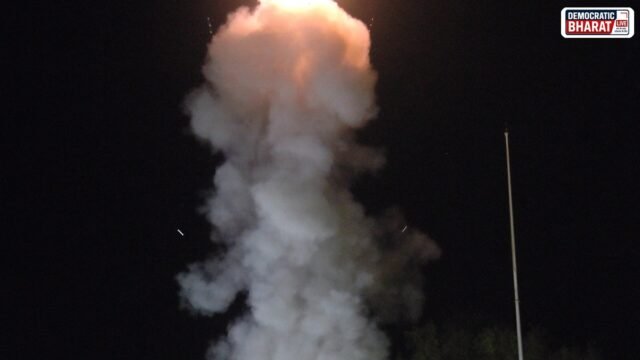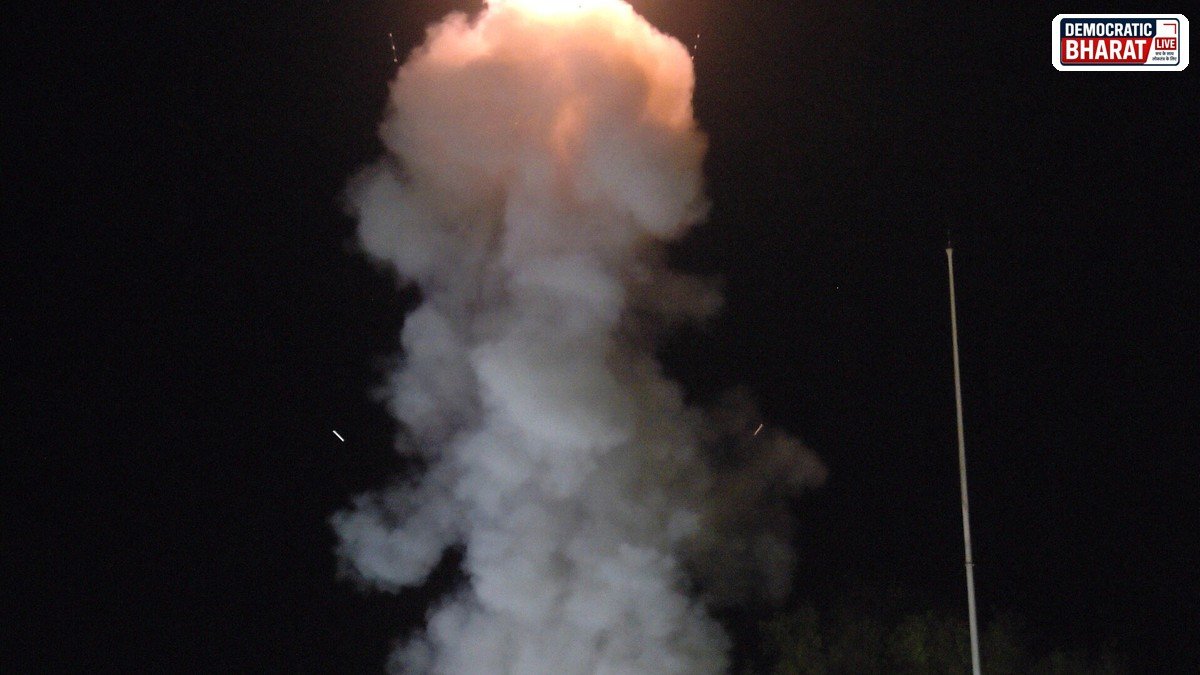
DRDO is actively working to enhance the operational range of India’s indigenous Long Range Anti-Ship Hypersonic Missile (LR-ASHM). Having already successfully demonstrated a range of approximately 1500 kilometers, the organization is now preparing to extend this capability to 3500 kilometers. The LR-ASHM operates on a boost-glide principle, utilizing a solid-fuel rocket booster for initial acceleration before gliding through the atmosphere. The missile is reported to achieve speeds of up to 12348 kilometers per hour, with an average cruise speed around 6174 kilometers per hour. The system is designed to engage both stationary and moving maritime targets with high precision, utilizing indigenous sensors to track vessels during the terminal phase of flight. By leveraging advanced aerodynamic design, the missile executes complex flight paths, including various maneuvers and skips, which significantly complicate efforts by enemy radar and missile defense systems to intercept it.
Capabilities and Technical Specifications
The LR-ASHM represents a significant advancement in indigenous defense technology, utilizing a sophisticated boost-glide architecture. The system initiates its flight using a solid-fuel rocket booster, which provides the necessary thrust to reach hypersonic velocities before the missile transitions into its glide phase. During this phase, it travels through the atmosphere at speeds that reach up to 12348 kilometers per hour, maintaining an average cruise speed of approximately 6174 kilometers per hour. This velocity, combined with the ability to execute complex maneuvers and skips, ensures that the missile remains a formidable challenge for contemporary air defense systems. The missile is equipped with indigenous sensors that are critical during the terminal phase of the flight, allowing it to lock onto and track moving maritime vessels with high accuracy. These technical attributes ensure that the weapon can effectively engage both stationary targets and mobile maritime assets, providing a versatile option for long-range precision strikes.
Strategic Advantages and Maritime Security
The strategic implications of extending the range of the LR-ASHM to 3500 kilometers are substantial for India’s maritime defense posture. By increasing the reach of this hypersonic platform, the Indian armed forces will gain the ability to exercise maritime denial across a much larger portion of the Indian Ocean region. This capability allows for the engagement of adversary warships, aircraft carrier groups, and other critical maritime infrastructure from significantly greater distances than previously possible. Furthermore, the LR-ASHM is designed to operate in tandem with existing supersonic assets, such as the BrahMos missile, creating a multi-layered strike architecture. This combination of different missile types provides a robust defensive and offensive framework that enhances India’s overall strategic balance in the region. The ability to project force at such ranges serves as a powerful deterrent, influencing regional security dynamics and ensuring that the nation maintains a strong, self-reliant defense capability.
Development Path and Production Timeline
A key finding in the development of the LR-ASHM is that the proposed range extension does not require a complete redesign of the missile’s hardware. The booster stages used in the LR-ASHM are derived from the K-4 submarine-launched ballistic missile, which is already capable of achieving a 3500-kilometer range. Therefore, the current effort focuses on optimizing the existing design through software enhancements and the implementation of new trajectory profiles. This approach allows DRDO to unlock latent performance potential without extensive structural overhauls. Following successful flight tests conducted in 2023, 2024, and May 2026, which confirmed the 1500-kilometer capability, the organization has scheduled 2 to 3 additional test flights to validate the extended range performance. Once these trials successfully verify the new parameters, the project will move toward formal production clearance, with the system projected to enter the production phase by the 2028-29 period.
Multi-Service Utility and National Defense
The utility of the LR-ASHM extends beyond its primary maritime application, as DRDO has proposed the system for integration across all three branches of the Indian armed forces. Plans are underway to develop a ground-attack variant, which would enable the military to engage land-based targets from long distances, further expanding the system’s operational scope. By adapting the technology for the Indian Army and the Indian Air Force, the nation aims to equip its military with a powerful, conventional, long-range strike capability. This development highlights India’s progress in achieving self-reliance in the defense sector and its commitment to indigenous technological growth. As the LR-ASHM moves toward production, it is expected to become an essential component of India’s traditional strike arsenal, playing a pivotal role in maintaining regional stability and safeguarding national security interests in the years to come.
Source / स्रोत: Aaj Tak