
High blood pressure, or hypertension, is often called a silent killer because most people feel no symptoms until it causes a heart attack, stroke or kidney damage. Knowing your numbers is the first step to staying safe. Here is a simple guide.
What the numbers mean
Blood pressure is written as two numbers, such as 120/80 mmHg.
- Systolic (top number): the pressure in your arteries when the heart beats.
- Diastolic (bottom number): the pressure when the heart rests between beats.
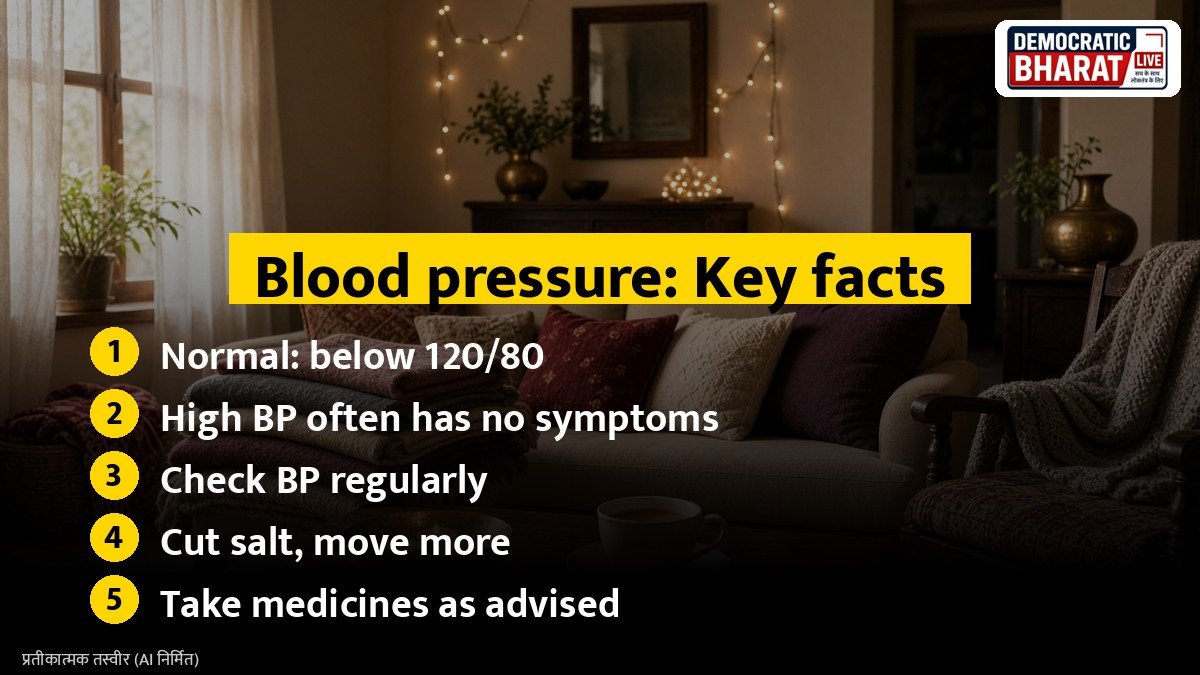
Normal and high ranges
- Normal: below 120/80 mmHg.
- Elevated or high normal: readings between normal and the hypertension level.
- Hypertension: generally diagnosed when readings are 140/90 mmHg or higher on repeated checks, as used by the World Health Organization and in Indian programmes. Some international guidelines use a lower cut off of 130/80.
One high reading is not enough for a diagnosis. Doctors confirm it with readings on different days.
How common it is
The World Health Organization estimates that about 1.28 billion adults aged 30 to 79 worldwide have hypertension, and nearly half do not know it. India runs the India Hypertension Control Initiative with ICMR and state governments to screen and treat people at primary health centres.
Also Read: AQI Categories Explained: What Good, Poor, Very Poor and Severe Air Quality Mean for You | Air Purifier Buying Guide: What CADR, HEPA and Room Size Mean Before You Buy One This Winter
Risk factors
- Too much salt in the diet.
- Being overweight and inactive.
- Smoking and alcohol use.
- Stress and poor sleep.
- Family history and older age.
- Diabetes and kidney disease.
Simple steps to control BP
- Cut salt: WHO advises less than 5 grams of salt a day, about one teaspoon, including hidden salt in pickles, papad and packaged food.
- Eat more fruits, vegetables, pulses and whole grains.
- Exercise for at least 150 minutes a week, such as brisk walking.
- Keep a healthy weight.
- Quit tobacco and limit alcohol.
- Sleep well and manage stress.
Dr K Srinath Reddy, cardiologist and founder president of the Public Health Foundation of India, is among the experts who have long urged lower salt intake across the population as a key way to prevent high blood pressure in India.
Checking BP at home
- Rest for five minutes before measuring.
- Sit with your back supported and arm at heart level.
- Use a validated digital machine.
- Note readings and show them to your doctor.
Medicines
If your doctor prescribes medicines, take them daily even if you feel fine. Do not stop them on your own.
Bottom line
Normal blood pressure is below 120/80. Since high BP rarely shows symptoms, regular checks and a low salt, active lifestyle are your best protection.
Disclaimer: This article is for general information only and is not a substitute for medical advice. Consult a qualified doctor before starting any treatment or if you have symptoms.
Source / स्रोत: World Health Organization, Ministry of Health and Family Welfare, Indian Council of Medical Research