Peas are grown in the rabi season across north and central India, both as a green vegetable and as a dry pulse. Being a legume, the crop also improves soil fertility by fixing nitrogen. Here is a simple guide based on advice from agricultural research bodies.
Climate and soil
- Peas need cool weather during growth. Frost at flowering can damage the crop.
- Well drained loam or clay loam soil is best.
- Waterlogging must be avoided, since it causes root rot.
Sowing time
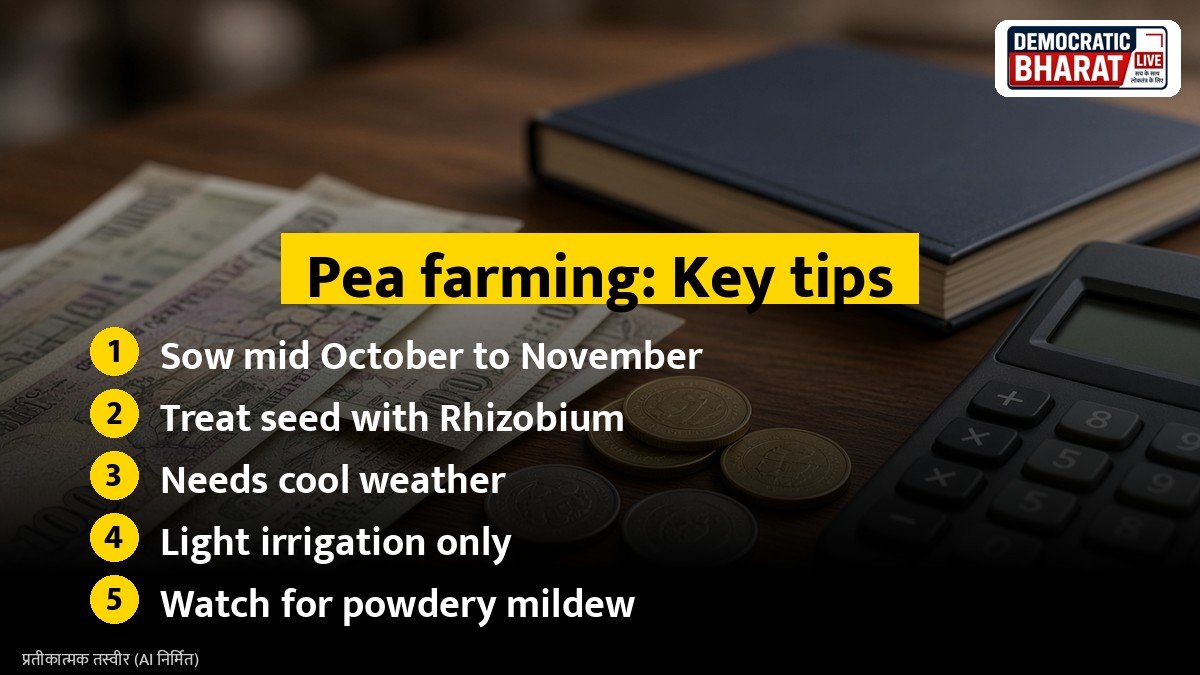
In the plains of north India, peas are generally sown from mid October to mid November. Early sowing in hot weather can lead to disease and poor germination, while very late sowing reduces yield. Follow the dates suggested by your state agricultural university or Krishi Vigyan Kendra (KVK).
Varieties
Varieties are chosen by purpose:
- Early vegetable types, such as Arkel, are popular for green pods.
- Mid season and grain types are chosen for dry pea production.
Choose certified seed of a variety recommended for your region. Your local KVK can advise the best option.
Also Read: Rajma Farming Guide: Sowing Time, Varieties, Fertiliser and Care for Kidney Bean Crops | Linseed (Alsi) Farming Guide: Sowing Time, Varieties, Irrigation and Care for a Rabi Oilseed
Seed treatment
- Treat seed with a recommended fungicide to protect against seed borne diseases.
- Then treat with Rhizobium culture, which helps the plant fix nitrogen from the air.
- Sow the treated seed in the shade soon after treatment.
Fertiliser
Being a legume, peas need less nitrogen than cereals. Apply nitrogen, phosphorus and potash as per a soil test. The Soil Health Card scheme gives farmers a free soil test with fertiliser advice. Adding well rotted farmyard manure improves soil health.
Irrigation
- Peas need light and limited irrigation.
- A pre sowing irrigation helps germination.
- Give water at flowering and pod filling if the soil is dry.
- Heavy irrigation can cause yellowing and root diseases.
Pests and diseases
- Powdery mildew: a white powdery coat on leaves. Grow resistant varieties and spray as advised by experts.
- Rust and wilt: use healthy seed and crop rotation.
- Pod borer and leaf miner: monitor fields and use recommended control measures only when needed.
Harvesting
Green pods are picked when they are well filled and still bright green, usually in several pickings. For dry grain, the crop is harvested when pods turn dry and yellow.
Selling the crop
Check prices on the Agmarknet portal and the e-NAM platform before you sell, and compare nearby mandis. Prices for green peas change quickly with arrivals, so plan pickings with care.
Bottom line
Peas fit well into rabi crop rotations. Timely sowing, seed treatment, light irrigation and disease control are the keys to a good harvest.
Source / स्रोत: Indian Council of Agricultural Research, ICAR Indian Institute of Pulses Research, Ministry of Agriculture and Farmers Welfare