
Vitamin D is called the sunshine vitamin because the skin makes it when exposed to sunlight. Yet many people in India, a country with plenty of sun, have low levels. Here is what you should know.
Why vitamin D matters
- Helps the body absorb calcium and phosphorus for strong bones and teeth.
- Supports muscle function.
- Plays a role in immunity.
Severe deficiency causes rickets in children, with soft and bent bones, and osteomalacia in adults, with bone pain and weakness.
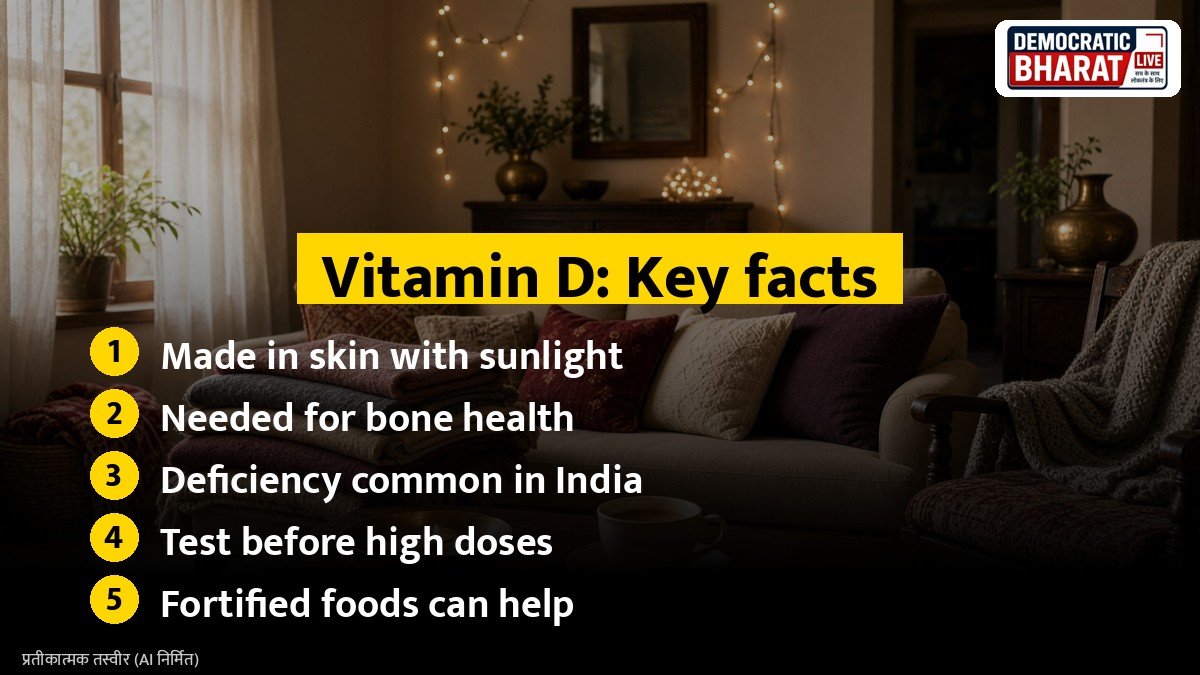
Why deficiency is common in India
- Many people spend most of the day indoors.
- Clothing covers much of the skin.
- Air pollution can reduce the sunlight that reaches the ground.
- Darker skin needs more sun exposure to make the same amount.
- Few Indian foods are naturally rich in vitamin D, especially in vegetarian diets.
Endocrinologists such as Dr Ambrish Mithal have long pointed out that vitamin D deficiency is widespread in India despite abundant sunshine, and have cautioned against taking high doses without medical advice.
Signs to watch for
Many people have no symptoms. When present, they may include:
- Tiredness and low energy.
- Bone or back pain.
- Muscle weakness or cramps.
- Frequent infections.
These signs are common to many conditions, so a test is needed to confirm deficiency.
Also Read: Anaemia in India: Signs, Iron Rich Foods and What ICMR-NIN Guidelines Advise | How Much Added Sugar Is Too Much? What WHO and ICMR-NIN Guidance Says and Easy Ways to Cut Down
Testing
The 25-hydroxy vitamin D blood test measures your vitamin D status. Your doctor will interpret the result and decide whether you need supplements.
Food sources
- Oily fish like salmon, sardines and mackerel.
- Egg yolks.
- Mushrooms exposed to sunlight.
- Fortified foods: FSSAI allows fortification of milk and edible oil with vitamins A and D. Look for the +F logo on packs.
Safe sunlight
Exposing arms and face to sunlight for a short time on most days helps the skin make vitamin D. The right amount depends on skin type, season and location. Avoid sunburn, and do not stay in harsh midday sun for long.
Supplements
- Take vitamin D supplements only on a doctor’s advice.
- Very high doses over long periods can cause toxicity, with high calcium levels that harm the kidneys and heart.
- Do not self medicate with injections or mega doses.
Who is at higher risk
- Elderly people and those who stay indoors.
- People with obesity, kidney or liver disease.
- Pregnant and breastfeeding women.
- Infants who are exclusively breastfed, as advised by doctors.
Bottom line
Vitamin D deficiency is common but manageable. Some daily sunlight, fortified foods and a doctor guided test and treatment plan can keep your bones and muscles healthy.
Disclaimer: This article is for general information only and is not a substitute for medical advice. Consult a qualified doctor before starting any treatment or if you have symptoms.
Source / स्रोत: ICMR National Institute of Nutrition, Food Safety and Standards Authority of India, World Health Organization