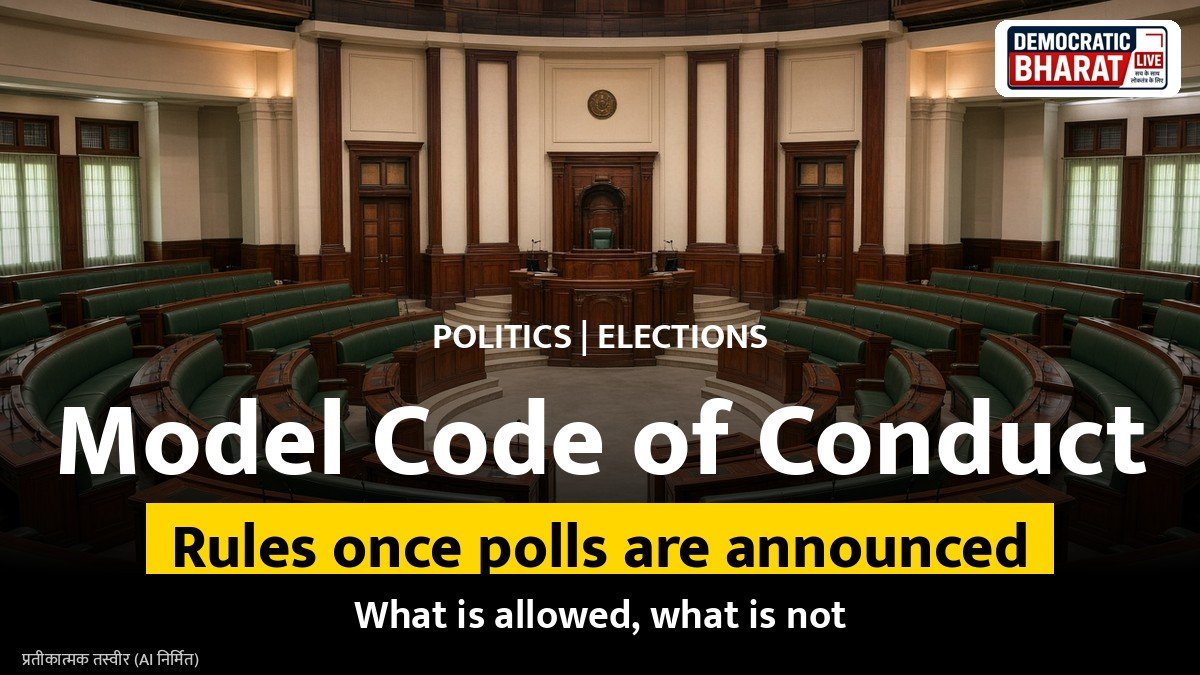
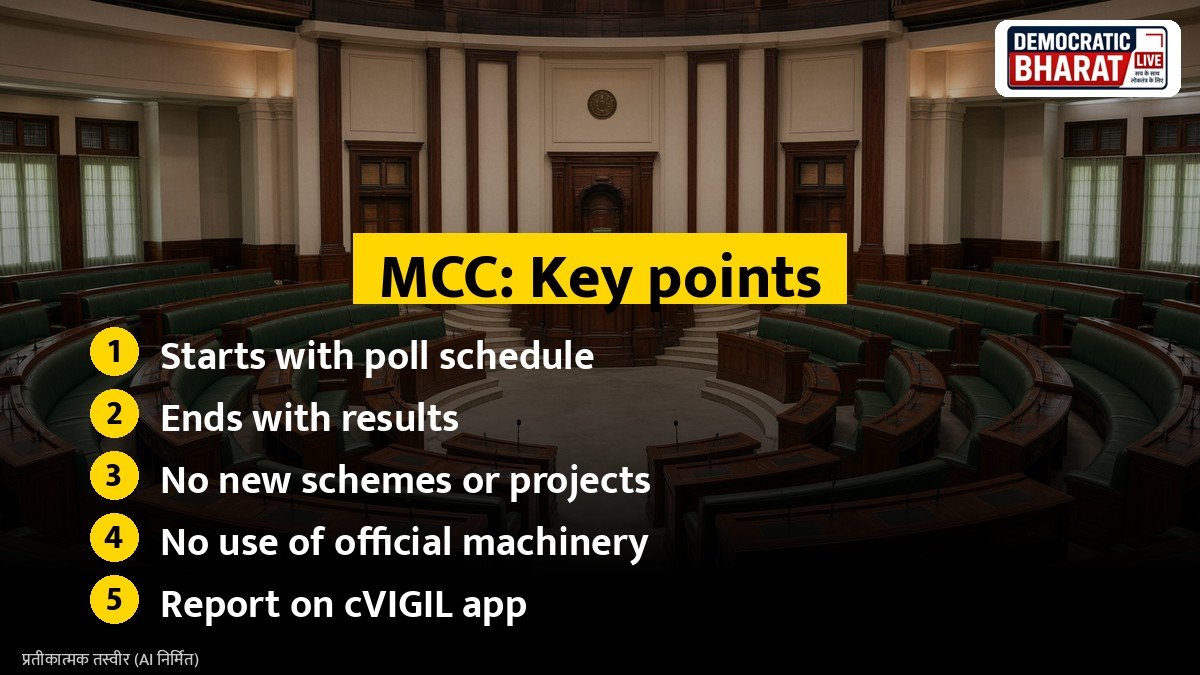
The Model Code of Conduct (MCC) is a set of guidelines issued by the Election Commission of India (ECI) for political parties, candidates and governments during elections. It comes into force the moment the ECI announces the election schedule and stays until the results are declared.
Is it a law
The MCC is not a statute. It evolved through consensus among political parties, starting with Kerala in 1960, and was adopted nationally by the ECI in later years. The ECI enforces it using its powers under Article 324 of the Constitution. Some violations, such as bribery or appeals on religious grounds, are also offences under the Representation of the People Act and the Bharatiya Nyaya Sanhita.
Rules for governments in power
- No new schemes, projects, grants or promises can be announced.
- No foundation stones can be laid for new projects.
- Ministers cannot combine official visits with campaign work or use official vehicles and staff for campaigning.
- Government advertisements at public cost that promote the ruling party are not allowed.
- Transfers and postings of officials connected to the election need ECI approval.
Rules for parties and candidates
- No appeals to caste or communal feelings for votes.
- No use of places of worship for campaigning.
- Criticism must be limited to policies and work, not private lives.
- Permission is needed from local authorities for meetings and processions.
- Bribing, intimidating or impersonating voters is banned.
- Campaigning must stop 48 hours before the end of polling, called the silence period.
Also Read: Anti-Defection Law Explained: What the Tenth Schedule Says and When an MLA or MP Is Disqualified | No-Confidence Motion Explained: How It Works in the Lok Sabha and What Happens if a Government Loses
Polling day
On polling day, parties must cooperate with election officials, avoid serving liquor, and keep camps near booths simple. Only voters and authorised persons may enter polling stations.
How violations are handled
The ECI can issue notices, ban leaders from campaigning for a period, order the removal of material and direct the filing of police cases where needed. Flying squads and static surveillance teams check cash, liquor and freebies.
How citizens can report
Citizens can use the ECI’s cVIGIL app to report violations with a photo or video. The app shares the location, and the ECI aims to act within 100 minutes. You can also call the voter helpline 1950.
Why it matters
The MCC aims to create a level playing field so that the party in power does not get an unfair advantage, and campaigns remain peaceful and fair.
Bottom line
The Model Code of Conduct shapes how elections are fought in India. Once it comes into force, governments go slow on announcements, and voters can report violations on cVIGIL.
Source / स्रोत: Election Commission of India: Model Code of Conduct, cVIGIL, ECI