Garlic is one of India’s most important spice crops, grown mainly in the rabi season in states such as Madhya Pradesh, Rajasthan, Gujarat and Uttar Pradesh. It needs care but can give good returns. Here is a guide based on advice from the ICAR Directorate of Onion and Garlic Research (DOGR) and NHRDF.
Climate and soil
- Garlic needs cool weather during growth and dry, warm weather at maturity.
- Well drained loam soil rich in organic matter is ideal.
- Heavy clay soils lead to small, misshapen bulbs.
Sowing time
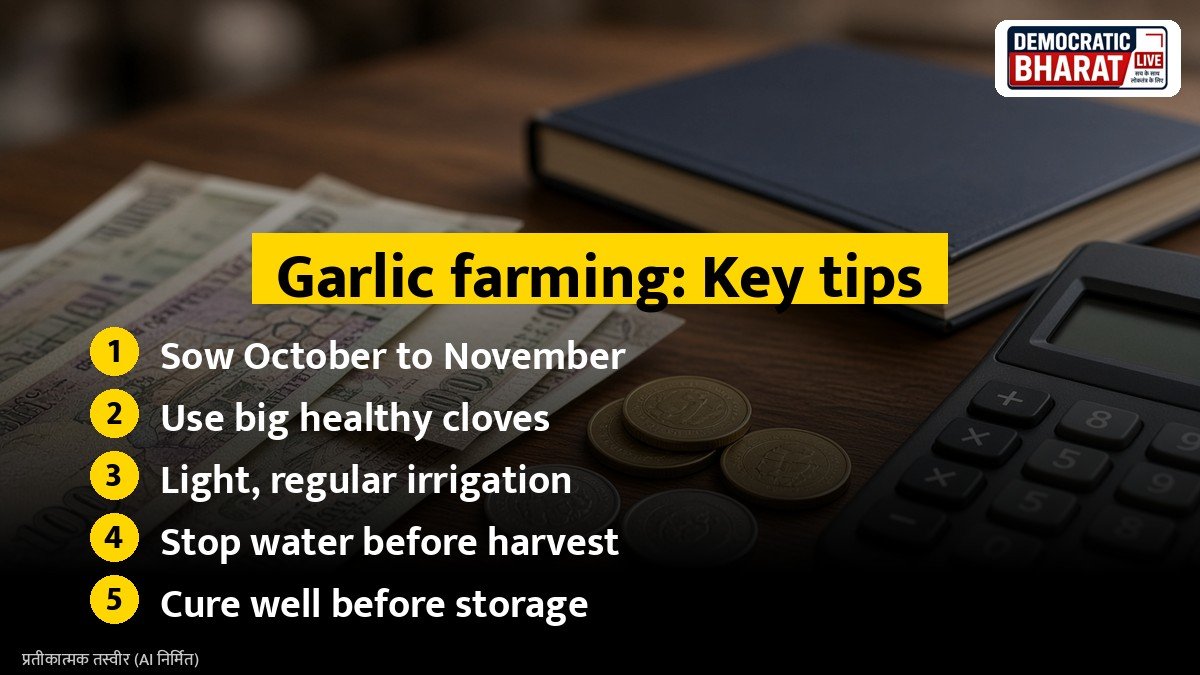
In the plains of north and central India, garlic is generally sown from October to November. In hilly areas, timing differs. Follow the dates given by your state agricultural university or Krishi Vigyan Kendra.
Varieties
- DOGR has released varieties under the Bhima series.
- NHRDF has released varieties under the Agrifound and Yamuna names.
Choose a variety recommended for your region and buy planting material from reliable sources.
Also Read: Mustard Farming Guide for Rabi: Sowing Time, Seed Rate, Irrigation and Pest Control Tips | Linseed (Alsi) Farming Guide: Sowing Time, Varieties, Irrigation and Care for a Rabi Oilseed
Selecting cloves
- Use large, healthy outer cloves for planting.
- Discard small, diseased or damaged cloves.
- Treat cloves with a recommended fungicide before planting.
Planting
Plant cloves upright with the pointed end up, at close spacing in rows, on flat beds or raised beds. Cover lightly with soil.
Manure and fertiliser
Apply well rotted farmyard manure during land preparation. Use fertiliser based on a soil test, with sulphur often recommended for better pungency and quality.
Irrigation
- Give light irrigation right after planting.
- Water at regular intervals depending on soil and weather.
- Avoid water stress during bulb formation.
- Stop irrigation about two to three weeks before harvest.
Drip irrigation helps save water and improve bulb size.
Weeds, pests and diseases
- Garlic grows slowly at first, so early weed control is important.
- Thrips are the main pest.
- Purple blotch and Stemphylium blight can affect leaves in humid weather.
Follow integrated pest management and use only recommended sprays.
Harvest
The crop is usually ready in March or April, when leaves turn yellow and start drying. Pull the plants and dry them in shade for some days.
Curing and storage
- Cure bulbs in a shaded, airy place.
- Store in well ventilated rooms, tied in bundles or in mesh bags.
- Remove damaged bulbs to avoid rot.
Selling the crop
Big garlic mandis like Mandsaur and Neemuch in Madhya Pradesh set price trends. Track rates on Agmarknet and e-NAM before selling.
Bottom line
Healthy cloves, timely sowing, steady irrigation and proper curing are the keys to a good garlic harvest and better prices.
Source / स्रोत: ICAR Directorate of Onion and Garlic Research, National Horticultural Research and Development Foundation, Ministry of Agriculture and Farmers Welfare