Dengue is a viral infection spread by mosquitoes. Cases rise in India during and after the monsoon, often lasting into November. Most people recover with care at home, but some develop severe dengue that needs hospital treatment. Here is what you should know.
How dengue spreads
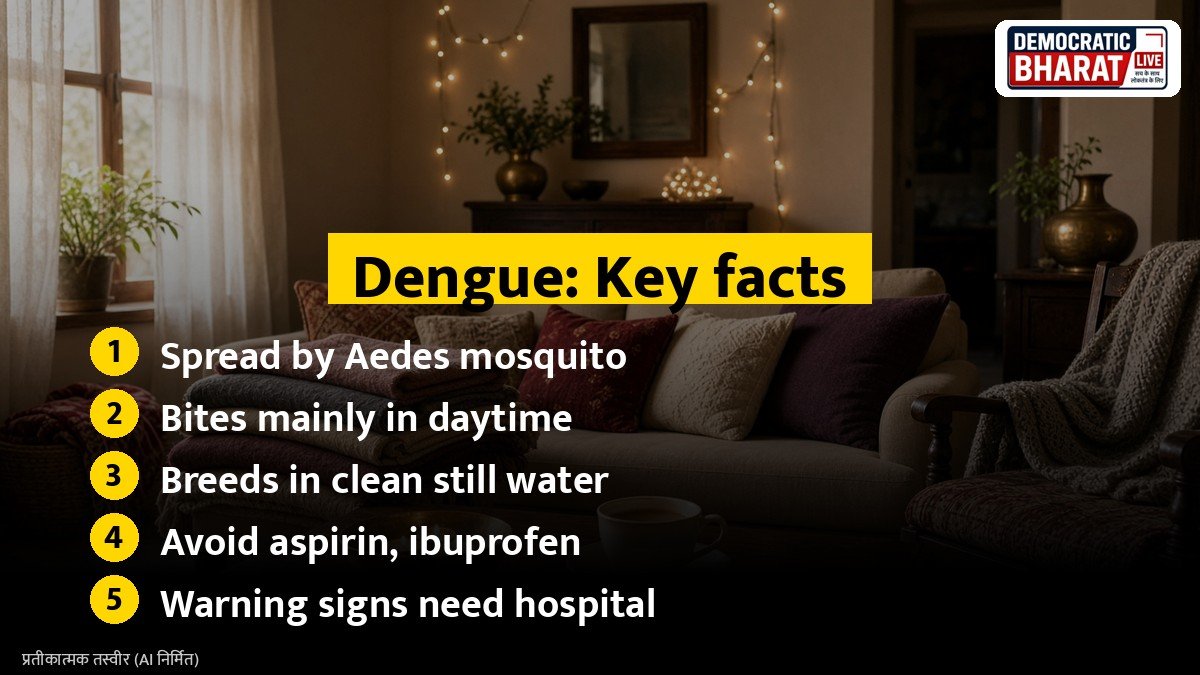
Dengue is spread mainly by the Aedes aegypti mosquito, which bites during the day, especially in the early morning and late afternoon. It breeds in clean, stagnant water in coolers, flower pots, tyres, buckets and water tanks.
Common symptoms
Symptoms usually start four to ten days after a mosquito bite and may include:
- Sudden high fever.
- Severe headache.
- Pain behind the eyes.
- Muscle and joint pain.
- Nausea and vomiting.
- Skin rash.
Warning signs
Severe dengue can develop as the fever comes down, usually between days three and seven. Go to a hospital at once if you notice:
- Severe stomach pain.
- Persistent vomiting.
- Bleeding from gums or nose, or blood in vomit or stool.
- Fast breathing.
- Extreme tiredness, restlessness or confusion.
- Cold, clammy skin.
Also Read: How Much Salt Should You Eat a Day? What WHO and ICMR-NIN Guidelines Say About Daily Salt Intake | Anaemia in India: Signs, Iron Rich Foods and What ICMR-NIN Guidelines Advise
Diagnosis
Blood tests like the NS1 antigen test in the first few days, and antibody tests later, help confirm dengue. Doctors also monitor platelet count and other blood values.
Treatment
- There is no specific antiviral medicine for dengue.
- Rest and drink plenty of fluids like water, ORS, coconut water and soups.
- Paracetamol can be used for fever and pain as advised by a doctor.
- Avoid aspirin, ibuprofen and other painkillers of this kind, as they can raise the risk of bleeding.
- Do not take platelet transfusions or medicines without a doctor’s advice.
Prevention at home
- Empty, clean and dry coolers, pots and containers at least once a week.
- Cover water tanks and drums.
- Remove waste like old tyres and coconut shells where water collects.
- Use mosquito nets, screens and repellents.
- Wear full sleeved clothes during the day.
Vaccine research
The Indian Council of Medical Research (ICMR), headed by Director General Dr Rajiv Bahl, began a phase 3 trial of an indigenous dengue vaccine with Panacea Biotec in 2024. Until a vaccine is approved and available, prevention remains the best protection.
Government programme
The National Center for Vector Borne Diseases Control runs dengue prevention and control activities with states, and National Dengue Day is observed on 16 May to raise awareness.
Bottom line
Stop mosquitoes from breeding, protect yourself from day time bites and watch for warning signs. Early medical care saves lives in severe dengue.
Disclaimer: This article is for general information only and is not a substitute for medical advice. Consult a qualified doctor before starting any treatment or if you have symptoms.
Source / स्रोत: National Center for Vector Borne Diseases Control, Indian Council of Medical Research, World Health Organization