The UN Human Rights Council is the main intergovernmental body within the United Nations that deals with the promotion and protection of human rights around the world. Here is how it works.
History
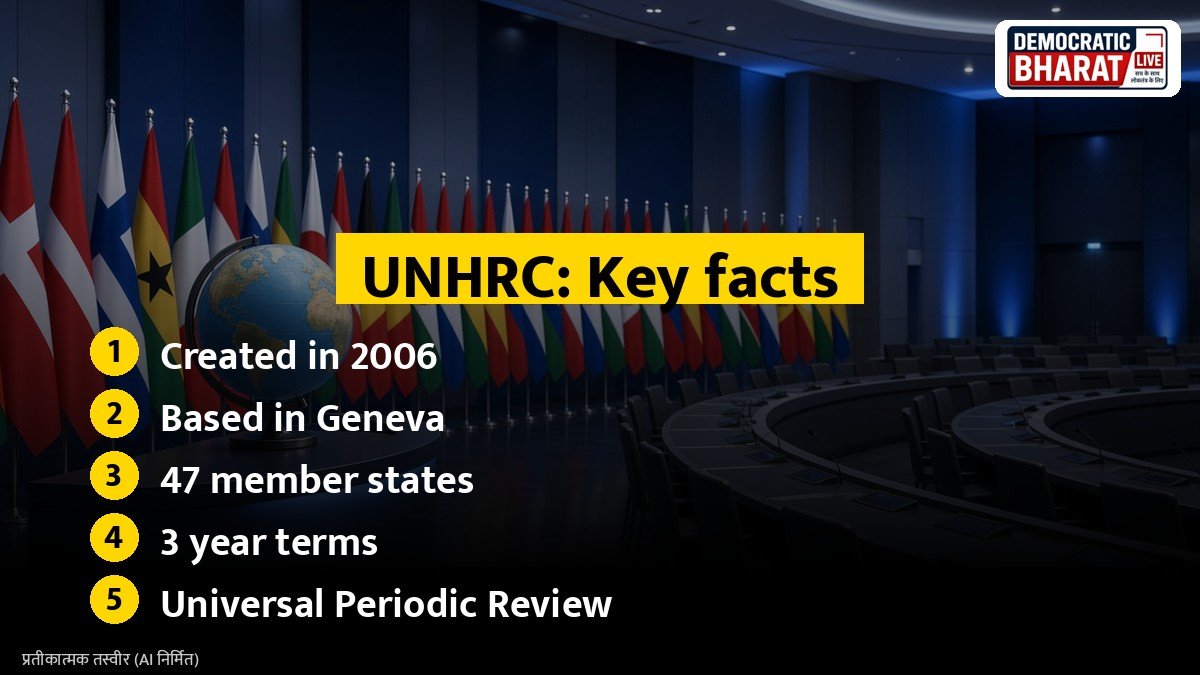
The Council was created by the UN General Assembly in March 2006, replacing the earlier UN Commission on Human Rights, which had existed since 1946 and faced criticism. The Council is based in Geneva, Switzerland.
Members
The Council has 47 member states. They are elected by the UN General Assembly by secret ballot, with a majority of members needed to win a seat. Seats are shared among regional groups:
- African States: 13
- Asia Pacific States: 13
- Latin American and Caribbean States: 8
- Western European and Other States: 7
- Eastern European States: 6
Members serve three year terms and cannot serve more than two terms in a row.
How it works
The Council meets in Geneva for at least three regular sessions a year, usually in February to April, June to July and September to October. It can also hold special sessions on urgent situations if one third of members ask for it.
Its main tools are:
- **Universal Periodic Review (UPR):** every UN member state’s human rights record is reviewed by other states, roughly once every four to five years.
- **Special Procedures:** independent experts and special rapporteurs who report on specific themes or countries.
- **Resolutions:** members debate and vote on resolutions on human rights issues.
- **Commissions of inquiry and fact finding missions** for serious situations.
The Council is supported by the Office of the UN High Commissioner for Human Rights (OHCHR).
Also Read: What Is BRICS? Members, New Development Bank and India’s Role as Chair in 2026 | What Is the SCO? Members, Aims and India’s Role in the Shanghai Cooperation Organisation
Limits
The Council’s resolutions are not legally binding. It works through dialogue, reporting and pressure. It has been criticised at times for politics among members.
India and the Council
India has been elected as a member of the Council several times since 2006. India takes part in the Universal Periodic Review and presents its national report. Indian officials have stressed dialogue, cooperation and respect for national sovereignty in the Council’s work.
How it differs from other bodies
The Human Rights Council is different from the UN Human Rights Committee, which is a body of independent experts that monitors the International Covenant on Civil and Political Rights.
Bottom line
The UN Human Rights Council reviews the human rights records of all countries and raises global concerns, although its decisions rely on cooperation rather than enforcement.
Source / स्रोत: UN Human Rights Council, Ministry of External Affairs