Barley, known as jau in Hindi, is an old rabi cereal that is regaining interest because it needs less water than wheat and has demand from the malt, food and animal feed industries. It is grown mainly in Rajasthan, Uttar Pradesh, Madhya Pradesh, Haryana and Punjab. Here is a guide based on advice from the ICAR Indian Institute of Wheat and Barley Research (IIWBR), Karnal.
Why grow barley
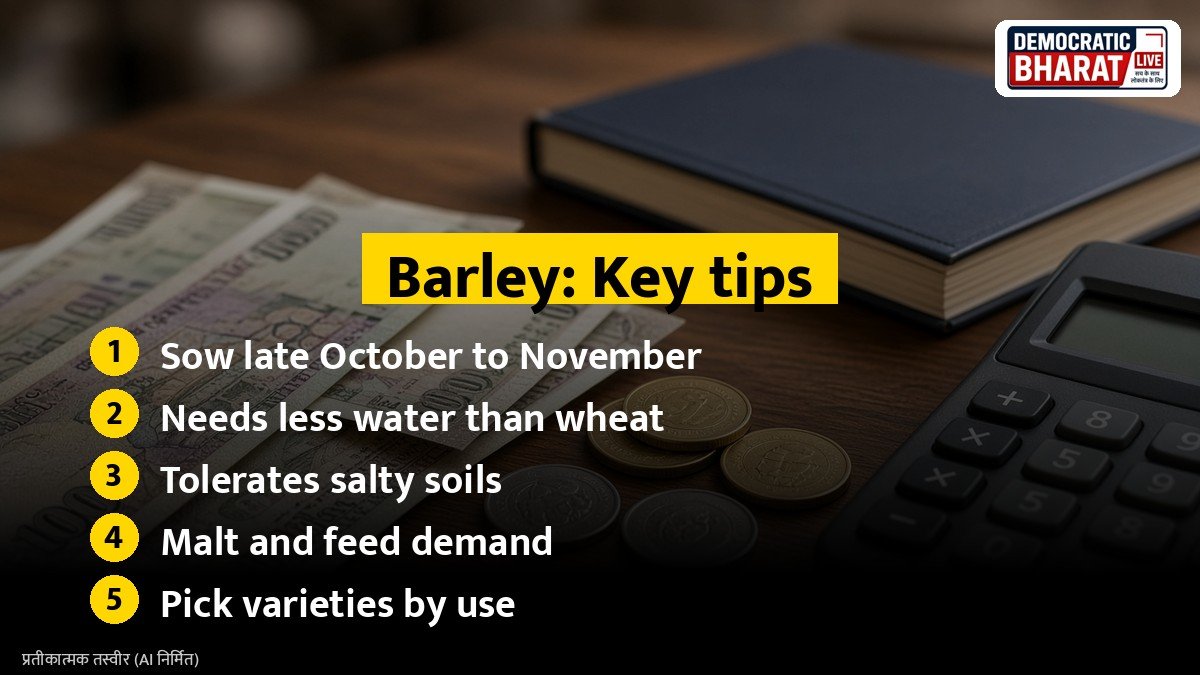
- Needs fewer irrigations than wheat.
- Can tolerate saline and alkaline soils better than many crops.
- Suits areas with limited water.
- Has demand from maltsters, brewers, food companies and feed makers.
Climate and soil
Barley grows well in cool weather. It does best on well drained loam and sandy loam soils, but can also be grown on poorer soils where wheat struggles.
Sowing time
In north India, barley is generally sown from late October to November. Late sowing reduces yield. Follow the dates suggested by your state agricultural university.
Also Read: Linseed (Alsi) Farming Guide: Sowing Time, Varieties, Irrigation and Care for a Rabi Oilseed | Pea Farming Guide for Rabi Season: Sowing Time, Varieties, Fertiliser and Care
Varieties
Varieties are chosen by end use:
- Malt barley: two row types are preferred by the malt industry for uniform grain.
- Feed and food barley: six row types are common.
- Hulless types are used for food.
ICAR-IIWBR has released several improved varieties for different zones, including the DWRB series. Choose a variety based on your region and the buyer you plan to sell to.
Seed and sowing
- Use certified seed and treat it with a recommended fungicide.
- Sow in lines with a seed drill for even spacing.
Fertiliser
Apply nitrogen, phosphorus and potash as per a soil test. Malt barley usually needs lower nitrogen than feed barley, because too much nitrogen raises grain protein and lowers malt quality.
Irrigation
Barley usually needs fewer irrigations than wheat. The most important stages are early tillering and flowering. In rainfed areas, it can be grown on stored soil moisture.
Pests and diseases
- Yellow rust and stripe disease can affect the crop.
- Aphids may appear in late winter.
Use resistant varieties and follow expert advice for control.
Harvest
Barley is usually harvested in March and April when the grain becomes hard and the straw turns golden.
Marketing
Contract farming with malt companies is common in some states, giving assured buyers. Barley also sells in regular mandis. Check prices on Agmarknet and e-NAM before selling.
Bottom line
Barley is a smart rabi option for areas with less water or problem soils. Choosing the right variety for malt or feed and timely sowing are key to good returns.
Source / स्रोत: ICAR Indian Institute of Wheat and Barley Research, Indian Council of Agricultural Research, Ministry of Agriculture and Farmers Welfare