The Speaker is the presiding officer of the Lok Sabha. Under Article 93 of the Constitution, the Lok Sabha chooses two of its members to be Speaker and Deputy Speaker. The Speaker plays a central role in how Parliament works.
How the Speaker is elected
After a general election, the newly elected Lok Sabha first meets under a Pro tem Speaker, appointed by the President, who administers the oath to new members. The House then elects the Speaker by a simple majority of members present and voting. Usually the ruling party or alliance proposes a candidate, and often the choice is unanimous, though contests have also happened.
Term
The Speaker holds office until the Lok Sabha is dissolved, and continues until just before the first meeting of the new House. The Speaker can resign or be removed by a resolution of the Lok Sabha passed by a majority of all the then members, after 14 days’ notice.
Key powers
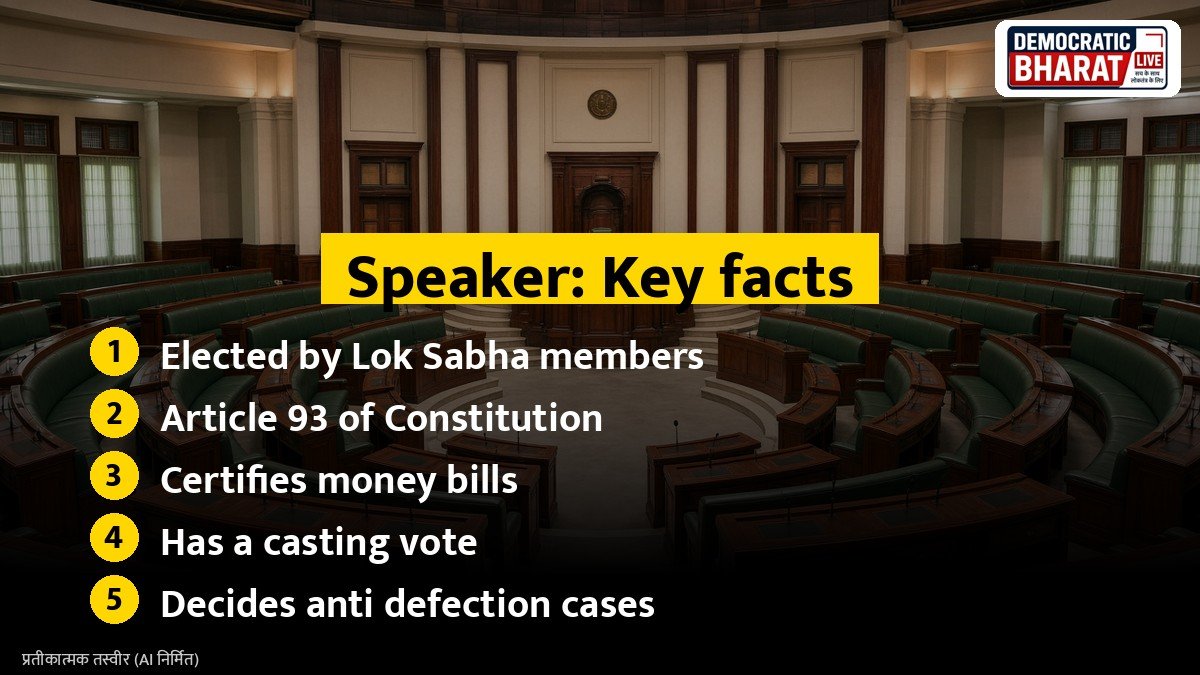
- Presides over the House and maintains order. The Speaker can suspend members for disorderly conduct under the rules.
- Decides who speaks and interprets the Rules of Procedure.
- Certifies whether a bill is a money bill under Article 110. This decision is final for the purposes of Parliament.
- Has a casting vote in case of a tie, but does not vote in the first instance.
- Presides over joint sittings of both Houses under Article 108.
- Decides disqualification petitions under the anti defection law, subject to judicial review.
- Refers bills to committees and appoints chairpersons of committees of the House.
- Admits or rejects notices of motions, including no confidence motions.
Also Read: How Rajya Sabha Election Works: Who Votes, Seats per State and the Single Transferable Vote | Election Commission of India Explained: Powers, How the CEC Is Appointed and the 2023 Law
Neutrality
Once elected, the Speaker is expected to act impartially. In the British tradition, the Speaker leaves the party. In India, Speakers do not formally resign from their parties, but the office carries an expectation of fairness. The Constitution protects the Speaker’s salary from being voted on by the House, and the Speaker’s rulings cannot be questioned in the House.
Deputy Speaker
The Deputy Speaker presides in the Speaker’s absence. By convention, the post has often gone to the opposition, though this is not a rule, and the post has at times been left vacant.
Famous Speakers
G V Mavalankar was the first Speaker of the Lok Sabha. Meira Kumar became the first woman Speaker in 2009.
Bottom line
The Lok Sabha Speaker runs the House, certifies money bills, holds a casting vote and decides defection cases. The credibility of Parliament depends a great deal on the fairness of this office.
Source / स्रोत: Lok Sabha, Constitution of India