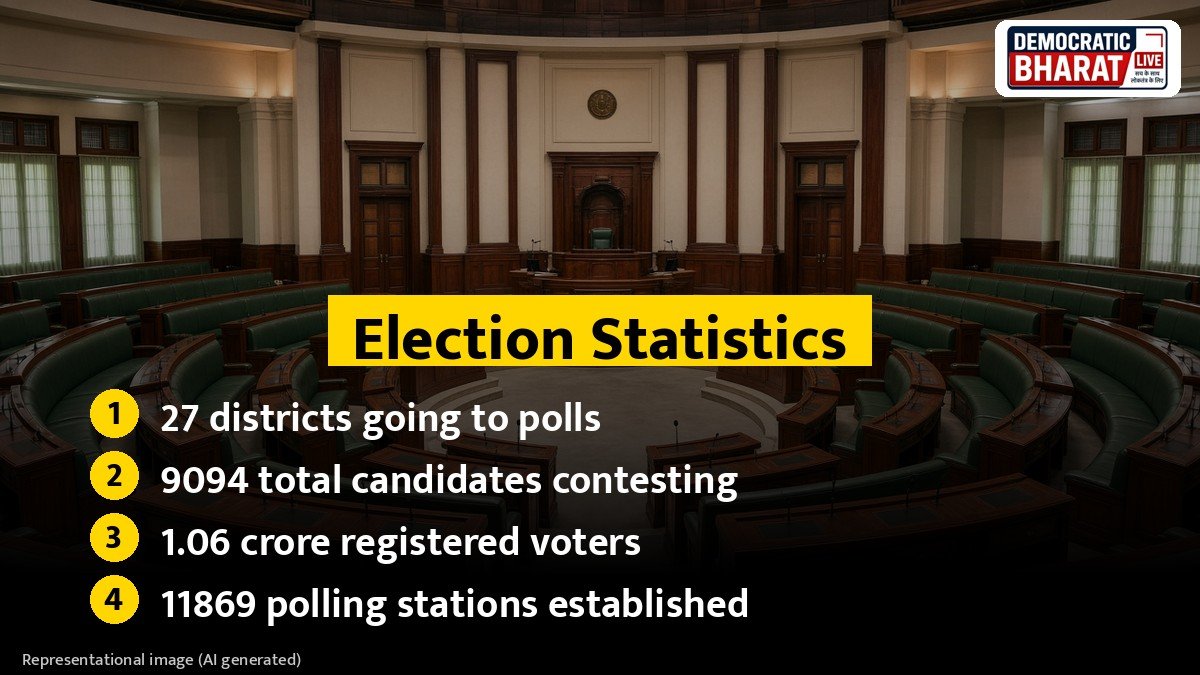
Rajasthan is set to conduct the third phase of its Panchayat elections across 27 districts on Tuesday. Over 1.06 crore voters will decide the political fate of 9094 candidates contesting for various local body positions. This phase covers 2496 wards, including both Zila Parishad and Panchayat Samiti seats, with extensive polling arrangements in place across the state. The administration has established 11,869 polling stations to facilitate the voting process.
Extensive Electoral Participation in 27 Districts
The third phase of the Panchayati Raj elections in Rajasthan marks a significant step in the state’s local governance framework. Spanning across 27 districts, this phase involves a massive logistical exercise to ensure that the democratic process reaches every corner of the rural landscape. A total of 1,06,81,567 registered voters are eligible to cast their ballots, reflecting the high level of engagement in rural politics. To accommodate this large voter base, the election authorities have set up 11,869 polling stations. These stations are equipped to handle the influx of voters and maintain the integrity of the electoral process. The scale of this phase highlights the importance of local bodies in the administrative structure of Rajasthan.
Statistical Overview of Candidates and Wards
The competition in this phase is notably dense, with 9,094 candidates vying for positions across 2,496 wards. When broken down by the level of local government, the figures show a high level of interest in both Zila Parishad and Panchayat Samiti roles. For the 377 Zila Parishad wards, there are 1,305 candidates in the fray, which averages to approximately three and a half candidates per ward. On the other hand, the Panchayat Samiti elections involve 2,119 wards with 7,789 candidates competing for seats. This high number of aspirants suggests that many contests will be multi cornered, featuring triangular or even quadrangular battles. Such competition often leads to a split in votes, making local equations and individual candidate popularity crucial for securing a victory.
Political Significance and Assembly Seat Dynamics
Beyond the local administrative impact, these elections carry substantial political weight for the major parties in the state. The 27 districts involved in this phase encompass more than 41 assembly constituencies. This provides a direct test of the influence held by sitting MLAs in their respective regions. According to available data, the Bharatiya Janata Party currently holds approximately 26 of these assembly seats, while the Congress and other parties or independents hold the remaining 15. The outcomes of the Panchayat elections will serve as an indicator of the political mood at the grassroots level and the effectiveness of the local leadership. Political organizations are closely monitoring these results to gauge their organizational strength and the public’s response to their representatives.
Detailed Contest in Bharatpur and Dausa
Specific districts are drawing particular attention due to their political profiles and the number of candidates involved. Bharatpur, the home district of Chief Minister Bhajan Lal Sharma, is witnessing a very competitive environment. In Bharatpur, 91 candidates are contesting for 19 Zila Parishad wards, while 696 candidates are in the race for 98 Panchayat Samiti wards. Dausa and Hanumangarh also stand out with the highest number of Zila Parishad wards at 24 each. In Dausa, the contest for 142 Panchayat Samiti wards features 474 candidates. These localized statistics demonstrate the intensity of the political struggle in these areas, where every ward is being contested with significant vigor. The high candidate density in Bharatpur and Dausa underscores the strategic importance these districts hold for the competing political factions.
Logistics and Polling Station Arrangements
The successful execution of the third phase relies heavily on the administrative arrangements made at the 11,869 polling stations. These centers are the primary points of contact for the over 1.06 crore voters who will participate in the election. The process involves voting for 377 Zila Parishad wards across 27 councils and 2,119 wards across 116 Panchayat Samities. The sheer volume of candidates, totaling 9,094, requires meticulous planning to ensure that the voting process remains orderly and transparent. As the state moves forward with this phase, the focus remains on the democratic empowerment of rural communities and the selection of representatives who will lead local development initiatives for the foreseeable future.
Source / स्रोत: Amar Ujala