

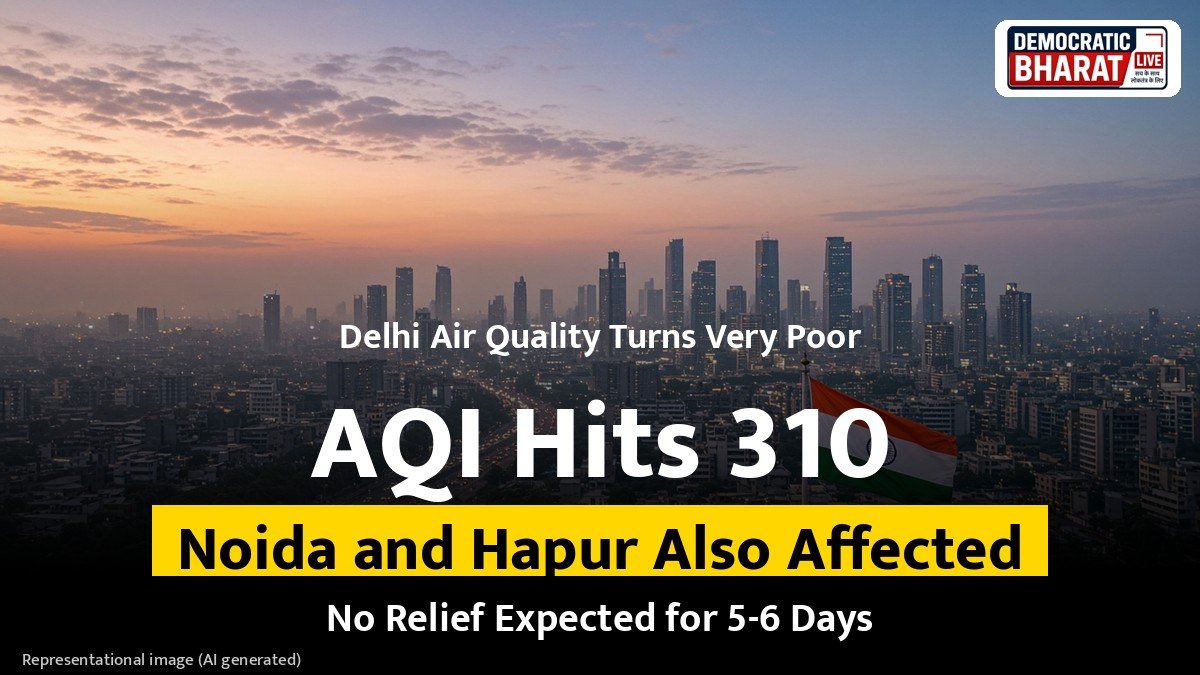
The air quality in the national capital has witnessed a significant decline, entering the very poor category on Monday morning. According to official data released by the Central Pollution Control Board, the 24-hour average Air Quality Index for Delhi was recorded at 310 at 8 a.m. on November 2, 2026. This deterioration in atmospheric conditions is not limited to Delhi alone, as several other parts of North India are also reporting similar levels of pollution, raising concerns about the environmental situation in the region.

Current Atmospheric Conditions in Delhi
On the morning of Monday, November 2, 2026, the residents of Delhi woke up to a thick layer of haze as the city’s air quality plummeted into the very poor category. The Central Pollution Control Board (CPCB), which is the primary agency responsible for monitoring air quality in the country, noted that the 24-hour average Air Quality Index (AQI) stood at 310 at 8 a.m. This numerical value is a clear indicator of the rising concentration of pollutants in the air. The AQI is a tool used to communicate the health of the air to the public, and a reading above 300 signifies that the air quality has reached a level that is considered very poor, necessitating caution and monitoring of the situation by the authorities.
Regional Impact Across North Indian Cities
The surge in air pollution levels has been observed across a wider geographical area beyond the boundaries of the national capital. Official reports indicate that many other cities and towns located in North India also witnessed very poor air quality on the same Monday morning. Among the affected areas are Noida, Kaithal, and Hapur, where the atmospheric conditions mirrored the severity seen in Delhi. This regional trend suggests that the factors contributing to the decline in air quality are widespread, affecting a large portion of the Indo-Gangetic Plains. The simultaneous drop in air quality across these diverse locations highlights the interconnected nature of the environmental challenges facing the northern part of the country during this season.
Analysis of Rising Pollution Levels
A closer look at the data from the preceding days reveals a sharp and rapid increase in pollution levels. On Saturday, the 24-hour average AQI of Delhi was recorded at 117, which falls under the moderate category. However, by Sunday at 4 p.m., the daily bulletin from the Central Pollution Control Board showed that the index had risen to 261, placing it in the poor category. The jump from 261 on Sunday afternoon to 310 by Monday morning marks a significant escalation in the presence of particulate matter and other pollutants. The CPCB daily bulletin is treated as the official AQI for the day, and the current trend shows that the air quality has more than doubled in terms of pollution intensity within a 48-hour window.
Meteorological and Human Factors
The spike in air pollution during this time of the year is a recurring phenomenon in Delhi-NCR and the larger Indo-Gangetic Plains. Several meteorological factors play a crucial role in this seasonal worsening of air quality. As winter approaches, a drop in temperature and lower wind speeds prevent pollutants from dispersing, causing them to remain trapped near the ground level. In addition to these natural factors, human activities significantly contribute to the problem. Stubble burning in neighboring regions during October and November, along with the bursting of firecrackers during the festive season, adds a massive load of pollutants to the atmosphere. These factors, combined with existing emissions from vehicles and dust, create a cumulative effect that severely degrades the air quality.
Future Outlook and Warning System Data
The immediate future does not appear to offer much relief to the residents of the affected regions. According to the Central government’s Air Quality Early Warning System for Delhi, the air quality is expected to remain in the poor to very poor category for approximately the next five to six days. This system provides forecasts based on current pollution trends and expected weather patterns. The persistence of these conditions is often linked to the stable atmospheric conditions typical of the early winter months in North India. As the authorities continue to monitor the CPCB data, the forecast serves as a reminder of the ongoing environmental challenges that require sustained attention and management to mitigate the impact on the region’s atmosphere.
Also Read: Green Crackers Explained: How They Differ From Regular Firecrackers and How to Identify Them
Source / स्रोत: The Hindu


