
Parliament Logjam: Parliamentary Affairs Minister Kiren Rijiju held a crucial, nearly 50-minute meeting with Leader of the Opposition in the Lok Sabha Rahul Gandhi on Wednesday in an intense bid to break the persistent Parliament logjam that has paralyzed legislative business for 13 consecutive days. The high-stakes outreach brought major contentious legislations including the Foreign Contribution (Regulation) Amendment (FCRA) Bill, 2026, and the proposed Delimitation Bill to the forefront of political discussions.
While the treasury benches sought opposition cooperation to ensure smooth proceedings before the session concludes on August 13, Congress leaders maintained a firm stance regarding their core demands. The dialogue signals an active effort by the government to bridge deep partisan divides, even as political friction persists over key national issues.
The meeting took place at Rahul Gandhi’s office in the Parliament complex and witnessed the presence of senior Congress leaders, including general secretary K.C. Venugopal, deputy leader in the Lok Sabha Gaurav Gogoi, and Wayanad MP Priyanka Gandhi Vadra.
This engagement marked the second direct interaction between Rijiju and Gandhi within ten days, following a telephonic conversation late Tuesday evening. The government initiated this contact to seek opposition support for passing pending statutory business. However, the meeting underscored the deep strategic differences that continue to hinder consensus in the House.
Parliament Logjam: Strategic Political Outreach To End Legislative Impasse
The government’s decision to reach out directly to the principal opposition party reflects growing concern over the complete breakdown of floor management during the Monsoon Session. Parliamentary Affairs Minister Kiren Rijiju sought to evaluate the position of the Congress on several key legislative proposals currently pending before Parliament. Treasury benches are eager to ensure that essential legislative work is transacted with proper deliberation rather than amidst continuous shouting and adjournments.
Despite the polite atmosphere during the bilateral talks, the meeting highlighted contrasting political priorities between the ruling coalition and opposition ranks.
While the government urged the opposition to allow Question Hour and regular debates to function normally, opposition representatives insisted that fundamental democratic grievances must be addressed first. This strategic stalemate continues to keep the legislative process suspended in both Houses.
Core Opposition Demands Set Firm Floor For Dialogue
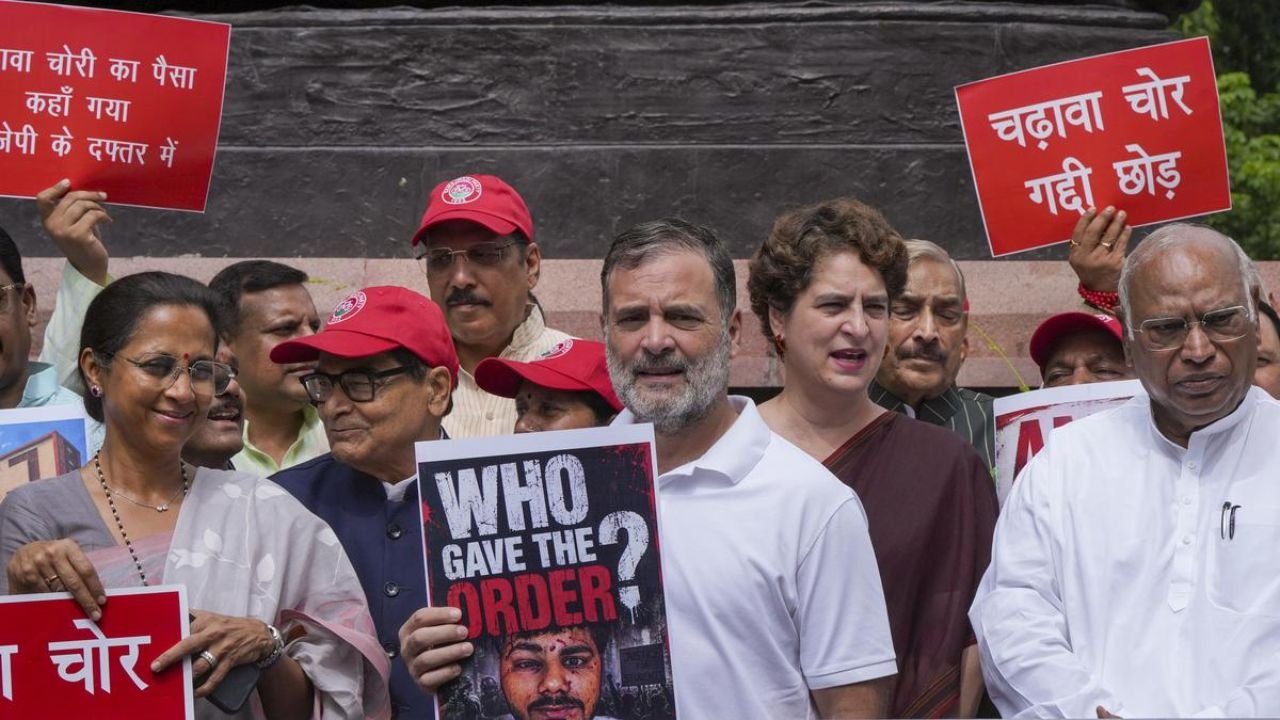
During the discussions, Rahul Gandhi clearly communicated that the opposition would not retreat from its demand for ministerial accountability inside the House. The opposition has made a formal statement by Home Minister Amit Shah regarding police action against students protesting over the NEET paper leak a primary prerequisite for restoring order.
Additionally, Congress leaders demanded a dedicated parliamentary debate on the alleged financial irregularities and theft of donations at the Ram Temple in Ayodhya.
Rahul Gandhi emphasized that these two issues remain entirely non-negotiable for the opposition coalition if the government expects the House to function smoothly. Opposition MPs also held a symbolic demonstration within the Parliament complex, publicly questioning the continued absence of the Home Minister during crucial debates. These firm conditions reflect the opposition’s determination to maintain political pressure on the ruling dispensation throughout the remainder of the session.
Parliament Logjam: Contentious Foreign Funding Bill Draws Fierce Resistance
A major focal point of the nearly hour-long meeting was the Foreign Contribution (Regulation) Amendment (FCRA) Bill, 2026. Sources indicate that Home Minister Amit Shah is slated to reply to the debate when the controversial bill is formally taken up for discussion and passage. However, Congress leadership firmly told the government that the legislation cannot be accepted in its current structural framework.
The proposed amendments have generated severe apprehension because they empower a central government-appointed authority to manage and dispose of assets belonging to non-governmental organizations whose FCRA registrations are suspended or canceled.
Civil society groups and opposition parties argue that such provisions grant excessive discretionary powers to the executive, threatening the independence of non-profit entities, religious trusts, and educational institutions. The bill has also drawn international attention, adding further momentum to the domestic political contestation surrounding its introduction.
Delimitation Bill Concerns Resurface In High-Level Talks
The consultation also touched upon the highly sensitive issue of the proposed Delimitation Bill, which seeks to alter parliamentary constituency boundaries across the country. Kiren Rijiju sought to gauge the perspective of the opposition on constitutional provisions related to this exercise. In response, Congress representatives reaffirmed their strong opposition to any constitutional amendment aimed at carrying out delimitation under the present circumstances.
Because any constitutional amendment requires a two-thirds majority in Parliament, the government is assessing the political feasibility of bringing the bill forward. Having failed to gather the requisite numerical support during the earlier Budget Session, the ruling coalition faces a steep challenge in securing broad political consensus. The opposition’s firm resistance suggests that consensus on redrawing electoral maps remains distant.
Parliament Logjam: Rumors Of Special Session Cleared By Government Signals
Amid intense media speculation that the government might convene a special three-day parliamentary session after Independence Day to pass the women’s reservation implementation and delimitation bills, official sources have firmly dismissed such plans. Kiren Rijiju clarified that no proposal to extend the current session or summon a special session is currently under consideration by the administration.
This clarification indicates that the government intends to work within the existing schedule of the Monsoon Session, which is slated to conclude on August 13. However, without a formal breakthrough between the two sides, managing the heavy pending legislative agenda within the remaining working days will remain an uphill task for parliamentary managers.
Unprecedented Disruption Mars Monsoon Session Progress
Since the commencement of the Monsoon Session on July 20, the Lok Sabha has experienced unprecedented turbulence, failing to transact Question Hour even once due to relentless protests. The persistent noise and slogans have forced repeated adjournments, severely limiting meaningful parliamentary scrutiny. Despite the continuous turmoil, the government has managed to pass five key bills without structured debate, a move that has drawn sharp criticism from opposition benches.
Presiding officers in both Houses have repeatedly appealed to protesting members to maintain decorum and return to their assigned seats. Lok Sabha Speaker Om Birla pointed out that continuous sloganeering damages the dignity of the constitutional institution and deprives citizens of crucial legislative debates. Nevertheless, the lack of an official compromise has kept the daily parliamentary proceedings severely constrained.
Parliament Logjam: Impact On Governance And Way Forward For House
The ongoing Parliament logjam highlights the widening rift between the government and the opposition over parliamentary conventions and legislative priorities. When key legislations are passed amidst disruption without thorough committee review or public debate, it raises broader questions about legislative quality and democratic oversight. Healthy parliamentary democracy relies on constructive dialogue between the ruling alliance and opposition parties to resolve constitutional impasses.
Political observers note that floor leaders must find common ground to ensure that public interest issues are debated effectively. With critical legislative measures awaiting consideration, the success of parliamentary democracy depends heavily on whether both sides can transition from confrontation to structured negotiation before the session comes to a formal close.
The high-level engagement between Kiren Rijiju and Rahul Gandhi marks a significant attempt to resolve the persistent Parliament logjam, even as both political camps stand firm on their core ideological and strategic positions. While the government remains focused on navigating its legislative agenda prior to the August 13 deadline, the opposition’s insistence on executive accountability underscores vital democratic checks.
Moving forward, resolving this parliamentary impasse will require sustained floor management, genuine negotiation, and mutual adherence to legislative traditions. Whether this outreach successfully paves the way for productive debates or leads to continued political confrontation will determine the final outcome of the Monsoon Session.
Read More Here
- How to watch Leagues Cup 2026 in India: How To Watch Lionel Messi In Action, Inter Miami Matches Schedule, And Broadcast Details
- DIY Vertical Garden: प्लास्टिक की बोतलों से बनाएं लालटेन जैसे आकर्षक प्लांटर्स, घर की खाली दीवार पर उगाएं ताजी हरी मिर्च और धनिया
- Lizard Repellent Plants: घर में छिपकलियों का आतंक है? बालकनी में लगा दें ये 5 पौधे, आसपास भी नहीं फटकेंगी
- Parenting Tips: बच्चों के दोस्त बनें, लेकिन पैरेंट होने की सीमा न भूलें, जानें कितनी होनी चाहिए नजदीकी
About The Author




टिप्पणियां (1)