

In December and January, clear nights and calm winds can push temperatures close to or below freezing in north and central India. This causes frost (pala), which can damage crops like mustard, potato, gram, peas, vegetables and young fruit plants. Here is how farmers can reduce the risk.
How frost damages crops
When the temperature falls near zero, water inside plant cells can freeze. The cells burst, and leaves turn brown or black and dry up. Flowering and pod forming stages are the most sensitive, so frost at this time can cut yield sharply.
Warning signs
- Clear sky at night with no clouds
- Very little or no wind
- Low humidity and a sharp fall in temperature after sunset
- A cold wave warning from the India Meteorological Department (IMD)
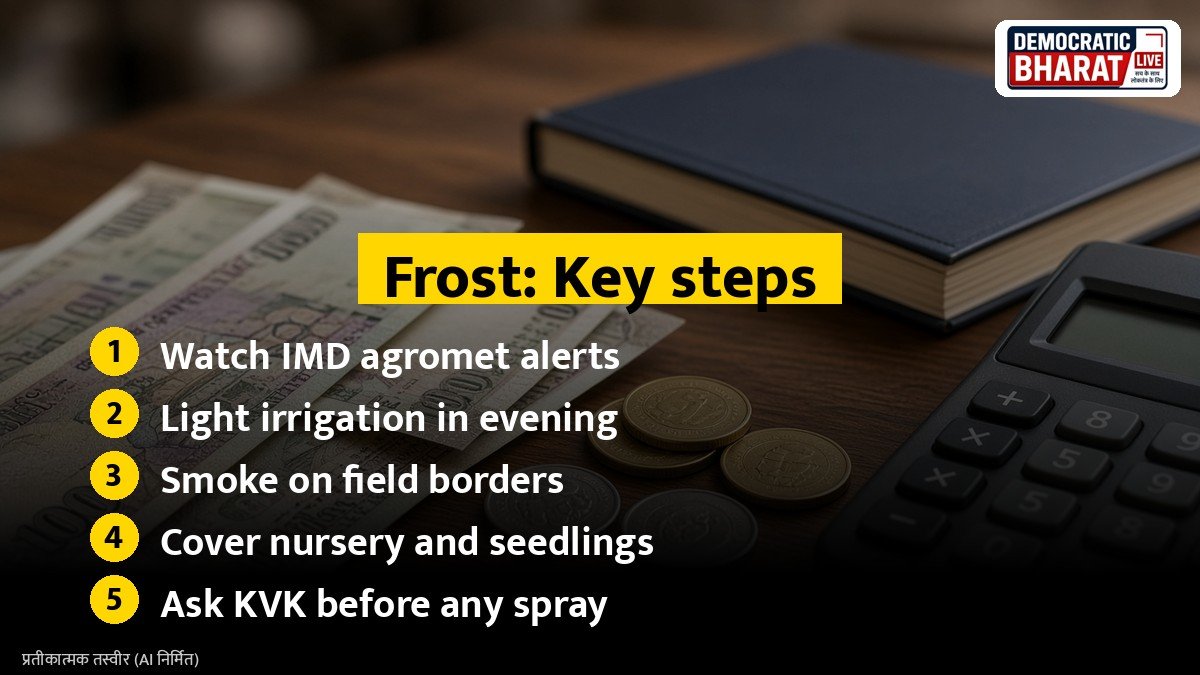
IMD and state agricultural universities issue district level agromet advisories, usually twice a week. Farmers can get them through the Meghdoot app, Kisan portals and SMS services, and from their Krishi Vigyan Kendra.
Simple protective steps
- **Light irrigation:** when frost is forecast, give a light irrigation in the evening. Moist soil holds and releases more heat than dry soil, so the field stays slightly warmer.
- **Smoke:** burn small heaps of dry waste on the windward side of the field around midnight to early morning. A layer of smoke reduces heat loss. Take care that it does not spread fire.
- **Cover nurseries:** cover vegetable nurseries and young plants with straw, plastic sheets or sacks at night, and remove them in the morning.
- **Windbreaks:** rows of trees or tall crops on the north and west side of fields reduce cold winds over time.
- **Nutrient and spray advice:** agricultural scientists sometimes recommend a specific spray, such as diluted sulphuric acid or wettable sulphur, in certain crops. Use these only after checking the dose and crop with your KVK or agriculture officer, because a wrong dose can harm the plant.
Also Read: Wheat Sowing Guide for Rabi Season: Best Time, Seed Rate, Varieties and Tips From ICAR | How MSP Is Fixed in India: Role of CACP, the 1.5 Times Cost Formula and Rabi Crops Covered
After frost
Do not rush to uproot damaged plants. Many crops recover new growth after a few days. Give light irrigation and a balanced nutrient dose as advised by experts.
Crop insurance
If your crop is insured under the Pradhan Mantri Fasal Bima Yojana, check with your bank or insurance company about the rules for reporting localised losses within the given time.
Advice for farmers
Before sowing, selling or storing your crop, check the latest information with your district agriculture department, Krishi Vigyan Kendra or mandi committee.
Bottom line
Watching weather alerts, giving light irrigation in the evening and covering young plants are the cheapest ways to protect rabi crops from frost.
Source / स्रोत: India Meteorological Department, Agromet Advisory, ICAR





टिप्पणियां (1)