Masoor, or lentil, is an important rabi pulse in India, grown mainly in Madhya Pradesh, Uttar Pradesh, Bihar, West Bengal and Jharkhand. It is hardy, needs little water and improves soil fertility. Here is a guide based on advice from the ICAR Indian Institute of Pulses Research (IIPR), Kanpur.
Why grow masoor
- Needs less water than wheat.
- Fixes nitrogen and leaves the soil richer for the next crop.
- Fits well after kharif rice in many areas.
- India imports pulses, so domestic demand is strong.
Climate and soil
Masoor needs cool weather during growth. It grows on a range of soils, from loam to clay loam, but waterlogging and very acidic or saline soils should be avoided.
Sowing time
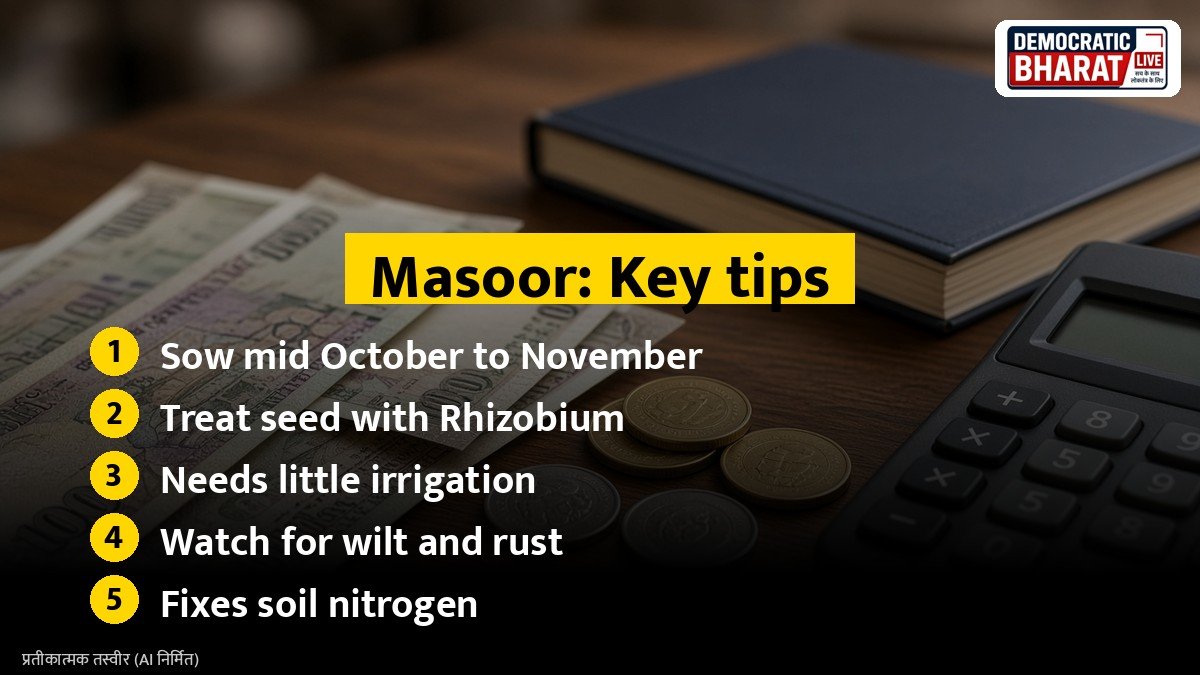
In north India, masoor is generally sown from mid October to November. Late sowing after rice is possible with suitable varieties but gives lower yields. Follow the dates suggested by your state agricultural university.
Also Read: Mustard Farming Guide for Rabi: Sowing Time, Seed Rate, Irrigation and Pest Control Tips | Chana Farming Guide for Rabi: Sowing Time, Seed Treatment, Wilt Control and Pod Borer Management
Varieties
Choose a variety based on your area and sowing time. ICAR and state universities have released bold seeded and small seeded types, as well as varieties with resistance to wilt and rust. Your Krishi Vigyan Kendra can advise the best one.
Seed treatment
- Treat seed with a recommended fungicide against seed and soil borne diseases.
- Then treat with Rhizobium culture and phosphate solubilising bacteria.
- Sow in lines for even spacing.
Fertiliser
Being a legume, masoor needs only a small starter dose of nitrogen. Apply phosphorus and other nutrients as per a soil test. Sulphur and zinc may be needed in some soils.
Irrigation
Masoor is often grown on stored soil moisture. Where irrigation is available, one or two light irrigations, especially at pod formation, can raise yields. Avoid heavy irrigation.
Pests and diseases
- Wilt and root rot: use resistant varieties and seed treatment.
- Rust: appears in humid weather, and resistant varieties help.
- Aphids and pod borer: monitor and use recommended measures only when needed.
Weed control
Keep the field weed free in the first 30 to 45 days, either by hand weeding or as advised.
Harvest
Masoor is harvested when pods turn brown and leaves dry, usually in March and April.
Government support
Masoor has a Minimum Support Price announced each year for rabi crops. The Union Budget 2025 announced a six year mission for self reliance in pulses with a focus on tur, urad and masoor, including procurement through central agencies for registered farmers. Check the Agriculture Ministry and your state for the latest details.
Bottom line
Masoor is a low input, soil friendly rabi crop. Timely sowing, seed treatment and careful pest control can bring good yields and returns.
Source / स्रोत: ICAR Indian Institute of Pulses Research, Directorate of Pulses Development, Ministry of Agriculture and Farmers Welfare