Coriander, or dhaniya, is grown in India both for its fresh leaves and for its seeds, which are a key spice. The seed crop is grown mainly in the rabi season in Rajasthan, Madhya Pradesh and Gujarat. Here is a guide based on advice from the ICAR National Research Centre on Seed Spices (NRCSS), Ajmer.
Climate and soil
- Coriander needs cool, dry weather during growth.
- Frost at flowering and cloudy, humid weather can harm the seed crop.
- Well drained loam and clay loam soils with good organic matter are best.
Sowing time
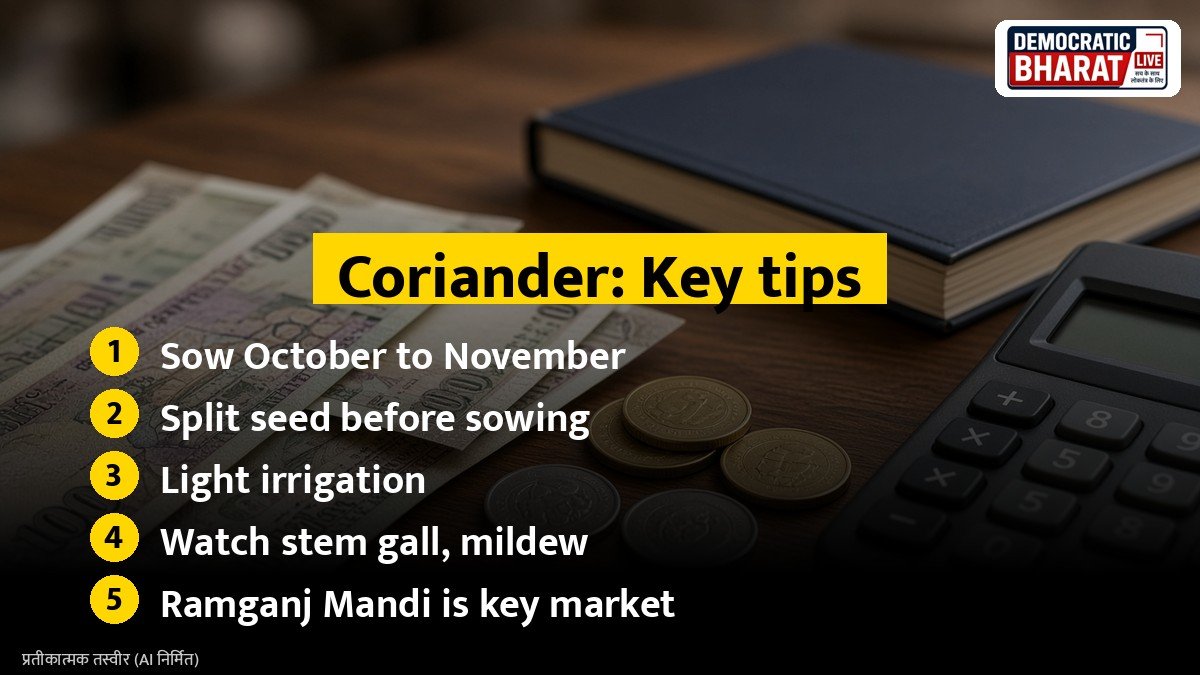
For the seed crop, coriander is generally sown from October to November in north and central India. Early sowing in warm weather can affect germination.
Seed preparation
- Coriander seeds are actually fruits with two seeds inside.
- Rub them gently to split them into halves before sowing. This improves germination.
- Soak the split seed in water for a few hours if advised, and treat with a recommended fungicide or Trichoderma.
Also Read: Mustard Farming Guide for Rabi: Sowing Time, Seed Rate, Irrigation and Pest Control Tips | Masoor Farming Guide: Lentil Sowing Time, Seed Treatment, Irrigation and Pest Control
Varieties
NRCSS and state agricultural universities have released many varieties for seed and leaf production, including some tolerant to stem gall and powdery mildew. Choose a variety suited to your area and purpose.
Sowing method
Sow in lines for easier weeding and spraying. Seeds take time to germinate, so keep the soil moist.
Fertiliser
Apply well rotted farmyard manure and fertiliser as per a soil test. Too much nitrogen can increase leaf growth at the cost of seed yield and raise disease risk.
Irrigation
- Give light irrigation after sowing and at regular intervals depending on soil.
- The key stages are branching, flowering and seed formation.
- Avoid waterlogging.
Diseases and pests
- Stem gall: swelling on stems and leaves, common in cool, humid weather. Use tolerant varieties and recommended seed treatment.
- Powdery mildew: white powder on leaves and umbels.
- Wilt: use healthy seed and crop rotation.
- Aphids: common at flowering.
Follow expert advice on sprays and use them only when needed, keeping safety intervals before harvest.
Harvest
The seed crop is harvested when most fruits turn from green to light brown. Harvesting too late leads to shattering and loss of colour. Dry the crop in shade to keep a good colour, which fetches better prices.
Marketing
Ramganj Mandi in Kota district of Rajasthan is one of the largest coriander markets in the country. Other mandis in Rajasthan, Madhya Pradesh and Gujarat also trade large volumes. Check prices on Agmarknet and e-NAM.
Bottom line
Split seed, timely sowing, light irrigation and close watch on stem gall and mildew are the keys to a good coriander seed crop.
Source / स्रोत: ICAR National Research Centre on Seed Spices, Spices Board India, Ministry of Agriculture and Farmers Welfare