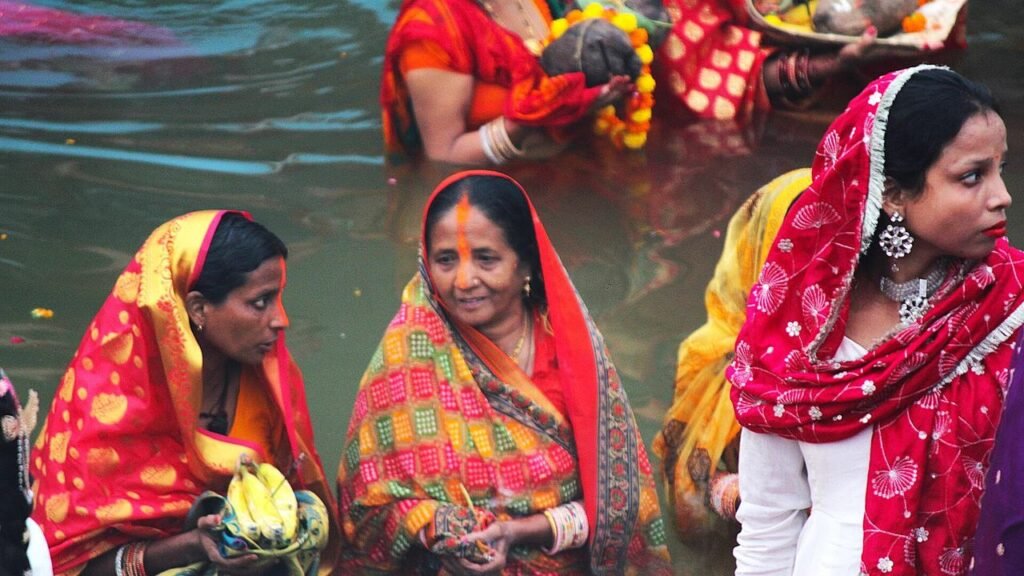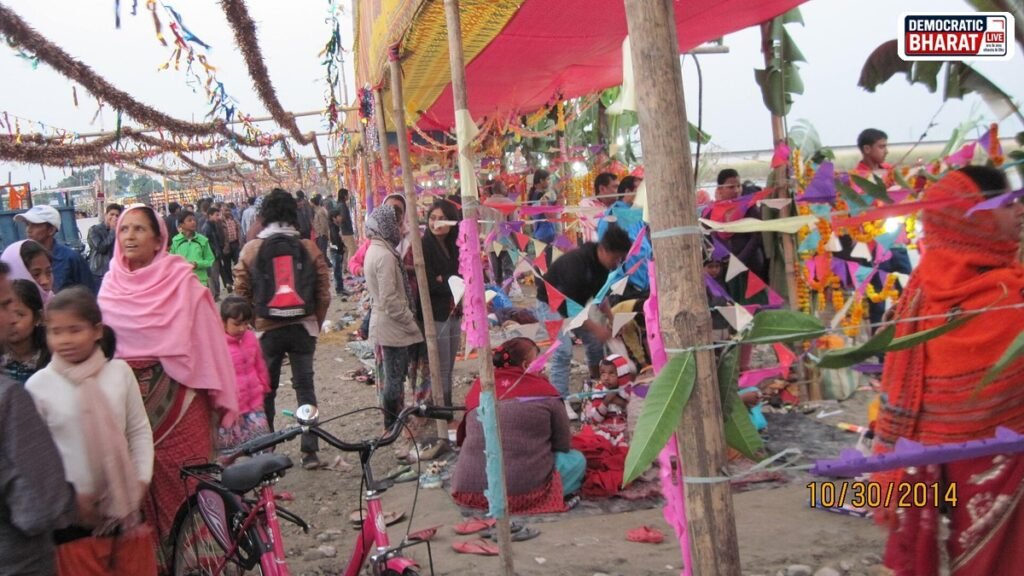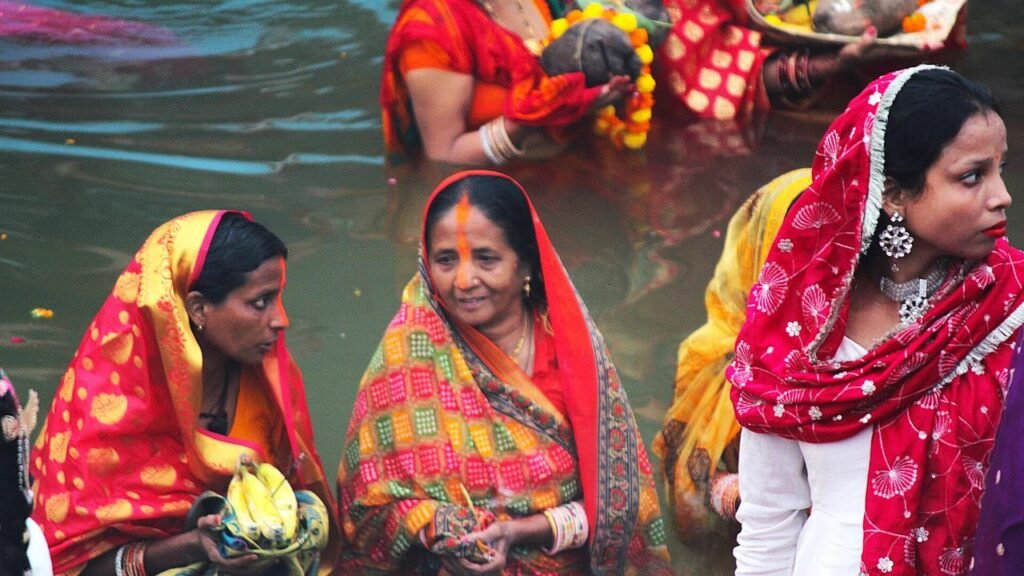
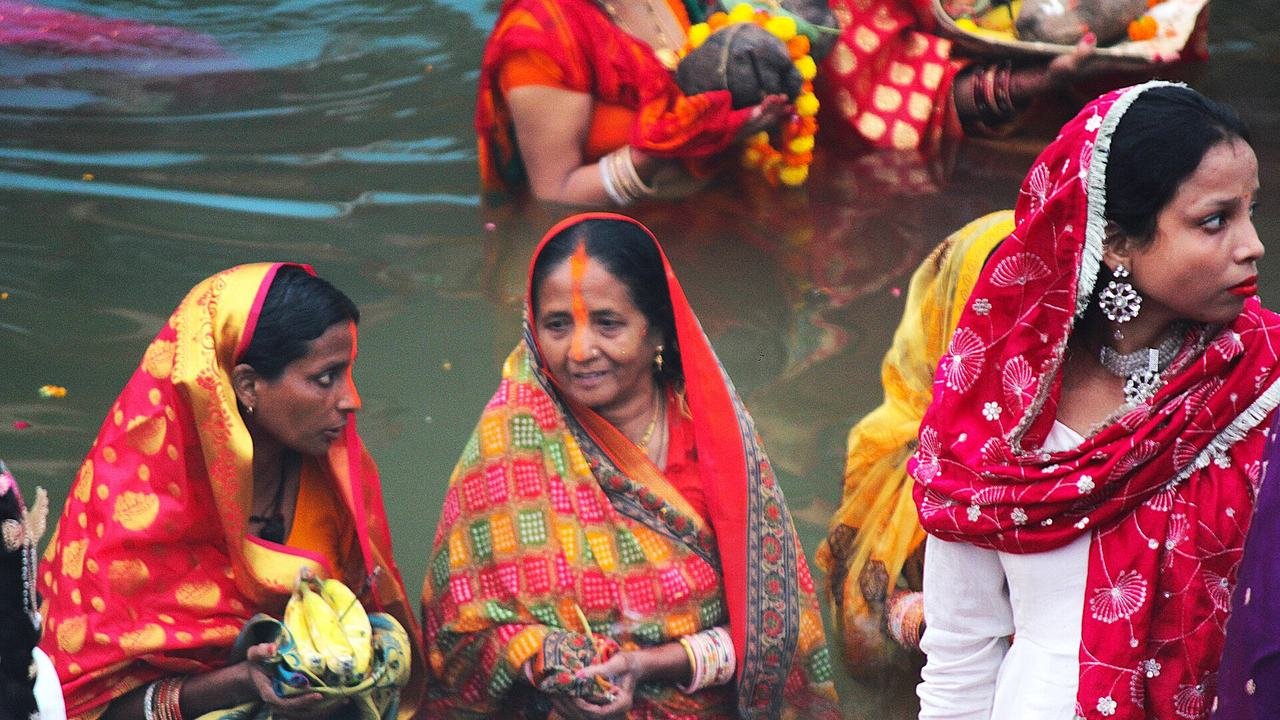
Chhath is often described, by those who did not grow up with it, as a riverbank ritual in which people offer water to the Sun. In Bihar, Jharkhand and eastern Uttar Pradesh it is treated as one of the most demanding and pure fasts in the Hindu calendar. In 2026 the four-day Mahaparva begins on Friday, 13 November, and ends on Monday, 16 November, when arghya is offered to the rising Sun. The setting Sun is honoured with the same reverence as the rising Sun.
| Day | Date in 2026 | Observance |
|---|---|---|
| Nahay-Khay | Friday, 13 November | Ritual bath and a sattvik meal |
| Kharna | Saturday, 14 November | Day-long nirjala fast, evening prasad |
| Sandhya Arghya | Sunday, 15 November | Arghya to the setting Sun |
| Usha Arghya | Monday, 16 November | Arghya to the rising Sun, then the fast is broken |
The four days of Chhath in 2026
Nahay-Khay, on 13 November, opens the festival. Those who are keeping the vrat take a bath and eat sattvik food. The traditional meal is described as bottle gourd, also called kaddu, with gram dal and rice. This marks the beginning of the fast.
Kharna falls on 14 November. The vrati keeps a nirjala fast through the day, taking neither food nor water. In the evening, kheer made with jaggery, and roti, are taken as prasad. After that meal a strict waterless fast of about 36 hours begins. It continues until Usha Arghya is completed the following morning after next.
Sandhya Arghya is on the evening of 15 November. At the ghat, a bamboo soop, the traditional winnowing basket, is arranged with thekua, sugarcane and fruit. Devotees stand in the water and offer arghya to the setting Sun. On the morning of 16 November they offer Usha Arghya to the rising Sun, and only then is the fast broken.
Who is Chhathi Maiya
Chhath is an offering to Surya, the Sun God, and also a prayer to Chhathi Maiya. A widely held belief says that when Brahma created the universe, Chhathi Maiya, also called Devasena, appeared from the sixth part of nature. She is regarded as a goddess who protects children. That is why families ask, during Chhath, for a long life and good health for their children.
In many places she is also worshipped as Usha, who is regarded as the consort of the Sun God. These beliefs sit side by side. The Sun is thanked as the source of life, and Chhathi Maiya is asked to watch over the household, especially the children.
Offering arghya to the setting Sun is central to the festival’s meaning. Faith holds that the Sun that goes down also promises to rise again. Some people also link the morning light on the riverbank with a sense of closeness to nature, and with the benefit of early sunlight. The discipline of the vrat, however, remains a matter of devotion first.
Stories of faith, and a fast kept by men as well as women
It is often said that Chhath was observed in the age of the Ramayana. There is no firm historical evidence for this, but the belief is well known. According to that tradition, after the killing of Ravana, sage Mudgal advised Rama to worship the Sun in connection with the guilt of brahmahatya. In popular tellings of the Mahabharata, Draupadi and Karna are also remembered as worshippers of the Sun. These are stories of religious faith, not proven historical record, and they add to the reverence around the festival.
Chhath is sometimes spoken of as a women’s festival. That is not accurate. Men also keep this fast with the full set of rites. In Bihar and Jharkhand it is common to see men offering arghya at the vrati ghat. The festival is about the wellbeing of the whole family, not of one gender alone.
From 13 to 16 November 2026, Chhath will again unfold through Nahay-Khay, Kharna, Sandhya Arghya and Usha Arghya. The katha of Chhathi Maiya, and the equal honour given to the setting and the rising Sun, are what give the Mahaparva its character.
#BreakingNews #ताजाखबर #UttarPradesh #यूपी #Bihar #बिहार #ChhathPuja #ChhathiMaiya