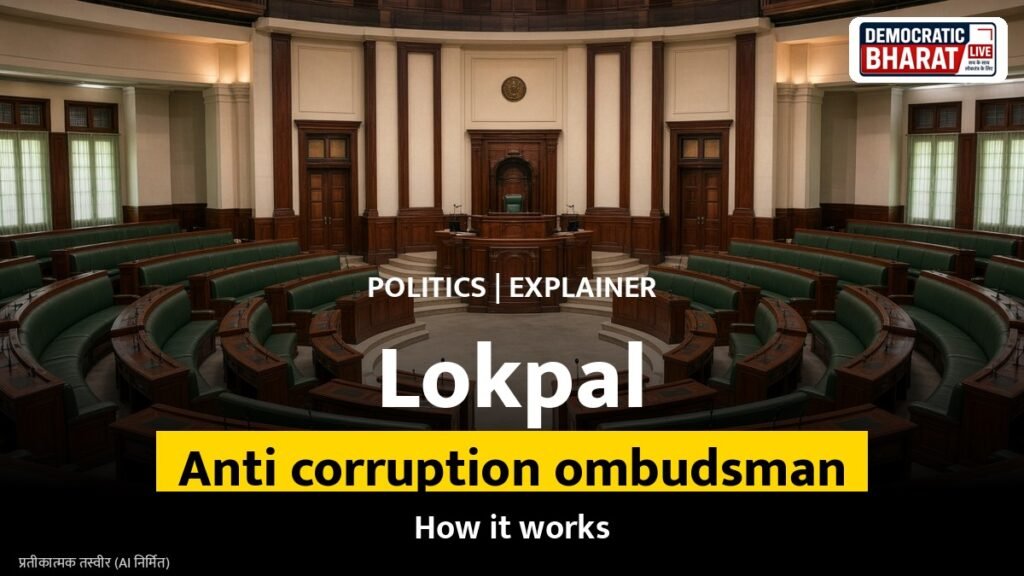
The Lokpal is India’s national anti corruption ombudsman. It can inquire into complaints of corruption against public servants, including ministers and MPs. Here is a simple explainer.
The law
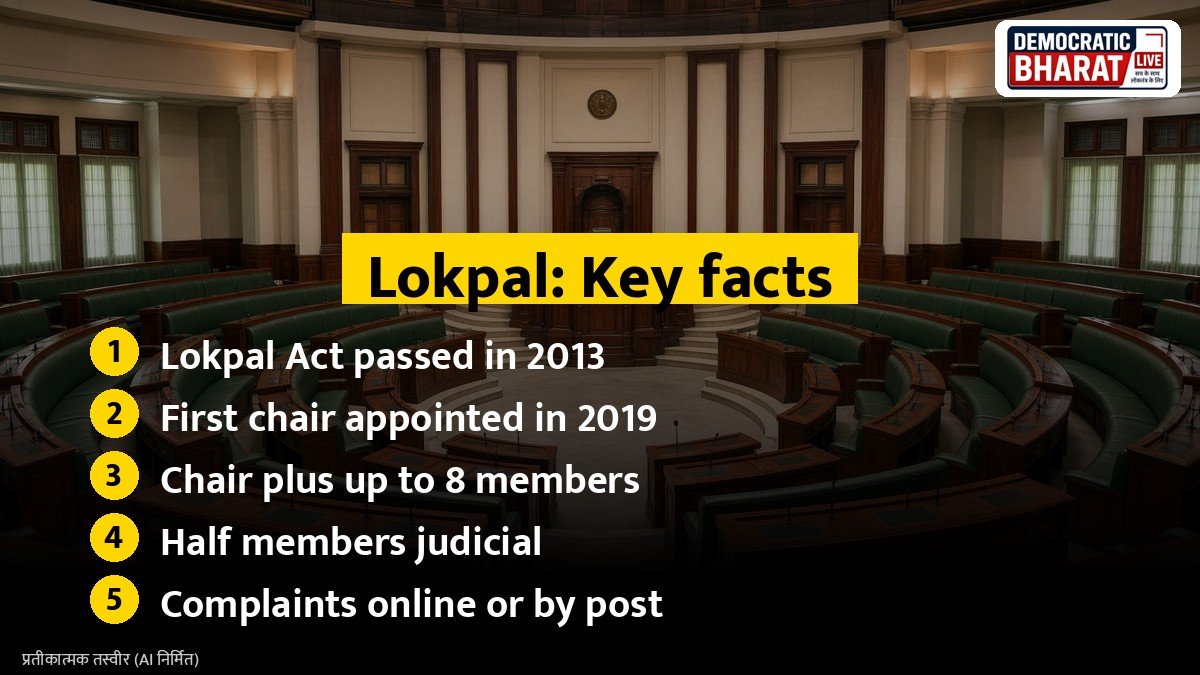
The Lokpal and Lokayuktas Act, 2013 was passed after a long public campaign against corruption. It came into force in January 2014. The Act also asks states to set up Lokayuktas for state level public servants.
Structure
- A chairperson and up to eight members.
- At least half the members must be judicial members.
- At least half the members must be from Scheduled Castes, Scheduled Tribes, Other Backward Classes, minorities or women.
The first Lokpal chairperson, Justice Pinaki Chandra Ghose, was appointed in March 2019. Former Supreme Court judge Justice A M Khanwilkar became chairperson in 2024.
How members are selected
A selection committee recommends the names to the President. It includes:
- The Prime Minister, as chairperson.
- The Speaker of the Lok Sabha.
- The Leader of the Opposition in the Lok Sabha, or leader of the largest opposition party.
- The Chief Justice of India or a judge nominated by the CJI.
- An eminent jurist nominated by the President on the recommendation of the other members.
Also Read: Election Commission of India Explained: Powers, How the CEC Is Appointed and the 2023 Law | Role of the Governor in India: Appointment, Powers Over Bills and the Supreme Court’s Rulings
Who is covered
- The Prime Minister, with special safeguards. Matters related to international relations, security, public order, atomic energy and space are excluded.
- Union ministers and MPs.
- Group A, B, C and D officers and officials of the central government.
- Office bearers of bodies funded by the central government, and some NGOs receiving foreign or government funds above set limits.
Powers
- It can order a preliminary inquiry and investigation by its inquiry wing or agencies such as the CBI.
- It can supervise and direct agencies in cases it refers.
- It can recommend attachment of property gained through corruption.
- It can prosecute through its own prosecution wing.
How to file a complaint
- Use the prescribed complaint form available on the Lokpal website.
- Submit online or send a hard copy to the Lokpal office in New Delhi.
- Attach supporting documents and an identity proof.
False or frivolous complaints can attract penalties under the Act, so be careful and truthful.
Bottom line
The Lokpal gives citizens a legal route to complain about corruption by central public servants, right up to the top.
Source / स्रोत: Lokpal of India, Lokpal and Lokayuktas Act, 2013, India Code, Department of Personnel and Training