Term insurance is the simplest and cheapest form of life insurance. If the policyholder dies during the policy term, the family receives the sum assured. Financial planners often call it the first insurance a working person should buy. Here is a guide.
How term insurance works
- You pay a premium for a fixed term, such as 20 or 30 years.
- If you die during the term, your nominee gets the sum assured.
- If you survive the term, there is usually no payout, unless you choose a return of premium plan, which costs much more.
Because there is no savings part, premiums are low for large cover.
How much cover to buy
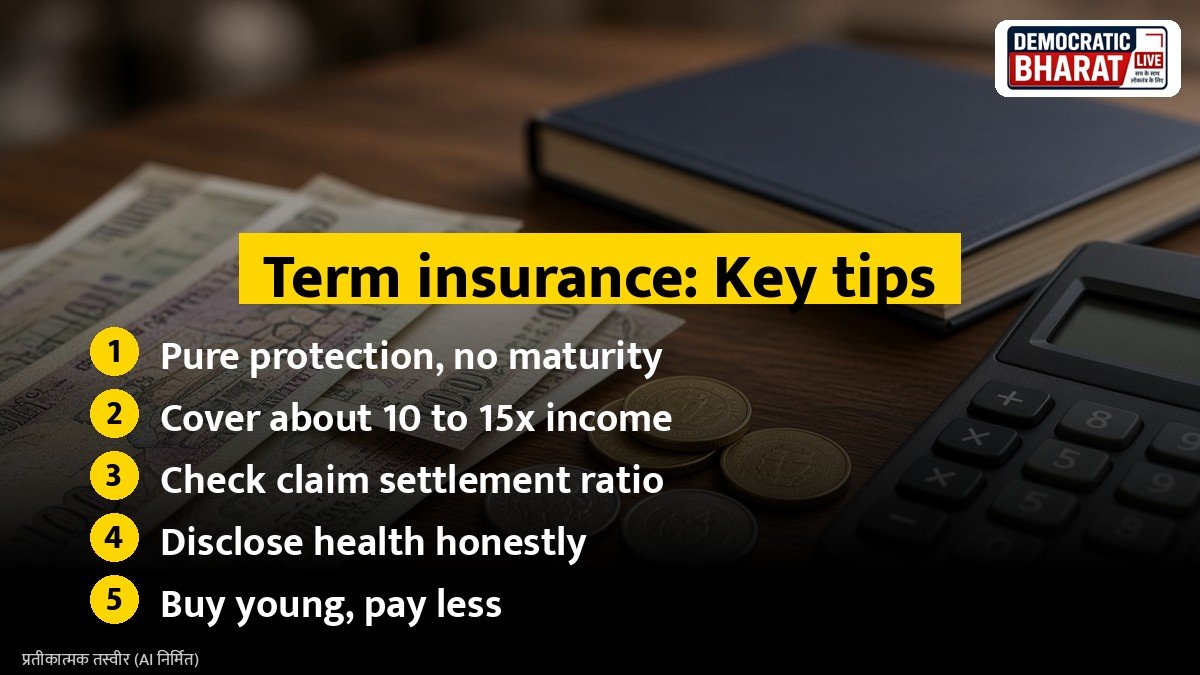
A common rule of thumb is cover of 10 to 15 times your annual income. Also consider:
- Outstanding loans, such as a home loan.
- Children’s education and marriage costs.
- Your spouse’s living costs for many years.
- Existing savings and insurance.
Policy term
Choose a term that covers your working years and major responsibilities, often until about 60 or 65 years of age.
Also Read: Health Insurance Cashless Claim: IRDAI Timelines, Steps and What to Do if It Is Denied | Sukanya Samriddhi Account: Rules, Deposit Limits, Tax Benefits and When the Money Can Be Withdrawn
Claim settlement ratio
The claim settlement ratio shows the share of claims an insurer paid in a year. IRDAI publishes these figures in its annual report. Prefer insurers with a consistently high ratio over several years.
Riders
Riders add extra cover for a small premium:
- Accidental death benefit.
- Critical illness cover.
- Waiver of premium on disability.
Add only riders you really need.
Married Women’s Property Act option
Married men can buy a term policy under the Married Women’s Property (MWP) Act, 1874. The payout then goes only to the wife and children and is protected from creditors.
Tax benefits
- Premiums can be claimed for deduction under Section 80C in the old tax regime, within the overall limit.
- Death benefit paid to the nominee is generally tax free.
Check the latest rules under the Income-tax Act, 2025, in force from 1 April 2026.
Mistakes to avoid
- Hiding health conditions or smoking habits. This can lead to claim rejection.
- Buying too little cover to save on premium.
- Delaying purchase. Premiums rise with age and health issues.
- Not telling your family about the policy.
- Not updating the nominee after marriage or birth of a child.
Free look period
After buying a policy, you get a free look period to review it and return it if unsatisfied, as per IRDAI rules. Check the period mentioned in your policy document.
Grievances
If you have a complaint, first contact the insurer. If not resolved, use IRDAI’s Bima Bharosa portal or approach the Insurance Ombudsman.
Bottom line
Term insurance gives large protection at low cost. Buy adequate cover early, disclose health details honestly and choose an insurer with a strong claims record.
Source / स्रोत: Insurance Regulatory and Development Authority of India, Bima Bharosa, IRDAI, Income Tax Department