India’s folk dances are as varied as its languages and landscapes. Most grew out of farming cycles, festivals, religious rituals and community celebrations. Unlike classical dances, they are usually simple, lively and performed in groups. Here is a state wise guide to some of the best known.
North India
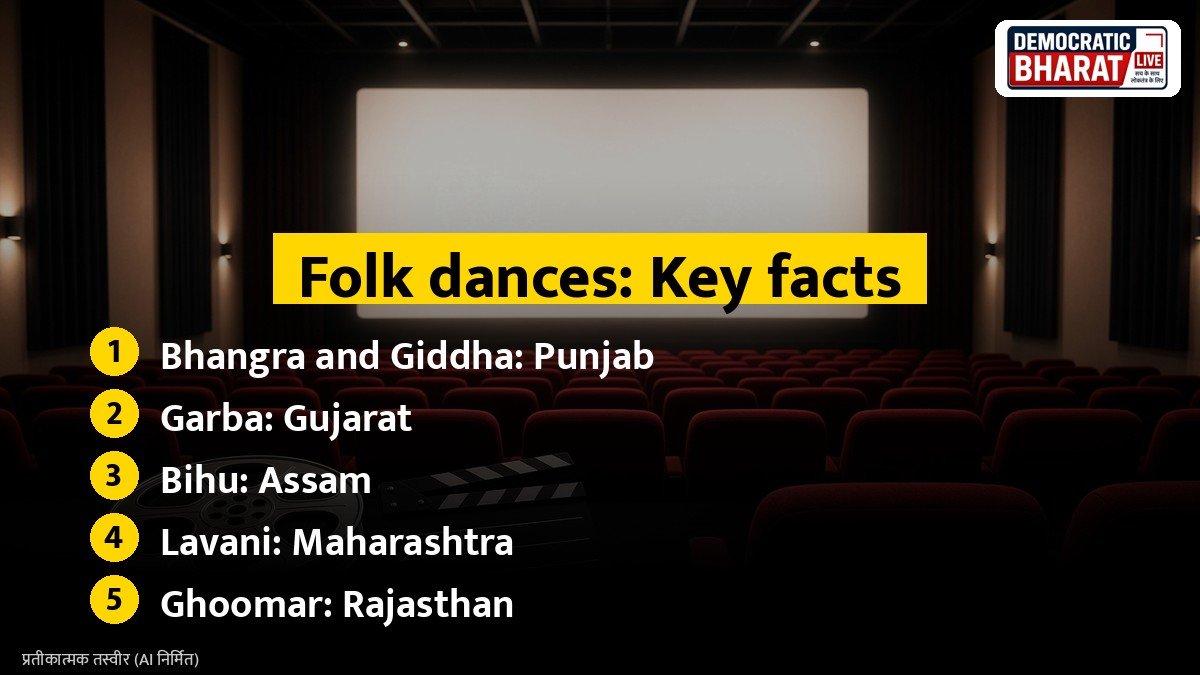
- Punjab: Bhangra, an energetic men’s dance linked to the harvest festival of Baisakhi, and Giddha, a lively women’s dance.
- Himachal Pradesh: Nati, a group dance from Kullu and other regions. A performance in Kullu in 2016 entered the Guinness World Records as the largest folk dance.
- Uttarakhand: Chholiya, a sword dance often performed at weddings in Kumaon.
- Jammu and Kashmir: Rouf, performed by women during festivals.
- Haryana: Phag, linked to the spring season.
West India
- Gujarat: Garba and Dandiya Raas, performed during Navratri. Garba is on UNESCO’s list of intangible cultural heritage.
- Rajasthan: Ghoomar, a graceful women’s dance with swirling skirts, and Kalbelia, performed by the Kalbelia community, also on the UNESCO list.
- Maharashtra: Lavani, a powerful dance set to the beat of the dholki, and Koli, the dance of fishing communities.
- Goa: Dekhni and Fugdi.
East and North East India
- Assam: Bihu, performed during the Bihu festivals, especially Rongali Bihu in spring.
- Odisha, Jharkhand and West Bengal: Chhau, a martial and masked dance on the UNESCO list.
- Manipur: Thang Ta, a martial art form, and many folk dances linked to festivals.
- Mizoram: Cheraw, the bamboo dance.
- Nagaland: war dances performed during the Hornbill Festival.
Also Read: Indian Musical Instruments: The Four Classical Types, Famous Instruments and Their Masters | UNESCO Intangible Cultural Heritage of India: The Full List and What It Means
South India
- Karnataka: Dollu Kunitha, a drum dance, and Yakshagana, a theatre form blending dance and music.
- Kerala: Theyyam, a ritual dance in which performers are believed to embody deities, and Thiruvathirakali, performed by women.
- Tamil Nadu: Karagattam, in which dancers balance pots on their heads, and Kummi.
- Andhra Pradesh and Telangana: Lambadi, performed by the Banjara community.
Central India
- Chhattisgarh: Raut Nacha, performed by the Yadav community around Diwali, and Panthi.
- Madhya Pradesh: Matki dance and tribal dances like Karma.
Keeping traditions alive
The Ministry of Culture’s zonal cultural centres, the Sangeet Natak Akademi and festivals like the Republic Day parade and Rashtriya Sanskriti Mahotsav give folk artists a stage. Many dances are also taught in schools and colleges.
Bottom line
From Bhangra to Bihu and Ghoomar to Theyyam, India’s folk dances celebrate its seasons, faiths and communities. Each one is a window into the life of a region.
Source / स्रोत: Ministry of Culture, Sangeet Natak Akademi, Incredible India, Ministry of Tourism