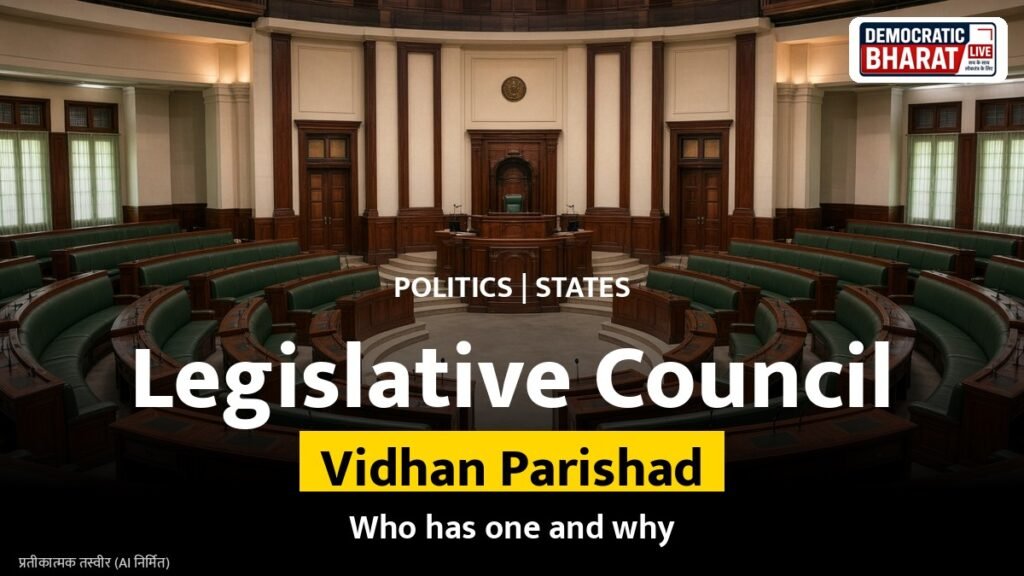
Most Indian states have a single House legislature, the Legislative Assembly or Vidhan Sabha. But a few states also have a second House, the Legislative Council or Vidhan Parishad. Here is how it works.
Which states have one
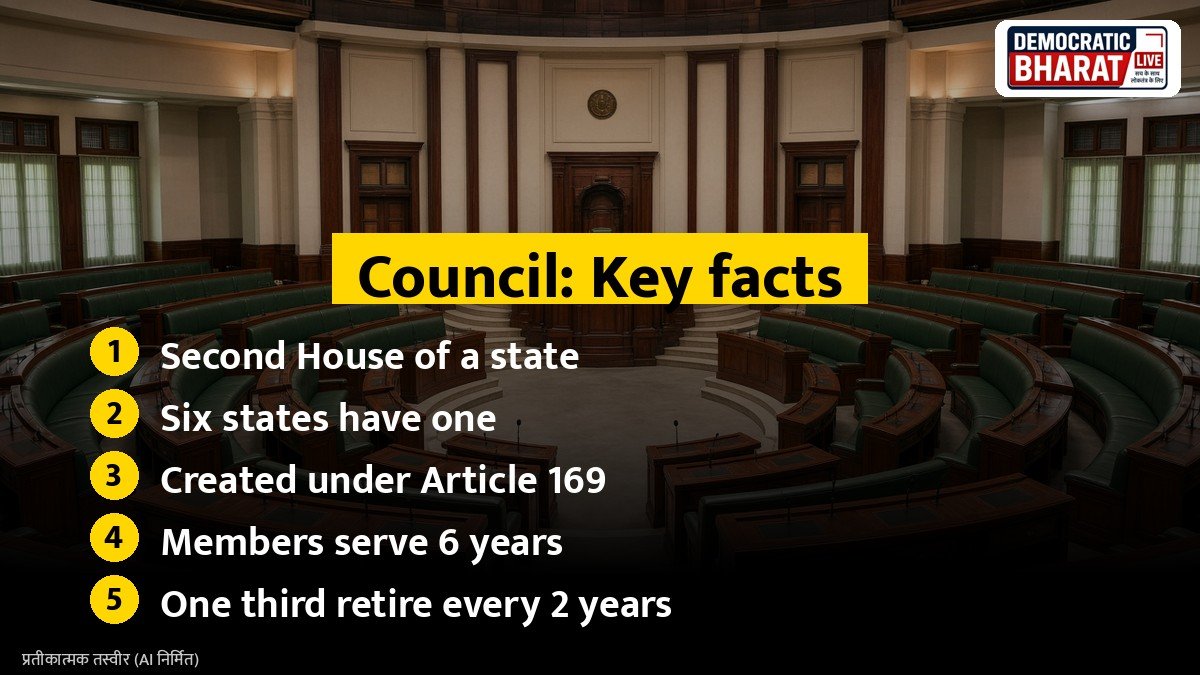
Six states currently have a Legislative Council:
- Andhra Pradesh
- Bihar
- Karnataka
- Maharashtra
- Telangana
- Uttar Pradesh
Jammu and Kashmir had a council until it was abolished when the state was reorganised in 2019.
How a council is created or abolished
Under Article 169 of the Constitution, Parliament can create or abolish a Legislative Council by law, if the state assembly passes a resolution by a majority of its total membership and two thirds of members present and voting. Such a law is not treated as an amendment of the Constitution.
Size
Under Article 171, a council cannot have more than one third of the total members of the state assembly, and not fewer than 40 members.
Also Read: Anti-Defection Law Explained: What the Tenth Schedule Says and When an MLA or MP Is Disqualified | No-Confidence Motion Explained: How It Works in the Lok Sabha and What Happens if a Government Loses
How members are chosen
- About one third are elected by members of local bodies like municipalities and district boards.
- One twelfth are elected by graduates living in the state.
- One twelfth are elected by teachers of secondary schools and above.
- About one third are elected by members of the Legislative Assembly.
- The rest, about one sixth, are nominated by the Governor from people with special knowledge in literature, science, art, cooperative movement and social service.
Term
A Legislative Council is a permanent House and is not dissolved. Members serve six years, and one third of them retire every two years.
Powers
The council’s powers are limited compared with the assembly:
- It can only delay ordinary bills. If the assembly passes a bill again, it becomes law regardless of the council’s view.
- It has very limited power over money bills, which it must return within 14 days.
- The Council of Ministers is responsible only to the assembly.
The debate
Supporters say councils bring experienced voices and allow more careful review of laws. Critics say they are costly, can delay legislation and are sometimes used to accommodate politicians who lose elections. Several states have proposed creating or abolishing councils over the years, with some proposals pending in Parliament.
Bottom line
A Legislative Council is an optional second House found in six states. It adds review and expertise but has far less power than the elected assembly.
Source / स्रोत: Constitution of India, Legislative Department, Election Commission of India, PRS Legislative Research