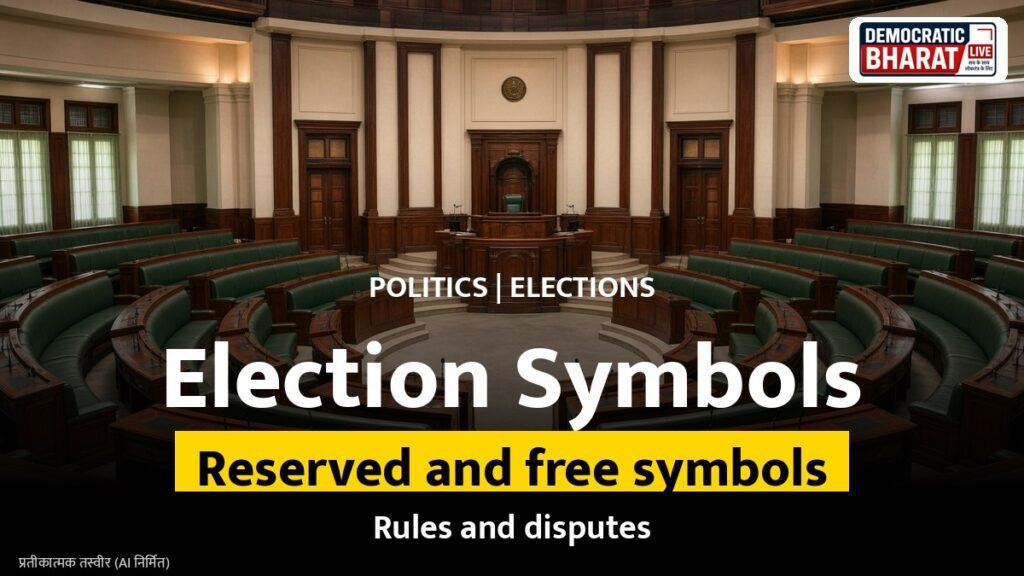
In a country where many voters read different scripts or may not read at all, election symbols help people find their chosen party or candidate on the EVM. The Election Commission of India (ECI) controls how symbols are given. Here is how it works.
The law
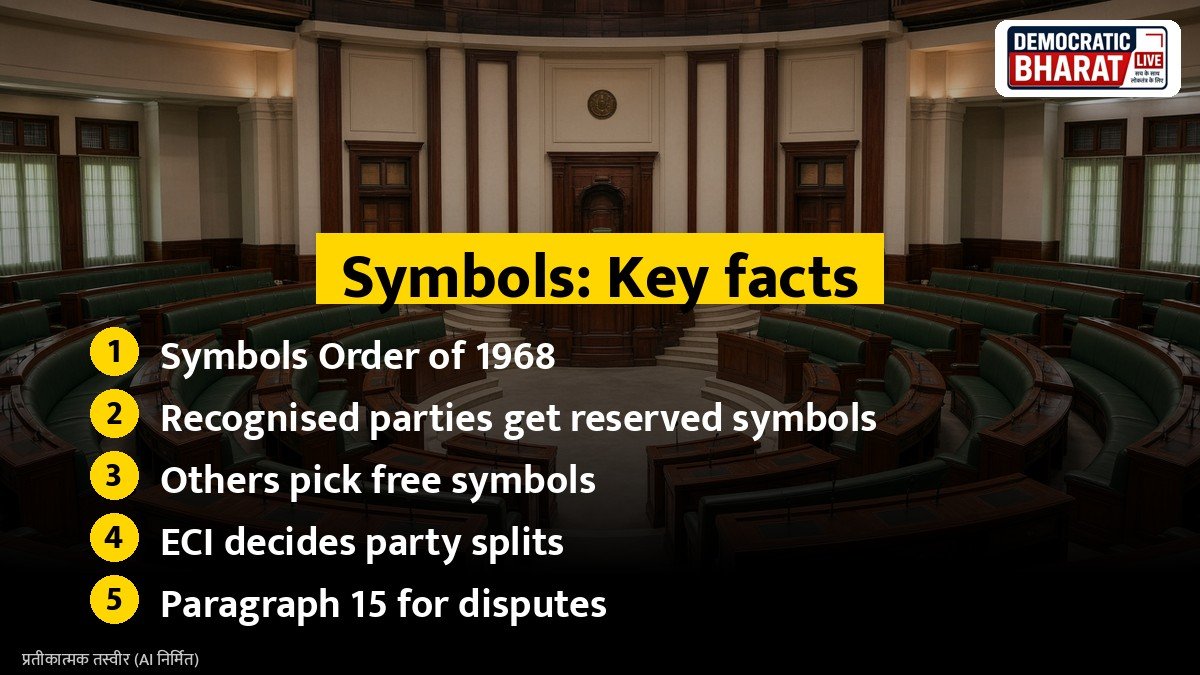
Symbols are allotted under the Election Symbols (Reservation and Allotment) Order, 1968, issued by the Election Commission. The order covers recognition of parties, reservation of symbols and settling disputes.
Types of symbols
- Reserved symbols: given only to recognised national and state parties. No one else can use them in the area where the party is recognised.
- Free symbols: a list of symbols that the ECI notifies for each election. Registered unrecognised parties and independent candidates choose from this list.
National and state parties
A party is recognised as a national party if it meets one of these conditions:
- Wins at least 6 percent of valid votes in four or more states in a Lok Sabha or assembly election, and wins at least four Lok Sabha seats.
- Wins at least 2 percent of Lok Sabha seats from at least three states.
- Is recognised as a state party in at least four states.
State parties have their own criteria based on votes and seats in a state. The ECI reviews party status after elections and can withdraw recognition.
Also Read: By-Election Rules in India: When a Seat Falls Vacant and Why Polls Must Be Held Within Six Months | Model Code of Conduct Explained: What Governments and Parties Cannot Do Once Elections Are Announced
Common symbol for unrecognised parties
Registered unrecognised parties can apply for a common symbol for all their candidates in an election, if they meet certain conditions such as contesting a minimum number of seats.
Symbol disputes
When a recognised party splits and rival groups claim the name and symbol, the ECI decides under Paragraph 15 of the Symbols Order. It looks at tests such as:
- Support among elected MPs and MLAs.
- Support within the party organisation.
- The party constitution.
In recent years, the ECI decided such disputes in the Shiv Sena case in 2023 and the Nationalist Congress Party case in 2024, giving the party name and symbol to the factions with majority support among legislators. Both decisions were challenged in the Supreme Court.
Freezing a symbol
During a dispute, the ECI may freeze the party’s symbol and give interim names and symbols to each faction until it decides.
Why symbols matter
Symbols build brand identity for parties. Well known symbols can carry a party’s support across generations and languages.
Bottom line
Election symbols are controlled by the Election Commission under the 1968 Symbols Order. Recognised parties get reserved symbols, others choose free symbols, and disputes are settled by the ECI.
Source / स्रोत: Election Commission of India, Election Symbols (Reservation and Allotment) Order, 1968, Supreme Court of India