Heritage is not only monuments and temples. It also includes living traditions like music, dance, festivals, rituals and crafts that pass from one generation to the next. UNESCO recognises these as intangible cultural heritage. India has many elements on UNESCO’s Representative List. Here is a guide.
What is intangible cultural heritage
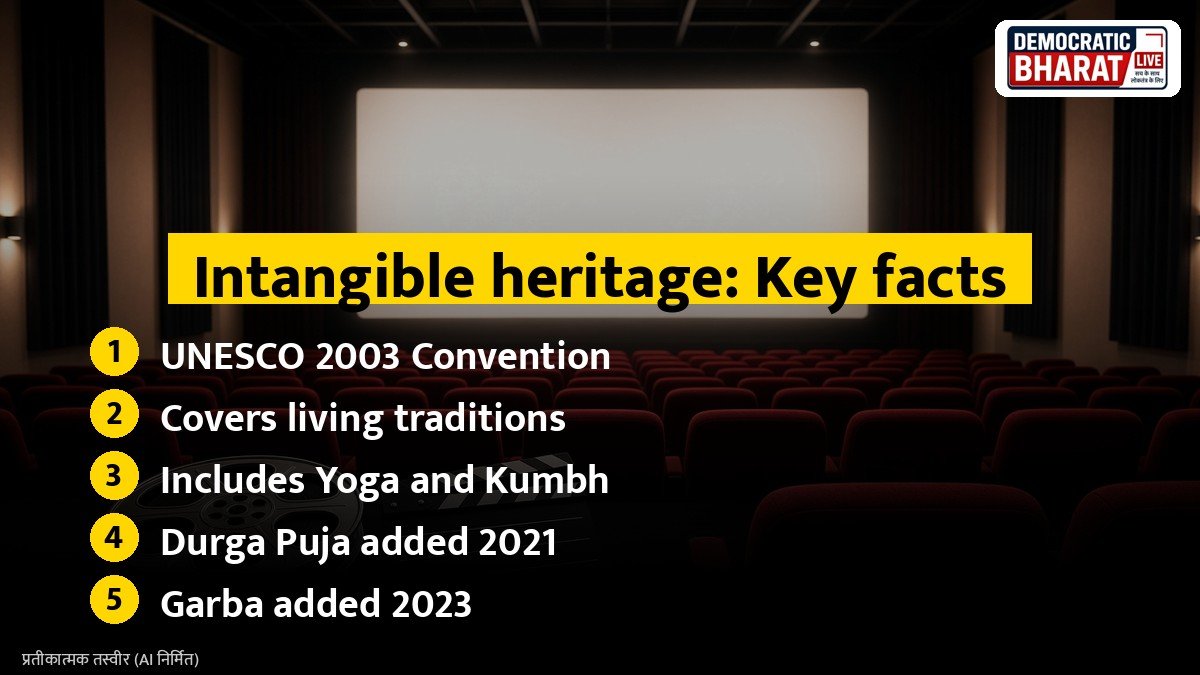
Under UNESCO’s 2003 Convention for the Safeguarding of the Intangible Cultural Heritage, it means practices, knowledge, skills and expressions that communities recognise as part of their heritage. India ratified the convention in 2005. The Sangeet Natak Akademi is the nodal body for India’s nominations.
India’s elements
- Kutiyattam, Sanskrit theatre of Kerala.
- Tradition of Vedic chanting.
- Ramlila, the traditional performance of the Ramayana.
- Ramman, religious festival and ritual theatre of the Garhwal Himalaya.
- Mudiyettu, ritual theatre and dance drama of Kerala.
- Kalbelia folk songs and dances of Rajasthan.
- Chhau dance of eastern India.
- Buddhist chanting of Ladakh.
- Sankirtana, ritual singing, drumming and dancing of Manipur.
- Traditional brass and copper craft of the Thatheras of Jandiala Guru, Punjab.
- Yoga, inscribed in 2016.
- Nawrouz, shared with several other countries.
- Kumbh Mela, inscribed in 2017.
- Durga Puja in Kolkata, inscribed in 2021.
- Garba of Gujarat, inscribed in 2023.
India hosted the session of UNESCO’s intergovernmental committee on intangible heritage in New Delhi in December 2025, where Deepavali was added to the list. For the latest complete list, check UNESCO’s official intangible heritage website.
What inscription means
- It raises global awareness of the tradition.
- It encourages communities and governments to protect and pass it on.
- It does not mean UNESCO owns or controls the tradition.
- Countries must report on safeguarding measures.
Also Read: IFFI Goa Guide: What Is the International Film Festival of India, Indian Panorama and How to Register | How TV Ratings Work in India: What BARC Measures, BAR-O-Meters and Why Ratings Matter
India’s own national list
The Ministry of Culture maintains a National List of Intangible Cultural Heritage, which includes many more traditions from across the country, grouped under performing arts, oral traditions, social practices, knowledge systems and crafts.
How a tradition is nominated
The government, with community consent, prepares a detailed nomination file. UNESCO’s evaluation body reviews it, and the intergovernmental committee decides at its annual session. Countries can usually submit one national nomination per cycle, along with joint nominations.
Why it matters
Many traditions face threats from changing lifestyles, migration and loss of patronage. Recognition can bring support, tourism and pride, helping younger generations stay connected to their culture.
Bottom line
From ancient Vedic chanting to Garba, India’s intangible heritage on the UNESCO list shows the depth of its living culture. Each element is a reminder to protect traditions that are still alive today.
Source / स्रोत: UNESCO Intangible Cultural Heritage, Ministry of Culture, Sangeet Natak Akademi