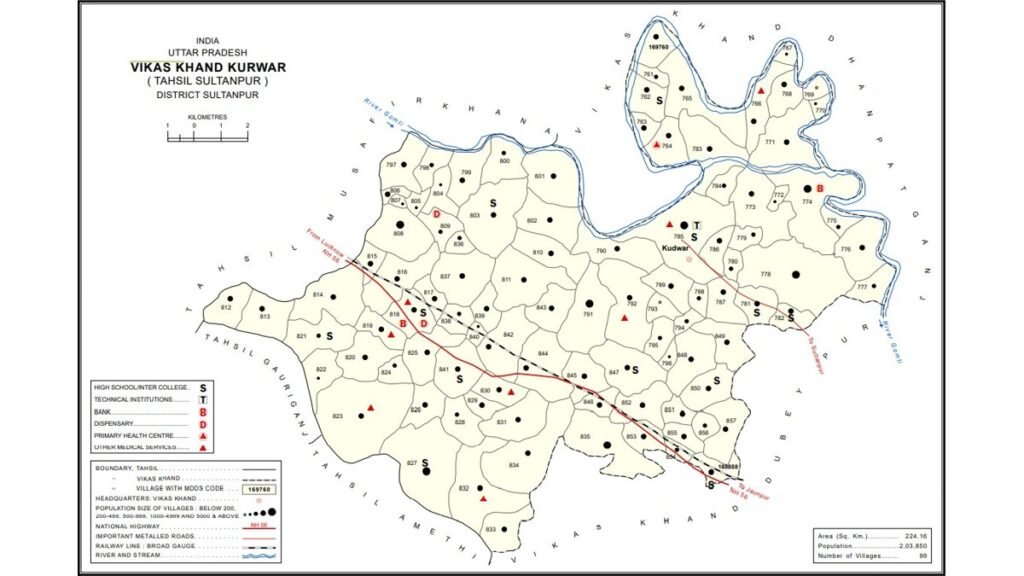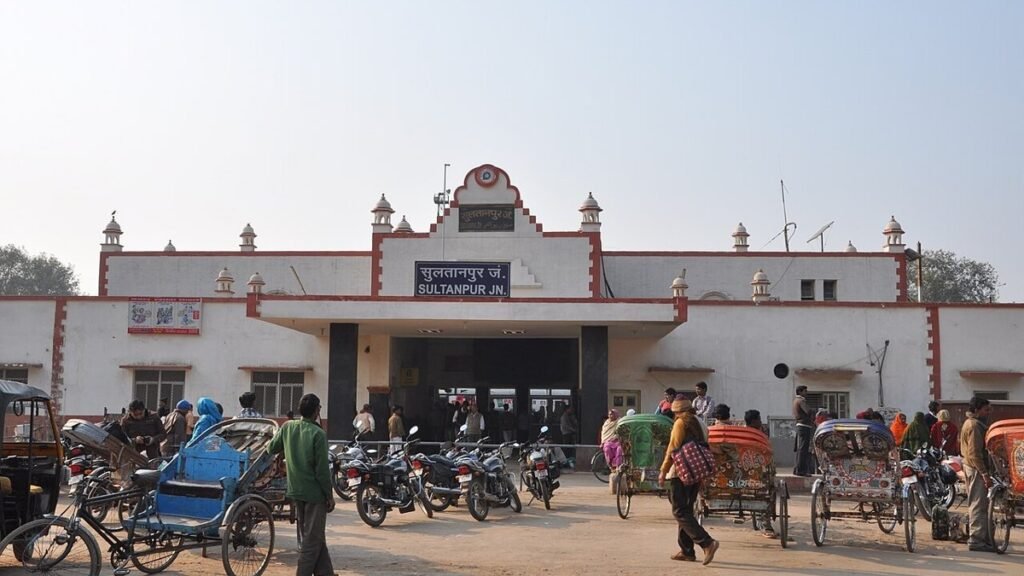
Sultanpur is a district in the Ayodhya division of Uttar Pradesh, located on the banks of the Gomti river. For administration, the district is divided into tehsils. A tehsil is the unit of revenue administration, where land records are maintained, certificates are processed and revenue disputes are heard. The official website of the district administration, sultanpur.nic.in, lists five tehsils. This explainer puts that official information in simple terms.
The five tehsils and their villages
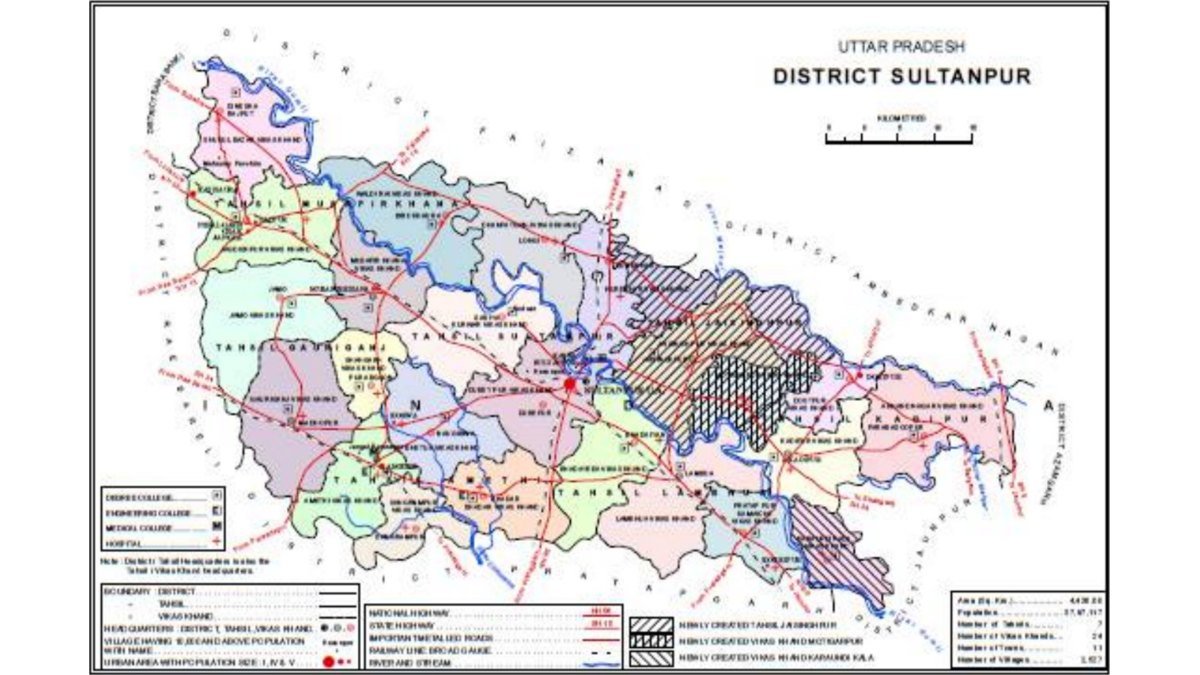
The district website lists each tehsil with its Census 2011 code and the number of revenue villages. Sadar tehsil has code 00915 and 350 revenue villages. Jaisinghpur tehsil has code 00916 and 395 revenue villages. Lambhua tehsil has code 00917 and 456 revenue villages, the highest among the five. Kadipur tehsil has code 00918 and 376 revenue villages. Baldirai tehsil has code 01058 and 188 revenue villages.
Taken together, these add up to 1,765 revenue villages in the district. A revenue village is the unit in whose name land records such as the khatauni and khasra are kept. A revenue village is not the same as a gram panchayat. One gram panchayat may include one or more revenue villages, which is why people sometimes find different names in land records and in panchayat documents.
The Census codes matter more than they seem. Government databases such as the Local Government Directory, maintained by the Ministry of Panchayati Raj at lgdirectory.gov.in, use standard codes for districts, sub districts and villages. When a name is spelt differently in two documents, these codes help match records correctly, which is useful for scheme databases and land records alike.
Officials at the tehsil level
In Uttar Pradesh, the Sub Divisional Magistrate, or SDM, is the senior administrative officer at the tehsil level. Revenue work is managed by the tehsildar and naib tehsildar. At the village level, the lekhpal maintains land records, while the revenue inspector, commonly called the kanungo, supervises them. Land measurement, mutation of records and damage surveys after floods or other disasters are handled by this team.
What people visit a tehsil for
Most residents deal with the tehsil for certificates and land matters. Income, caste and domicile certificates in Uttar Pradesh are applied for online through the e District service, but they are verified by the lekhpal and revenue inspector and approved at the tehsil. After buying land, getting the new owner’s name entered in the khatauni, a process known as mutation or dakhil kharij, is also a tehsil matter. Boundary disputes and revenue cases are heard in revenue courts at the tehsil level.
To view a copy of the khatauni, a visit to the tehsil is not always needed. The Uttar Pradesh government’s land records portal, upbhulekh.gov.in, lets users select the district, tehsil and village and search by account number or name. For this, it helps to know the correct name of your tehsil and village, which is where the official list becomes useful in daily life.
Grievance days and complaints
Tehsils in Uttar Pradesh hold Sampoorna Samadhan Diwas on fixed days, where officials hear public grievances. The dates and venues are announced by the district administration. Residents can also use the state government’s Jansunwai portal to file complaints online and track their status.
Before visiting a tehsil, carry an identity proof, Aadhaar, old land documents and the receipt of any application already made. The status of certificate applications can be checked on the e District portal using the application number. Using a Common Service Centre or the official portal is safer than paying a middleman.
In short, Sultanpur district has five tehsils, Sadar, Jaisinghpur, Lambhua, Kadipur and Baldirai, with 1,765 revenue villages according to the district administration’s list. Administrative boundaries can change over time, so always confirm current details on sultanpur.nic.in and official notices of the district administration.
Source: District Sultanpur, Tehsil list, District Sultanpur, Subdivision and Blocks, UP Bhulekh