Every winter, air quality in many north Indian cities falls to poor, very poor or severe levels. Fine particles called PM2.5 can enter deep into the lungs. An N95 mask can reduce how much of this you breathe. Here is how to use one well.
What N95 means
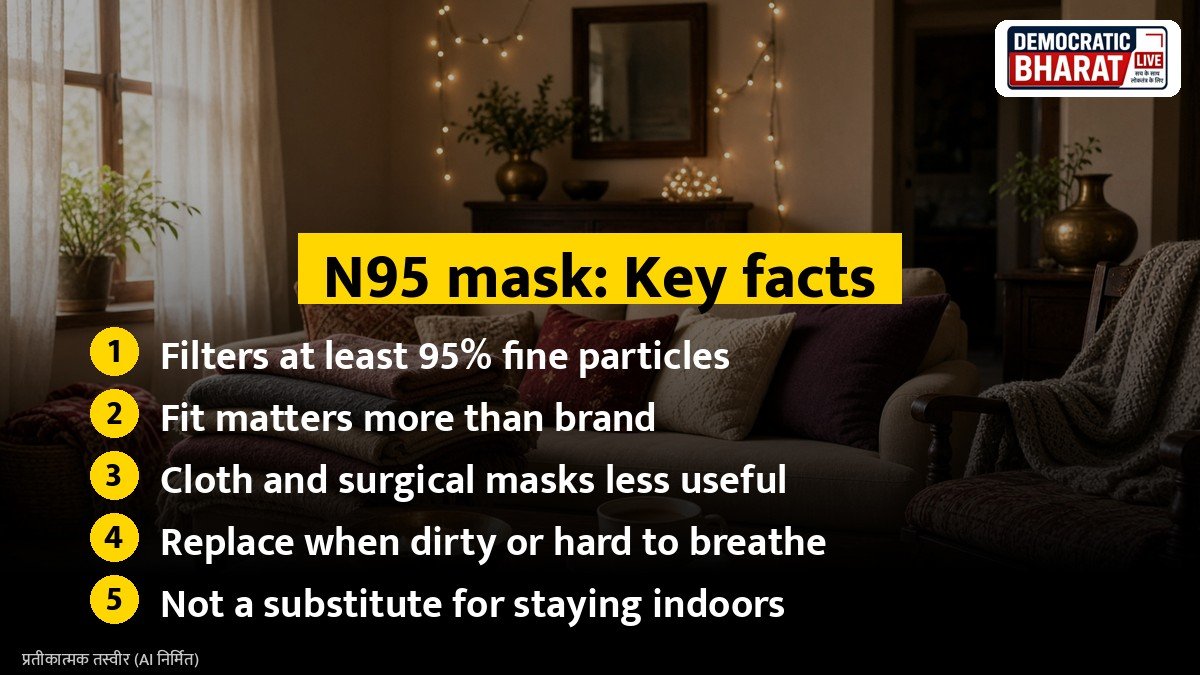
An N95 respirator filters at least 95 percent of very small airborne particles, around 0.3 microns in size, when it fits well. The term comes from US certification. In India, similar respirators are tested under BIS standards and are often labelled FFP2.
Expert view
Dr Randeep Guleria, pulmonologist and former director of AIIMS New Delhi, has repeatedly advised in public health messages that well fitted N95 masks can help reduce exposure on high pollution days, while cloth and surgical masks offer little protection against fine particles.
How to choose
- Look for a certification mark and the manufacturer’s details.
- Choose a size that fits your face snugly.
- Masks with an exhalation valve are more comfortable, but do not filter air you breathe out.
- Avoid fake products sold without labels.
Also Read: How Much Salt Should You Eat a Day? What WHO and ICMR-NIN Guidelines Say About Daily Salt Intake | Oral Health Basics: How to Brush Right, Why Fluoride Matters and Habits That Damage Teeth
How to wear it
- Wash your hands.
- Place the mask over the nose and mouth, with the straps around the head, not the ears, if designed so.
- Press the metal strip to shape it over your nose.
- Check the fit: breathe out sharply and feel for air leaking at the edges. Adjust until there are no leaks.
Beards reduce the seal and make masks less effective.
How long to use
N95 masks are generally meant for limited use. Replace the mask when it is dirty, damaged, wet or hard to breathe through. Do not wash it, as washing damages the filter.
Who should be careful
- People with heart or lung disease should ask a doctor before using one, as breathing through it takes more effort.
- N95 masks are not designed for young children, since they rarely fit properly.
Other steps on high AQI days
- Check the AQI on the CPCB Sameer app or website.
- Limit outdoor exercise, especially in the morning and late evening.
- Keep windows closed during peak pollution and use an air purifier if possible.
- People with asthma should keep medicines handy.
Bottom line
A well fitted N95 mask can cut exposure to harmful particles, but fit matters most. Combine it with other protective steps when the air is bad.
Disclaimer: This article is for general information only and is not a substitute for medical advice. Consult a qualified doctor before starting any treatment or if you have symptoms.
Source / स्रोत: Central Pollution Control Board, AQI, Ministry of Health and Family Welfare, Bureau of Indian Standards