The central government, under the leadership of Prime Minister Narendra Modi, has renewed its focus on the Delimitation Bill following a previous setback in the Lok Sabha. The administration is currently exploring the possibility of convening a special session of Parliament to advance this legislative agenda, as the political environment has undergone significant shifts since the bill failed to secure the necessary two-thirds majority in April.
Parliamentary Status and Legislative Background
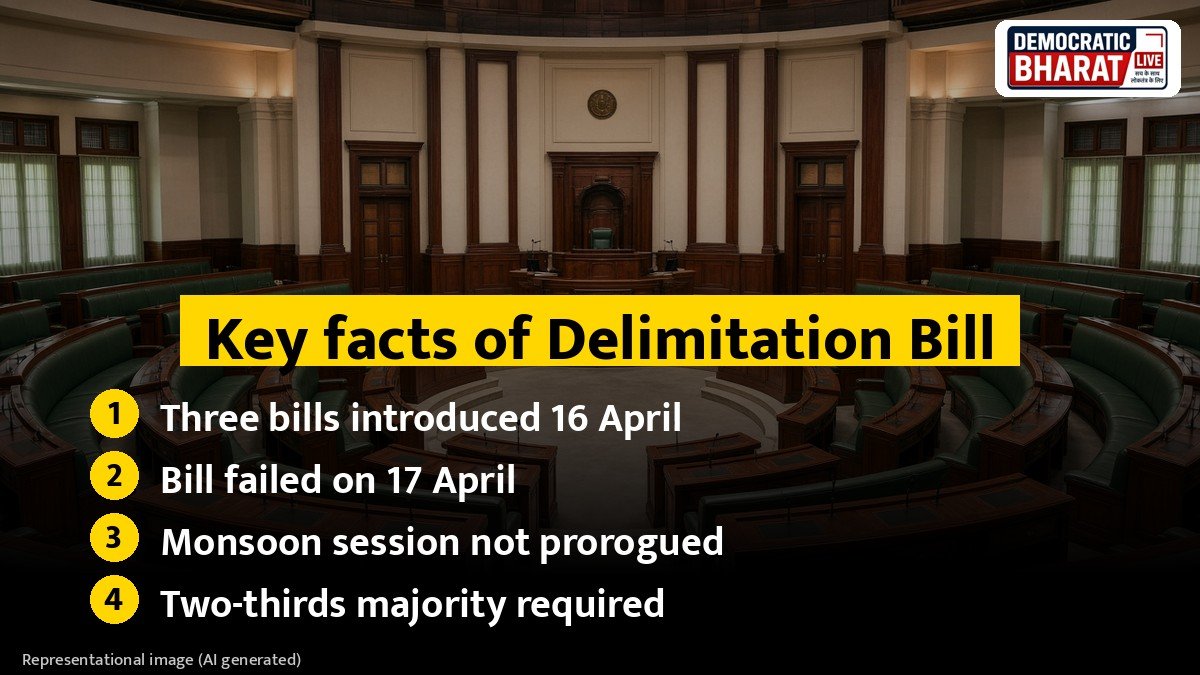
A critical factor in the government’s current planning involves the status of the recent monsoon session. Although the session was adjourned sine die on 13 August 2026, the formal prorogation of both houses of Parliament has not yet been executed. This procedural detail provides the government with the necessary parliamentary options to call for a new session. The legislative package in question was initially introduced on 16 April 2026 by the Minister of State for Law and Justice, Arjun Ram Meghwal. The package comprised three specific bills: the Constitution 131st Amendment Bill 2026, the Delimitation Bill 2026, and the Union Territories Laws Amendment Bill 2026. However, the Constitution Amendment Bill failed to pass on 17 April 2026 due to a lack of sufficient support within the house.
| Bill Name | Date of Introduction |
|---|---|
| Constitution 131st Amendment Bill 2026 | 16 April 2026 |
| Delimitation Bill 2026 | 16 April 2026 |
| Union Territories Laws Amendment Bill 2026 | 16 April 2026 |
Shifting Political Landscape and Alliances
The political dynamics within the country have evolved considerably since the bills were first presented in April. Reports indicate that the INDIA alliance has experienced a reduction in its internal cohesion. Specifically, there are claims that the Trinamool Congress has faced a significant internal division, with 20 out of its 22 members of parliament reportedly moving away from the party leadership to align with the BJP-led NDA. Furthermore, the departure of the DMK from the Congress-led coalition represents another major shift. The DMK, previously considered a cornerstone of the opposition bloc, is now the subject of speculation regarding its potential support for the central government on the delimitation issue, although no official confirmation of such a stance has been provided by the party.
Opposition Concerns and Calls for Consultation
The opposition remains steadfast in its resistance to the proposed delimitation process. Their primary argument is that the current methodology for redrawing constituencies could disproportionately increase the political influence of North Indian states while simultaneously diminishing the representation of South Indian states. Opposition leaders contend that basing seat distribution on population metrics penalizes states that have achieved success in population control initiatives. In response to the government’s renewed interest in the bill, Congress President Mallikarjun Kharge has addressed a letter to Prime Minister Modi. In this communication, he has formally demanded that an all-party meeting be convened to discuss any new proposals related to the delimitation process. Kharge emphasized that such a fundamental constitutional amendment should not be pursued without exhaustive consultation and consensus-building among all political stakeholders, arguing that the gravity of the change necessitates the input of every political party represented in the legislature.
The government’s renewed efforts reflect a strategic pivot as they look to navigate the complexities of the legislative process. By leveraging the current parliamentary status, the administration aims to overcome the hurdles that prevented the passage of the Constitution 131st Amendment Bill 2026 earlier in the year. The lack of the required two-thirds majority in April served as a major political challenge for the administration, prompting a reassessment of their approach to building support. As the government prepares for potential further action, the focus remains on whether the evolving alliances and the shifting stance of key political players will provide the necessary numbers to ensure the legislation’s success. The ongoing discourse underscores the sensitivity of the delimitation issue, which touches upon the fundamental structure of political representation across the nation’s diverse states.
Observers of the legislative process note that the absence of formal prorogation is a significant procedural detail that grants the government flexibility. This window of opportunity is being carefully considered as officials weigh the timing and necessity of a special session. Meanwhile, the concerns raised by the opposition, particularly regarding the potential imbalance between northern and southern states, continue to dominate the political narrative. The demand for an all-party meeting, as articulated by the Congress leadership, highlights the demand for transparency and collective decision-making on matters of constitutional significance. As the situation develops, the government must balance its legislative goals with the need to address the anxieties of various political stakeholders, ensuring that any move towards redrawing constituencies is viewed through a lens of national consensus rather than unilateral action.
Source / स्रोत: Prabhat Khabar