Cauliflower is one of the most popular winter vegetables in India, grown widely in Uttar Pradesh, West Bengal, Bihar, Haryana, Punjab and other states. Its success depends heavily on choosing the right variety for the season. Here is a guide based on advice from ICAR institutes.
Know your variety group
Cauliflower varieties are grouped by the temperature they need to form curds:
- Early varieties: form curds in relatively warm weather, sown in early monsoon months.
- Mid season varieties: for moderate winter conditions.
- Late or snowball varieties: need cool winter temperatures and are sown later.
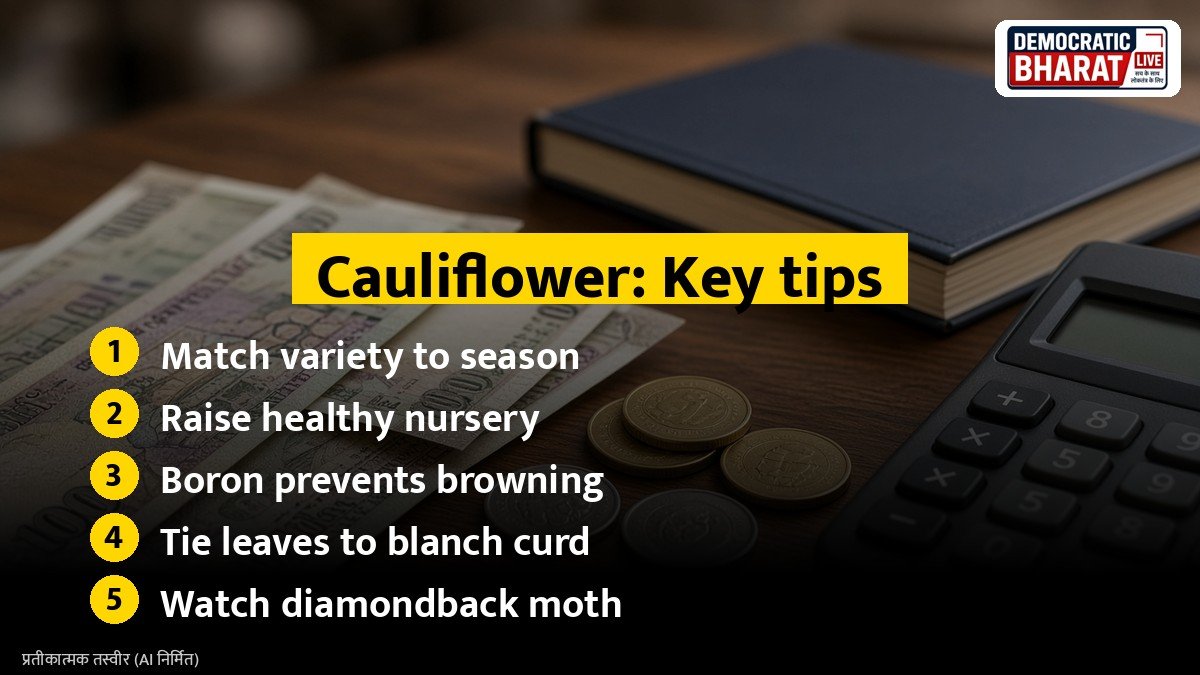
Sowing a variety in the wrong season leads to poor curds, early bolting or leafy curds. ICAR’s Indian Agricultural Research Institute (IARI) has released many varieties under the Pusa name for different groups. Ask your Krishi Vigyan Kendra which variety suits your sowing date.
Nursery
- Raise seedlings on raised beds or in pro trays.
- Treat seed with a recommended fungicide.
- Protect seedlings from heavy rain and pests.
- Transplant when seedlings are about four to six weeks old.
Field preparation and transplanting
Prepare well drained land with plenty of well rotted manure. Transplant seedlings in the evening on ridges or flat beds and water them at once.
Also Read: Rajma Farming Guide: Sowing Time, Varieties, Fertiliser and Care for Kidney Bean Crops | Linseed (Alsi) Farming Guide: Sowing Time, Varieties, Irrigation and Care for a Rabi Oilseed
Nutrition
- Apply fertiliser based on a soil test.
- Cauliflower is sensitive to boron deficiency, which causes brown, hollow curds. Apply boron where soil tests show low levels.
- Molybdenum deficiency causes whiptail, with narrow, strap like leaves, especially in acidic soils.
Irrigation
Keep the soil moist but not waterlogged. Water stress during curd formation reduces quality.
Blanching the curd
For white, attractive curds, tie or fold the inner leaves over the curd when it is small. This protects it from sunlight, which can turn it yellow. Some varieties have self blanching leaves.
Pests and diseases
- Diamondback moth: a major pest that eats leaves. Use traps, trap crops like mustard and recommended sprays.
- Aphids: common in cool weather.
- Black rot and downy mildew: use healthy seed and crop rotation.
Harvest
Harvest when curds are compact, white and full sized, before they become loose. Cut with a few leaves to protect the curd during transport.
Marketing
Cauliflower prices can fall sharply during peak arrival. Staggered planting and choosing early or late varieties can help farmers catch better prices. Check Agmarknet and e-NAM for daily mandi rates.
Bottom line
The right variety for the season, a healthy nursery, boron care and blanching are the keys to good cauliflower curds and better returns.
Source / स्रोत: ICAR Indian Agricultural Research Institute, ICAR Indian Institute of Vegetable Research, Ministry of Agriculture and Farmers Welfare