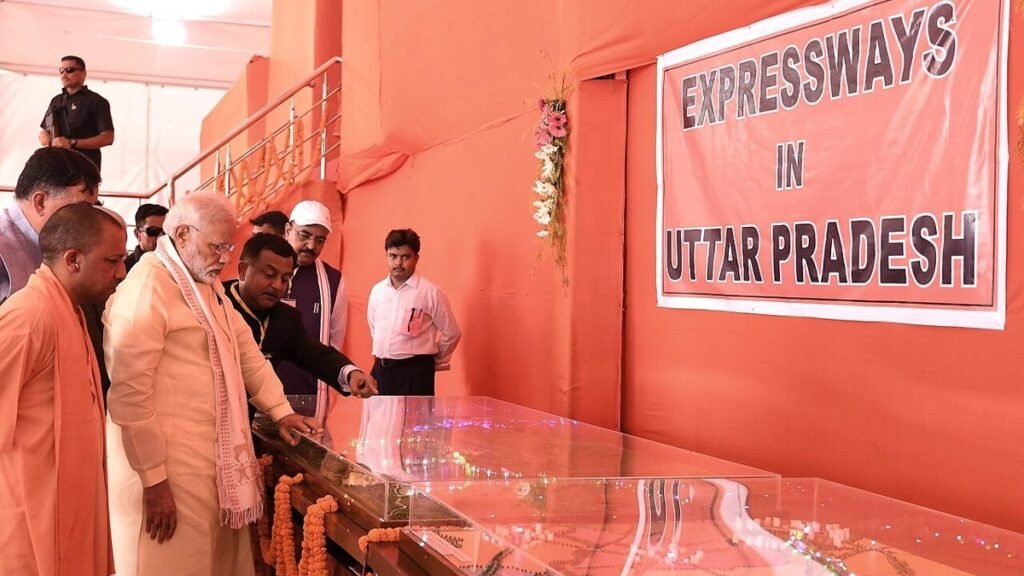
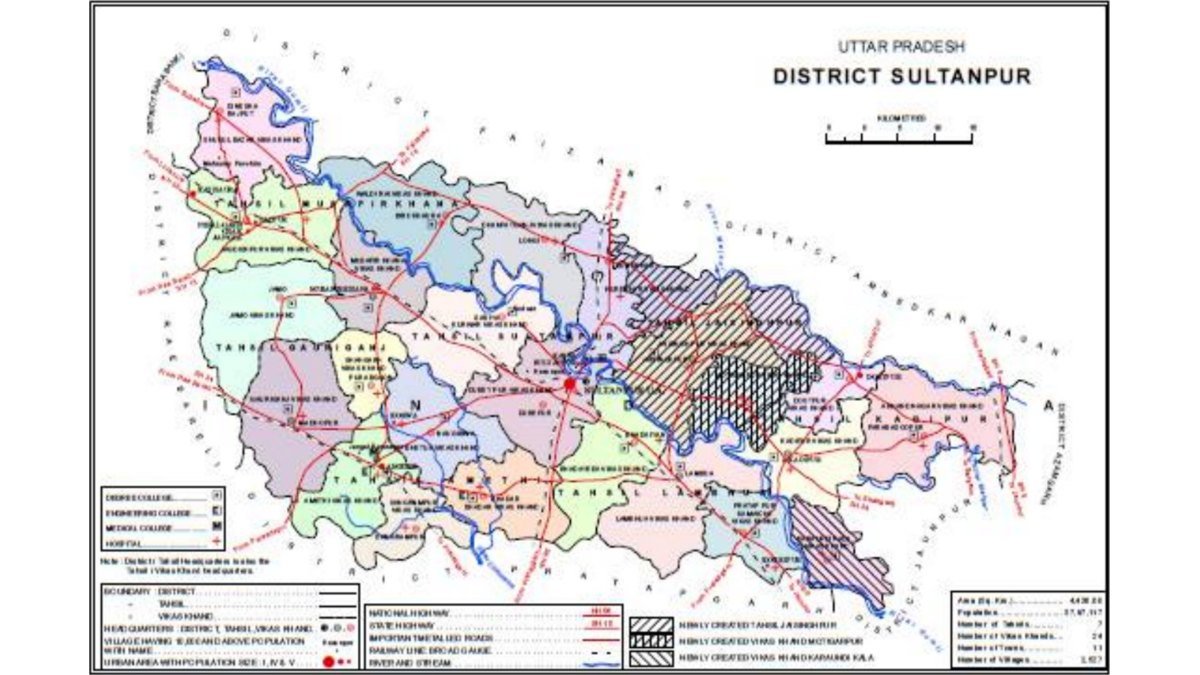
The Purvanchal Expressway is one of Uttar Pradesh’s major access controlled expressways, linking Lucknow with Ghazipur in the eastern part of the state. Sultanpur is among the important districts on its route. The expressway was built by the Uttar Pradesh Expressways Industrial Development Authority, or UPEIDA, and was inaugurated by the Prime Minister on 16 November 2021 at the Kurebhar airstrip in Sultanpur district. This guide uses facts from official PIB and UPEIDA documents.
Key official facts
According to UPEIDA and PIB, the total length of the expressway is 340.824 km, usually rounded to 341 km. It starts at Chand Sarai village on the Lucknow Sultanpur road in Lucknow district and ends near Haidaria village in Ghazipur district, about 18 km before the Uttar Pradesh Bihar border. It is six lanes wide and can be expanded to eight lanes in the future. The project cost, including land, is stated as Rs 22,494.66 crore.
The expressway passes through nine districts: Lucknow, Barabanki, Amethi, Sultanpur, Ayodhya, Ambedkar Nagar, Azamgarh, Mau and Ghazipur. Its foundation stone was laid on 14 July 2018. PIB’s 2021 backgrounder said it was designed for a speed of 120 km per hour, with the speed limit fixed at 100 km per hour. While driving, always follow the limits shown on road signs.
The PIB backgrounder also lists facilities. It says service roads totalling 402 km were built on both sides for nearby villages, eight fuel stations and four CNG stations were planned along the route, and rainwater harvesting pits were built every 500 m in the right of way. Lighting with solar backup was provided at interchanges, flyovers, bridges and underpasses.
The airstrip in Sultanpur
The most distinctive feature of the Purvanchal Expressway is the emergency airstrip in Sultanpur district. Official documents describe it as a 3.2 km long and 34 m wide cement concrete strip built so that Indian Air Force aircraft can land and take off in an emergency. On the day of the inauguration, the Air Force held an air show on this strip, and the Prime Minister landed there in an Air Force aircraft. The strip is in the Kurebhar area, which is also one of the district’s development blocks.
Why it matters for Sultanpur
The expressway has made road travel between Sultanpur, Lucknow and the eastern districts faster. Journeys that once relied only on national and state highways now have an expressway option. The government has also announced plans for industrial corridors along the expressway, and their current status can be checked on the UPEIDA website. Service roads have been built for villages along the route.
Before you drive
The expressway is tolled, and payment is made through FASTag, so keep enough balance and complete KYC. Toll rates are revised from time to time and are published by UPEIDA. Rules for two wheelers, three wheelers and slow vehicles may apply, so read the signs at entry points carefully.
On a high speed road, drowsiness and fatigue are the biggest dangers. On long trips, stop to rest every two to three hours. Wayside amenities offer fuel and refreshments. Check tyre pressure before starting, because under inflated tyres are more likely to fail at high speed. Wear seat belts in both front and rear seats. In an emergency, call the helpline number displayed along the expressway or dial 112.
Carry water and a basic first aid kit, and plan your fuel stops in advance. Avoid stopping on the carriageway; if your vehicle breaks down, move to the shoulder, switch on hazard lights and place a warning triangle behind the vehicle.
In short, the Purvanchal Expressway is a 340.824 km six lane road that passes through nine districts including Sultanpur, which hosts its 3.2 km emergency airstrip. For tolls, speed limits and current rules, check UPEIDA’s official website.
Source: PIB, Purvanchal Expressway backgrounder, November 2021, UPEIDA, The Purvanchal Expressway, PIB, inauguration release