PM POSHAN, short for Pradhan Mantri Poshan Shakti Nirman, is one of the world’s largest school meal programmes. It provides a hot cooked meal to children in government and government aided schools on every school day. Here is how it works.
History
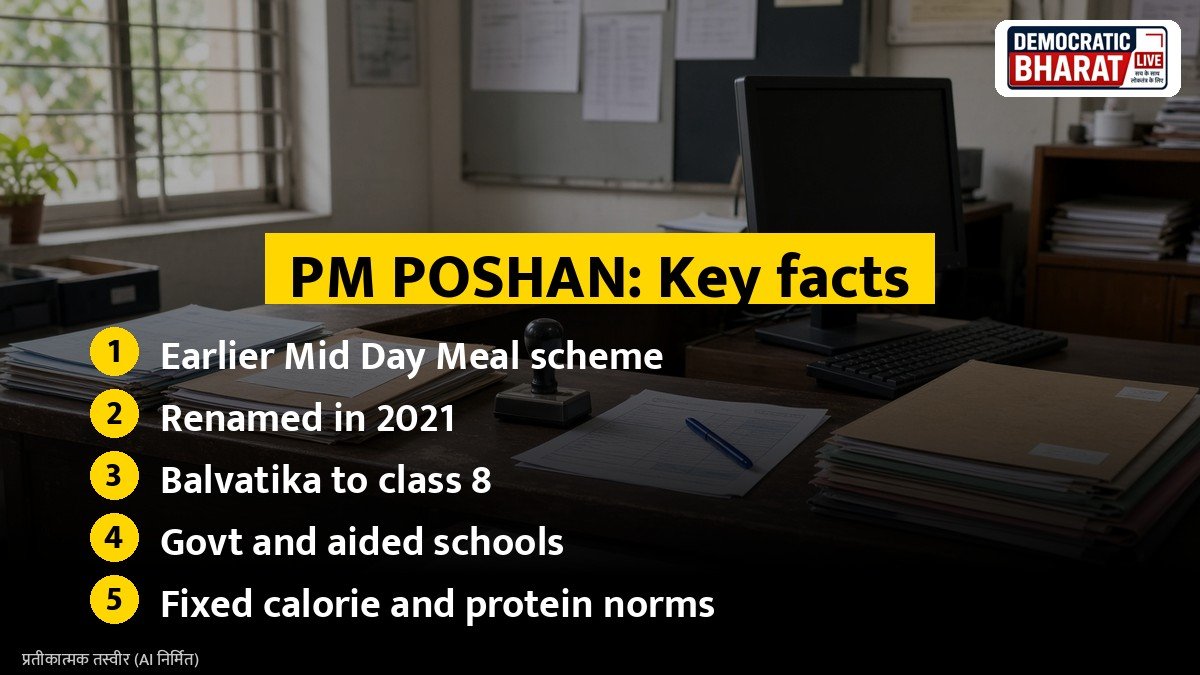
School meals in India go back decades, with Tamil Nadu among the pioneers. The central Mid Day Meal Scheme began in 1995. In 2001, the Supreme Court directed states to provide cooked meals in all government primary schools. In September 2021, the Union Cabinet approved the scheme as PM POSHAN, with an expanded scope.
Who is covered
- Children in Balvatika, the pre primary class, and classes 1 to 8.
- In government schools and government aided schools.
- Crores of children across the country benefit every school day.
Nutrition norms
The scheme sets minimum nutrition levels for each meal:
- Primary classes: about 450 kilocalories and 12 grams of protein.
- Upper primary classes: about 700 kilocalories and 20 grams of protein.
Menus include cereals, pulses, vegetables and oil, and many states add eggs, milk, fruits or local dishes.
Also Read: PM Ujjwala Yojana: Who Gets a Free LPG Connection, How to Apply and Documents Needed | PM Vishwakarma Yojana: 18 Trades Covered, Rs 15,000 Toolkit Aid and Loan up to Rs 3 Lakh at 5 Percent
Aims
- Improve nutrition of school children.
- Encourage enrolment and attendance, especially among poor families.
- Promote social equality, as children of all backgrounds eat together.
- Provide jobs for cooks and helpers, many of them women.
Funding
The cost is shared between the Centre and states, with a higher central share for north eastern and Himalayan states and full central funding for union territories without legislatures. Food grain is supplied by the Centre through the Food Corporation of India.
Special features
- Tithi Bhojan: community members can provide special meals on festivals and occasions.
- School nutrition gardens: schools grow vegetables to add to meals and teach children about food.
- Supplementary nutrition in aspirational districts and areas with high anaemia.
- Use of millets and local foods is encouraged.
Monitoring
- Social audits of the scheme are encouraged in every district.
- School management committees and parents can check quality.
- Food safety and hygiene guidelines must be followed in kitchens.
How parents can help
- Check that meals are served regularly and as per the menu.
- Report problems to the school management committee or district officials.
- Encourage children to eat the school meal.
Bottom line
PM POSHAN gives crores of children a nutritious hot meal every school day. It supports health, learning and equality in classrooms across India.
Source / स्रोत: PM POSHAN, Ministry of Education, Ministry of Education, Press Information Bureau