The Film and Television Institute of India (FTII) in Pune is one of the most respected film schools in Asia. Many of India’s best known actors, directors, cinematographers and editors studied there. Here is a guide.
History
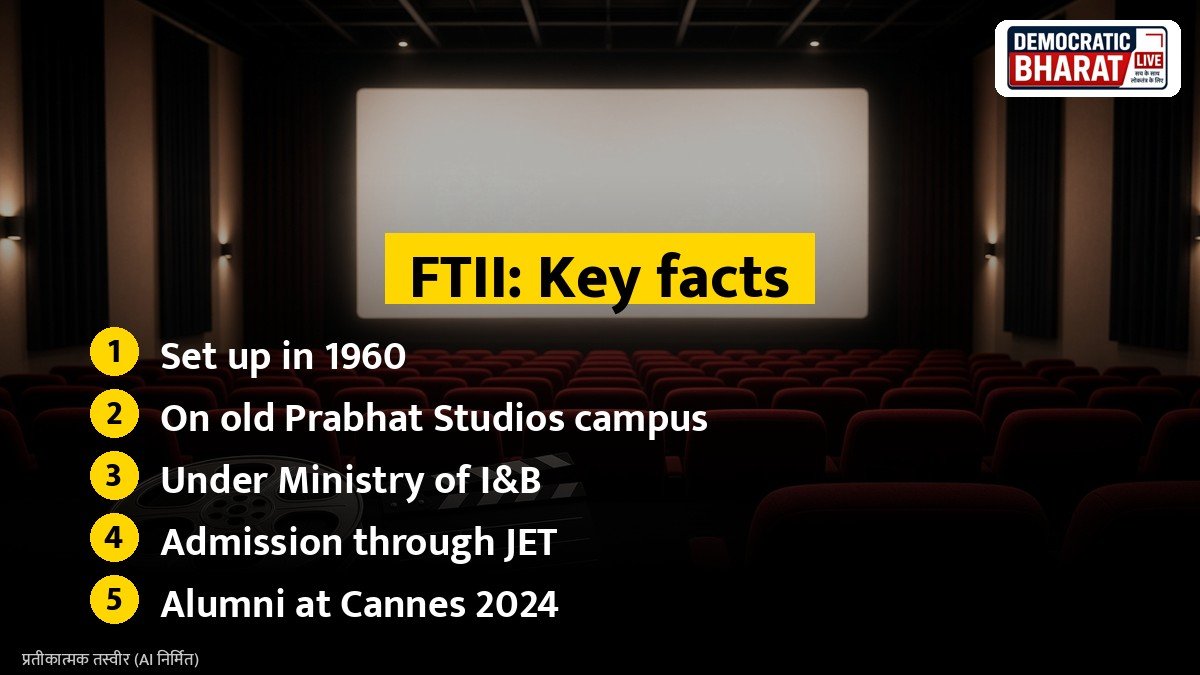
FTII was set up in 1960 as the Film Institute of India on the campus of the historic Prabhat Film Company studios in Pune. A television training wing was added later, and in 1974 the institute took the name Film and Television Institute of India. It is an autonomous body under the Ministry of Information and Broadcasting.
Courses
FTII offers postgraduate programmes and certificate courses in film and television, including:
- Direction and screenplay writing.
- Cinematography.
- Editing.
- Sound recording and sound design.
- Art direction and production design.
- Acting.
- Screen studies.
- Television direction, electronic cinematography, video editing and sound.
The institute also runs short courses across the country under its skilling programme, open to the public in subjects like film appreciation, screenwriting and smartphone filmmaking.
Admission
Admission to the main programmes is through the Joint Entrance Test (JET), conducted for FTII and the Satyajit Ray Film and Television Institute in Kolkata. The process typically includes:
- A written entrance test.
- Orientation and interviews for shortlisted candidates.
- Final merit list.
Check the FTII website for current notifications, eligibility and fees.
Also Read: National School of Drama: History, Famous Alumni, Bharat Rang Mahotsav and How Admission Works | Kolkata International Film Festival: History, Venues, Delegate Passes and What to Expect
Famous alumni
FTII alumni include actors Jaya Bachchan, Shabana Azmi, Naseeruddin Shah and Om Puri, filmmakers Adoor Gopalakrishnan and Mani Kaul, and editors turned directors such as Rajkumar Hirani and Sanjay Leela Bhansali, who studied editing. Many top cinematographers and sound designers in Indian cinema also trained there.
Recent global recognition
In 2024, FTII alumni made headlines at the Cannes Film Festival. Payal Kapadia’s All We Imagine as Light won the Grand Prix, and the FTII student film Sunflowers Were the First Ones to Know, directed by Chidananda S Naik, won the first prize in the La Cinef section for film school entries.
Film archive link
The National Film Archive of India, which preserves Indian films, is located next to FTII in Pune. Students benefit from access to its collection.
Debates
FTII has seen student protests over fees, appointments and course structures at different times, reflecting its role as a lively campus with strong opinions.
Bottom line
FTII Pune has shaped Indian cinema for over six decades. For aspiring filmmakers, its JET based admission is one of the most sought after routes into the industry.
Source / स्रोत: Film and Television Institute of India, Ministry of Information and Broadcasting, Press Information Bureau