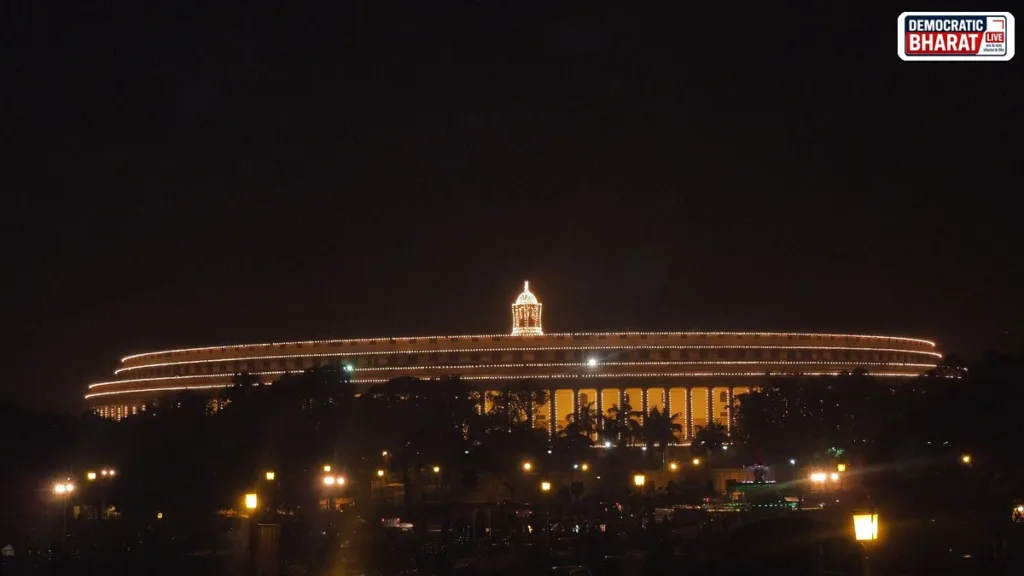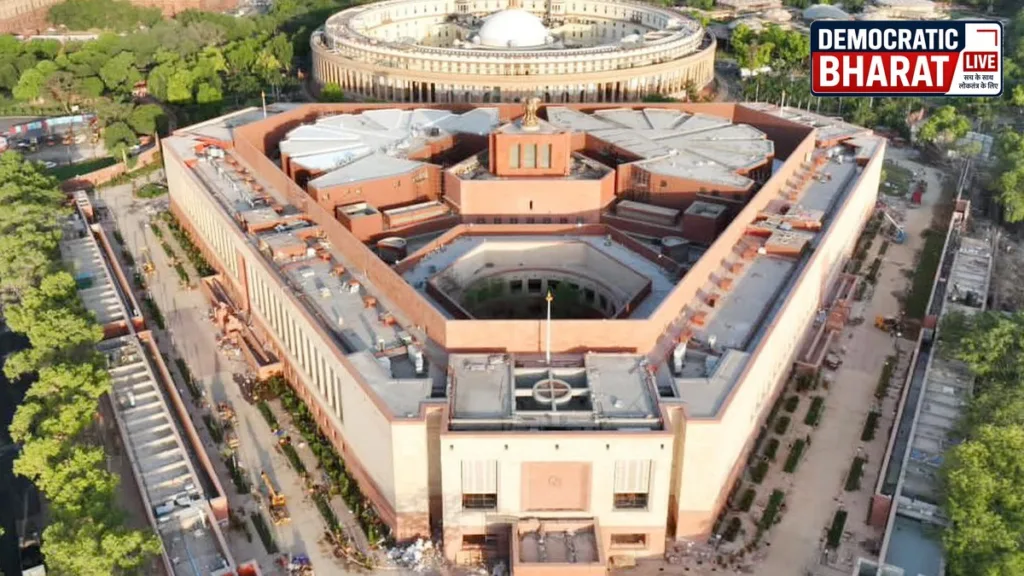


A joint sitting of Parliament is an extraordinary legislative mechanism provided under the Constitution of India to resolve significant disagreements between the two houses. When a bill passed by one house is rejected by the other, or when the houses disagree on amendments to be made, a legislative deadlock can occur. To prevent permanent legislative gridlock on crucial public policy matters, the Constitution empowers the President of India to summon a joint session where both chambers deliberate and vote together. This mechanism ensures that the legislative machinery of the nation does not grind to a halt simply due to persistent disagreements between the directly elected chamber and the revising chamber.
इस खबर में
This procedure serves as an important bridge in the bicameral parliamentary framework. While normal legislative business requires a bill to pass through both the Lok Sabha and the Rajya Sabha independently, the joint sitting creates a unified voting platform. Citizens and students of political science often study this process to understand the balance of power between the directly elected lower house and the indirectly elected upper house in the Indian democracy. The bicameral structure is designed to bring sober second thought to legislation, but when that deliberation transforms into an irreconcilable stalemate, the constitutional architecture provides this specific path toward final resolution.
Constitutional Basis and Article 108
The framework governing this process is primarily detailed under Article 108 of the Constitution of India. According to these constitutional provisions, a joint sitting can be called if a bill has been passed by one house and transmitted to the other, but is subsequently rejected by the other house. It can also be invoked if the houses have finally disagreed about the amendments to be made in the bill, or if more than six months elapse from the date of the reception of the bill by the other house without the bill being passed by the receiving house. The six-month calculation excludes any period during which the house is prorogued or adjourned for more than four consecutive days.
However, the Constitution explicitly excludes Money Bills and Constitution Amendment Bills from the scope of a joint sitting. A Money Bill must originate solely in the Lok Sabha and follows a distinct path involving the Rajya Sabha’s recommendations only, where the upper house has a maximum timeframe of fourteen days to return the measure. Similarly, amending the Constitution requires a special majority in both houses independently under Article 368, meaning a joint session cannot bypass the requirement of dual consent for constitutional changes. These exclusions protect the specific financial supremacy of the Lok Sabha and the federal safeguards inherent in amending the foundational document of the country through separate approvals.
Procedure and Conduct of Business
Once the President notifies the intention to summon a joint sitting, neither house can proceed further with the bill. The rules of procedure for the joint sitting are framed by the President after consultation with the Chairman of the Rajya Sabha and the Speaker of the Lok Sabha. During the session, the Speaker of the Lok Sabha presides over the meeting. If the Speaker is absent, the Deputy Speaker of the Lok Sabha presides, or in their absence, the Deputy Chairman of the Rajya Sabha takes the chair, or any other member agreed upon by the houses if these primary presiding officers are unavailable.
Read this also: What Is the IMF and How Does It Support Global Economy
The quorum for a joint sitting is one tenth of the total number of members of both houses combined. Voting is decided by a majority of the total number of members of both houses present and voting. Because the numerical strength of the Lok Sabha is significantly higher than that of the Rajya Sabha, this voting dynamic often plays a crucial role in determining the final outcome of the disputed legislative proposal. Members cast their votes through divisions or other established parliamentary methods, and amendments may be proposed at the joint sitting only if they are relevant to the deadlock or have been rendered necessary by the delay.
Historical Context and Significance
Throughout the history of independent India, joint sittings have been convened on rare occasions to resolve crucial legislative deadlocks. Notable examples include the passage of the Dowry Prohibition Act, the banking service commission repeal legislation, and the Prevention of Terrorism Act. These historical instances highlight how the mechanism acts as a safety valve when standard legislative procedures encounter prolonged disagreements between the two major parliamentary chambers, ensuring that governance can move forward on matters of pressing national interest.
Political analysts note that the mere provision of a joint sitting encourages both houses to seek consensus before reaching an absolute deadlock. Knowing that a combined numerical strength could eventually decide a controversial measure, lawmakers often engage in deeper committee deliberations and compromise rather than letting a bill lapse. For accurate and official guidance on parliamentary rules and constitutional articles, citizens and researchers should refer to the official parliamentary portal and statutory compilations maintained by the government.
Frequently Asked Questions (FAQ)
What is Joint Sitting of Parliament?
A joint sitting of Parliament is an extraordinary legislative mechanism provided under the Constitution of India to resolve significant disagreements between the two houses. When a bill passed by one house is rejected by the other, or when the houses disagree on amendments to be made, a legislative deadlock can occur. To prevent permanent legislative gridlock on crucial public policy matters, the Constitution empowers the President of India to summon a joint session where both chambers deliberate and vote together. This mechanism ensures that the legislative machinery of the nation does not grind to a halt simply due to persistent disagreements between the directly elected chamber and the revising chamber.
What should you know about Constitutional Basis and Article 108?
The framework governing this process is primarily detailed under Article 108 of the Constitution of India. According to these constitutional provisions, a joint sitting can be called if a bill has been passed by one house and transmitted to the other, but is subsequently rejected by the other house. It can also be invoked if the houses have finally disagreed about the amendments to be made in the bill, or if more than six months elapse from the date of the reception of the bill by the other house without the bill being passed by the receiving house. The six-month calculation excludes any period during which the house is prorogued or adjourned for more than four consecutive days.
What should you know about Procedure and Conduct of Business?
Once the President notifies the intention to summon a joint sitting, neither house can proceed further with the bill. The rules of procedure for the joint sitting are framed by the President after consultation with the Chairman of the Rajya Sabha and the Speaker of the Lok Sabha. During the session, the Speaker of the Lok Sabha presides over the meeting. If the Speaker is absent, the Deputy Speaker of the Lok Sabha presides, or in their absence, the Deputy Chairman of the Rajya Sabha takes the chair, or any other member agreed upon by the houses if these primary presiding officers are unavailable.
What should you know about Historical Context and Significance?
Throughout the history of independent India, joint sittings have been convened on rare occasions to resolve crucial legislative deadlocks. Notable examples include the passage of the Dowry Prohibition Act, the banking service commission repeal legislation, and the Prevention of Terrorism Act. These historical instances highlight how the mechanism acts as a safety valve when standard legislative procedures encounter prolonged disagreements between the two major parliamentary chambers, ensuring that governance can move forward on matters of pressing national interest.
Source: Parliament of India, Legislative Department India, Parliament of India