
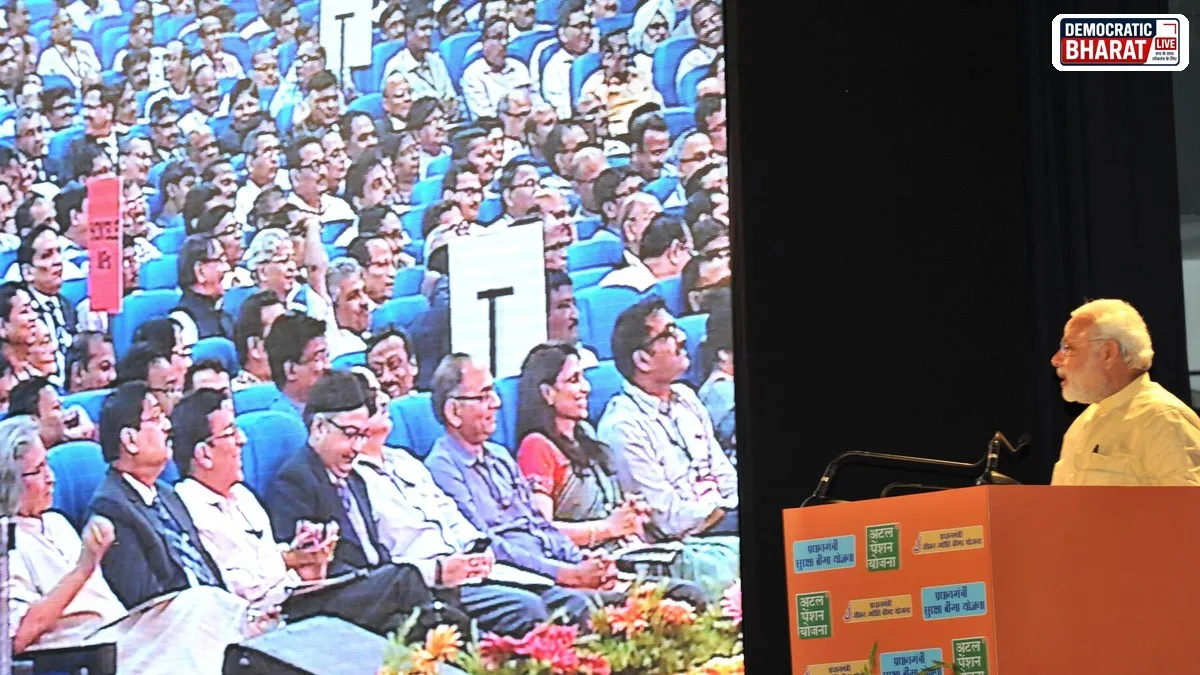
The Pradhan Mantri Suraksha Bima Yojana is an accident insurance scheme launched by the Government of India to provide affordable risk coverage to citizens. It aims to extend financial security to vulnerable sections of society by making accident insurance accessible to all eligible bank account holders. The scheme operates through participating banks and insurance companies, ensuring wide reach across urban and rural areas alike.
इस खबर में
Financial inclusion remains a core objective of this initiative, allowing individuals from diverse economic backgrounds to secure basic protection against unforeseen accidents. Through a simple enrollment process and a minimal annual premium, the scheme encourages habit formation regarding financial planning and risk management. Citizens can easily join the program by visiting their respective bank branches or through online banking portals. By bridging the protection gap in underserved regions, the scheme empowers families to face economic shocks arising from sudden tragedies with greater resilience and confidence.
Access to formal financial services has historically been limited for many households, particularly in remote geographical locations. Government backed welfare programs strive to eliminate these barriers by leveraging existing banking infrastructure. Participating financial institutions act as vital conduits, spreading awareness and facilitating smooth onboarding for interested applicants. Public sector banks, regional rural banks, and private sector institutions collaborate to ensure that administrative hurdles are minimized during the enrollment lifecycle.
Eligibility Criteria and Age Limits
To enroll in the insurance scheme, individuals must meet specific age and banking requirements set by the governing authorities. Generally, resident and non-resident Indian citizens within a designated age bracket are eligible to subscribe to the policy. Applicants are required to possess a savings bank account linked to their Aadhaar card to facilitate seamless premium deductions. Identity verification mechanisms are streamlined to prevent fraudulent claims and ensure that benefits reach genuine beneficiaries without unnecessary delays.
Each eligible individual can enroll in the scheme through only one savings bank account, even if they maintain multiple accounts across different institutions. Bank authorities verify the account details and ensure that the annual premium is debited directly from the designated account through an auto-debit facility. Individuals must maintain a sufficient balance in their accounts to ensure continuous coverage throughout the policy year. In cases where an individual holds multiple accounts and inadvertently pays the premium through more than one, duplicate coverage benefits are typically not admissible under the operational guidelines.
Understanding the administrative prerequisites helps applicants avoid cancellation or rejection of their policy. Bank representatives guide customers through the necessary paperwork, ensuring that nominee details are accurately recorded during registration. Maintaining updated contact information and linking correct identification documents with the bank branch prevents communication gaps during claim settlements.
Coverage Details and Financial Benefits
The policy provides financial compensation in the unfortunate event of accidental death or total and permanent disability resulting from an accident. Partial permanent disability is also covered under specific conditions defined in the master policy document. The predetermined compensation amount is disbursed to the registered nominee or the insured person upon successful verification of the claim. This financial cushion assists families in managing immediate monetary obligations during periods of extreme crisis.
Read this also: PMJJBY and PMSBY: Rs 2 Lakh Insurance for Rs 436 and Rs 20 a Year, Eligibility and How to Enrol
It is important for policyholders to understand the exact scope of coverage, as natural deaths and certain non-accident-related medical conditions are excluded from the benefits. The insurance policy primarily focuses on external, violent, and visible mishaps causing bodily injury or fatality. Detailed terms and conditions are made available by participating financial institutions during the enrollment phase, outlining specific definitions of accidents, disablement categories, and exclusion clauses.
Comprehensive financial literacy campaigns often accompany the distribution of such welfare policies, ensuring that citizens are fully aware of what constitutes a valid claim. Nominees must be informed of the documentation required, including police reports, medical certificates, and discharge summaries, which are essential for substantiating the occurrence of an accidental event.
Premium Payment and Renewal Process
One of the key features of the scheme is its highly affordable annual premium, which is deducted directly from the subscriber bank account. The low cost ensures that financial constraints do not prevent lower-income families from acquiring essential accident insurance protection. Subscribers must give their consent for auto-debit facilities, ensuring hassle-free renewals every year without manual intervention.
The policy coverage typically runs for a specific annual cycle, and renewals occur automatically based on the standing instructions provided by the account holder. If an account lacks sufficient funds at the time of renewal, the policy coverage may lapse until the premium is successfully processed. Citizens should check with their banks or visit official government portals for the most accurate and updated information regarding premium rates and operational guidelines.
Streamlining the renewal mechanism reduces administrative overhead for financial institutions while ensuring uninterrupted safety nets for policyholders. Continuous engagement between banks and account holders reinforces the importance of maintaining adequate balances prior to the designated deduction periods, thereby safeguarding families against sudden lapses in insurance protection.
Frequently Asked Questions (FAQ)
What is PMSBY Accident Cover?
The Pradhan Mantri Suraksha Bima Yojana is an accident insurance scheme launched by the Government of India to provide affordable risk coverage to citizens. It aims to extend financial security to vulnerable sections of society by making accident insurance accessible to all eligible bank account holders. The scheme operates through participating banks and insurance companies, ensuring wide reach across urban and rural areas alike.
What should you know about Eligibility Criteria and Age Limits?
To enroll in the insurance scheme, individuals must meet specific age and banking requirements set by the governing authorities. Generally, resident and non-resident Indian citizens within a designated age bracket are eligible to subscribe to the policy. Applicants are required to possess a savings bank account linked to their Aadhaar card to facilitate seamless premium deductions. Identity verification mechanisms are streamlined to prevent fraudulent claims and ensure that benefits reach genuine beneficiaries without unnecessary delays.
What should you know about Coverage Details and Financial Benefits?
The policy provides financial compensation in the unfortunate event of accidental death or total and permanent disability resulting from an accident. Partial permanent disability is also covered under specific conditions defined in the master policy document. The predetermined compensation amount is disbursed to the registered nominee or the insured person upon successful verification of the claim. This financial cushion assists families in managing immediate monetary obligations during periods of extreme crisis.
What should you know about Premium Payment and Renewal Process?
One of the key features of the scheme is its highly affordable annual premium, which is deducted directly from the subscriber bank account. The low cost ensures that financial constraints do not prevent lower-income families from acquiring essential accident insurance protection. Subscribers must give their consent for auto-debit facilities, ensuring hassle-free renewals every year without manual intervention.