
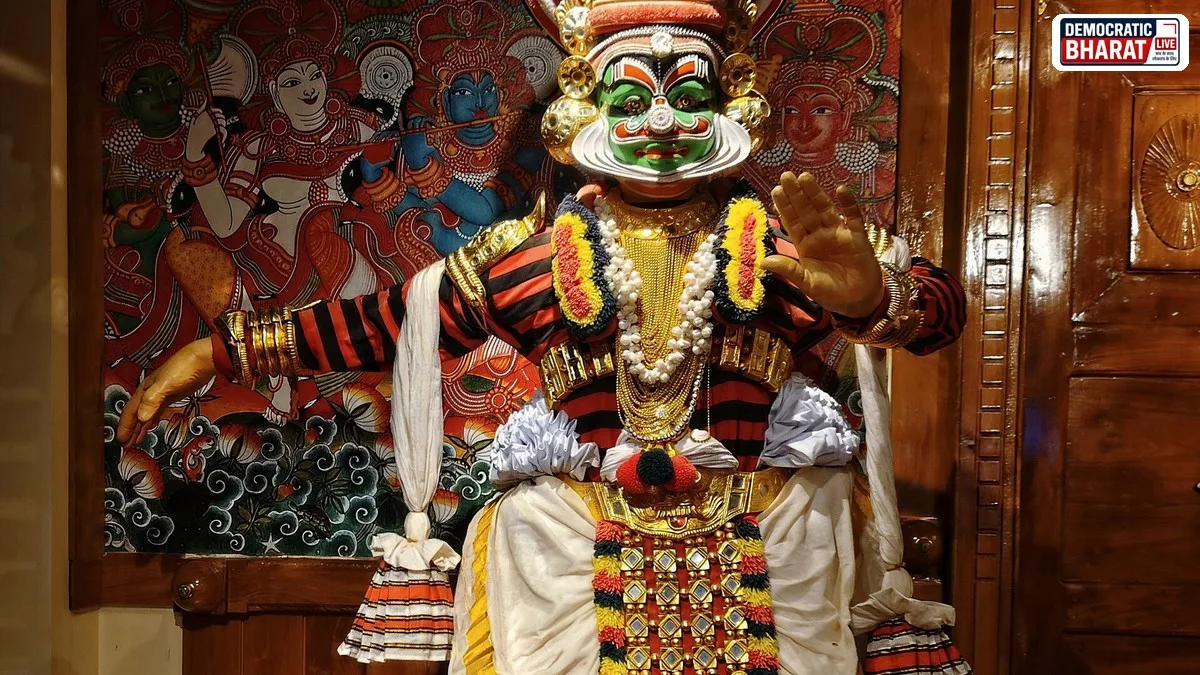
Kathakali is a traditional Indian dance drama that originated in the southern state of Kerala. This classical art form combines storytelling, dance, music, and elaborate visual aesthetics to depict timeless narratives from Hindu epics and Puranas. The name Kathakali translates literally to story-play, reflecting its primary function as a theatrical medium designed to convey epic literature through movement and visual arts.
इस खबर में
Performers undergo years of rigorous physical training to master the complex vocabulary of facial expressions, eye movements, and hand gestures. The tradition reflects the deep cultural heritage of South India and continues to captivate audiences around the world. Training often begins in childhood, requiring students to dedicate themselves to intensive physical conditioning, oil massages, and eye exercises that enable them to control their facial muscles with absolute precision.
The physical discipline required for this art form is immense. Students spend hours practicing core stability, leg flexibility, and endurance. Every movement is calculated, and the training regimen ensures that artists can maintain heavy costumes and intricate choreography for hours under stage lights without losing their expressive clarity.
Origins and Historical Roots
The roots of Kathakali trace back to several older performance traditions and ritual arts of Kerala, including Ramanattam and Krishnanattam. Scholars note that these temple arts evolved over centuries to form the structured classical framework seen today. Ramanattam focused on the narrative of the Ramayana, while Krishnanattam centered on the life of Krishna, laying the thematic groundwork for what would eventually become a more unified theatrical tradition.
Historically, royal patronage played a significant role in developing and preserving this art form. Local rulers and nobility supported troupes of artists, allowing the dance drama to flourish in temple courtyards and palace grounds across the region. Kings and chieftains took pride in maintaining their own troupes, which fostered artistic competition and innovation in both choreography and musical composition.
Over time, Kathakali transitioned from a localized ritual practice into a globally recognized classical dance form. Institutions dedicated to traditional arts now teach the rigorous discipline to new generations of students. Educational academies and cultural centers across Kerala ensure that the ancient performance techniques, musical accompaniments, and makeup craft are preserved for future scholars and practitioners.
Elaborate Costumes and Makeup
One of the most striking features of Kathakali is its elaborate makeup, known as Vesham, which can take several hours to apply. Different color codes on the face represent specific character archetypes, such as divine beings, noble heroes, or demonic figures. For instance, green faces often signify noble and virtuous characters, known as Pacha, while red patches or entirely red makeup denote aggressive or evil personalities, known as Kari or Kathi.
Read this also: Indian Puppetry Traditions: Kathputli, Shadow, Rod and Glove Puppets by State
The costumes are equally grand, featuring voluminous skirts, heavy wooden ornaments, and tall, ornate headpieces called Kireedam. These garments enhance the visual presence of the performers and help distinguish various roles on the stage. The sheer weight and scale of these garments require performers to develop exceptional core strength and balance to execute dynamic choreography while wearing them.
Natural pigments and rice paste are traditionally used for facial makeup, demonstrating the deep connection between local materials and artistic expression. Artists grind stones and minerals to create vibrant powders, mixing them with coconut oil to form pastes that are applied meticulously to the skin. The careful design allows actors to convey personality traits without uttering a single spoken word, relying entirely on visual symbolism.
Language of Gestures and Music
Kathakali relies heavily on Mudras, which are precise hand gestures used to communicate complex ideas, emotions, and narrative plots. Combined with subtle eye and facial movements, these gestures form a sophisticated sign language on stage. There are twenty four fundamental mudras in the Kathakali system, and when combined in various sequences, they can express hundreds of different words, abstract concepts, and narrative actions.
The accompanying musical score features traditional vocalists singing verses in Manipravalam, a linguistic blend of Malayalam and Sanskrit. Percussion instruments, including the chenda, maddalam, and idakka, provide a powerful rhythmic foundation for the entire performance. The chenda, played with wooden sticks, produces a thunderous sound that is characteristic of battle scenes and divine entrances, while other instruments provide softer accompaniment for emotional moments.
Together, the music, percussion, and silent acting create a multisensory experience that brings ancient stories to life. Viewers can check official cultural portals to learn more about upcoming performances and training workshops. The interplay between the vocalists and the actors demands intense concentration, as every musical cue dictates the exact timing of the actor’s emotional transitions and physical movements.
Frequently Asked Questions (FAQ)
What is Kathakali Explained?
Kathakali is a traditional Indian dance drama that originated in the southern state of Kerala. This classical art form combines storytelling, dance, music, and elaborate visual aesthetics to depict timeless narratives from Hindu epics and Puranas. The name Kathakali translates literally to story-play, reflecting its primary function as a theatrical medium designed to convey epic literature through movement and visual arts.
What should you know about Origins and Historical Roots?
The roots of Kathakali trace back to several older performance traditions and ritual arts of Kerala, including Ramanattam and Krishnanattam. Scholars note that these temple arts evolved over centuries to form the structured classical framework seen today. Ramanattam focused on the narrative of the Ramayana, while Krishnanattam centered on the life of Krishna, laying the thematic groundwork for what would eventually become a more unified theatrical tradition.
What should you know about Elaborate Costumes and Makeup?
One of the most striking features of Kathakali is its elaborate makeup, known as Vesham, which can take several hours to apply. Different color codes on the face represent specific character archetypes, such as divine beings, noble heroes, or demonic figures. For instance, green faces often signify noble and virtuous characters, known as Pacha, while red patches or entirely red makeup denote aggressive or evil personalities, known as Kari or Kathi.
What should you know about Language of Gestures and Music?
Kathakali relies heavily on Mudras, which are precise hand gestures used to communicate complex ideas, emotions, and narrative plots. Combined with subtle eye and facial movements, these gestures form a sophisticated sign language on stage. There are twenty four fundamental mudras in the Kathakali system, and when combined in various sequences, they can express hundreds of different words, abstract concepts, and narrative actions.
Source: UNESCO, Ministry of Culture Government of India, Government of India